
Work Text:
Gong Jun first notices the odd couple when he’s passing through the security check.
He’s doing it one-handed, sliding off his trainers and hoisting his suitcase on the conveyor belt, as his manager reminds him, for the fifth time in the very same call: “It’s an incredible opportunity. I just want to make sure you understand —”
“I’m sorry, I’ve got to go,” he cuts her off, and sends an apologetic look to the TSA agent who’s frowning at him from behind his monitor. “I’ll message you once I’m there.”
The female half of the pair, standing at his heels, heaves a pointed sigh when he puts his phone into the electronics tray. She taps her feet nervously, straightening the sleeves of her business suit. Her companion takes a step into Gong Jun’s space, eager to start unpacking his carry-on. They make it through the scan first, and Gong Jun follows them out through the fast track line, his bodyguard tailing him like a shadow.
Gong Jun likes the frenetic energy of airports, the way people pretend to be at ease over their cups of coffee, drowning out other passengers’ conversations in the patter of laptop keyboards. Sometimes, he wishes he could disappear in their midst—sunglasses on, pulling his cap lower and taking an unexpected swerve, circling around random gates with no destination in mind. As it stands, he only pauses in the main hall long enough to check his flight. 02.15, Shanghai to Ho Chi Minh City, gate open.
The couple winds up in the same airline lounge, sitting on opposite ends of a leather sofa. Gong Jun watches them as he sips his complementary cold water. The woman looks a lot older than her companion and she’s wearing a pinched expression, almost like her high updo is pulling on her skin. She’s the one keeping her distance, while the man talks about his new VR headset. When he asks her a question, and the woman doesn’t reply, he pauses.
“You know it’s the safest way to travel, right?”
The woman glances at him. “Yes. But there are always exceptions.”
“That’s just fate,” the man tells her, shrugging. “No point fretting about something we can’t change.”
“Perhaps.” She sounds off, downing her glass of wine. “But I made the decision to get on this flight, today, at this time. Our actions and fate are equal players. Sometimes they align, sometimes they don’t.”
The man huffs and gives up on further conversation. Gong Jun, though, takes out his phone to write down the line. Our actions and fate are equal players. When the notes app opens on his last saved draft—the one he’s been trying to avoid, since getting to the airport—his hand jumps and he shuts it off. He struggles to finish the carbonated water, the bubbles poking at his nerves.
In his business class seat, he looks at the rain that’s starting to pick up on the other side of the window. A plane lands in the darkness of the night, the descent gradual and smooth, the impact sudden. When the captain’s voice rasps from the overhead speakers, he fiddles with his phone again, not able to put it off any longer.
Gong Jun copies the draft—edited ad infinitum and deleted twice— and chews on his lower lip as he hits send.
Hello, Zhang-laoshi! I know this comes out of nowhere, but I’m going to be in your city for the weekend. If you’ve got a moment, would you like to meet up? Please let me know.
He feels his sigh more than he hears it, as he turns his phone off and stuffs it at the bottom of his bag. He zips his hoodie all the way up to his neck, waiting for the aircon to kick in, and slouches in his seat — hoping for sleep, knowing it won’t come.
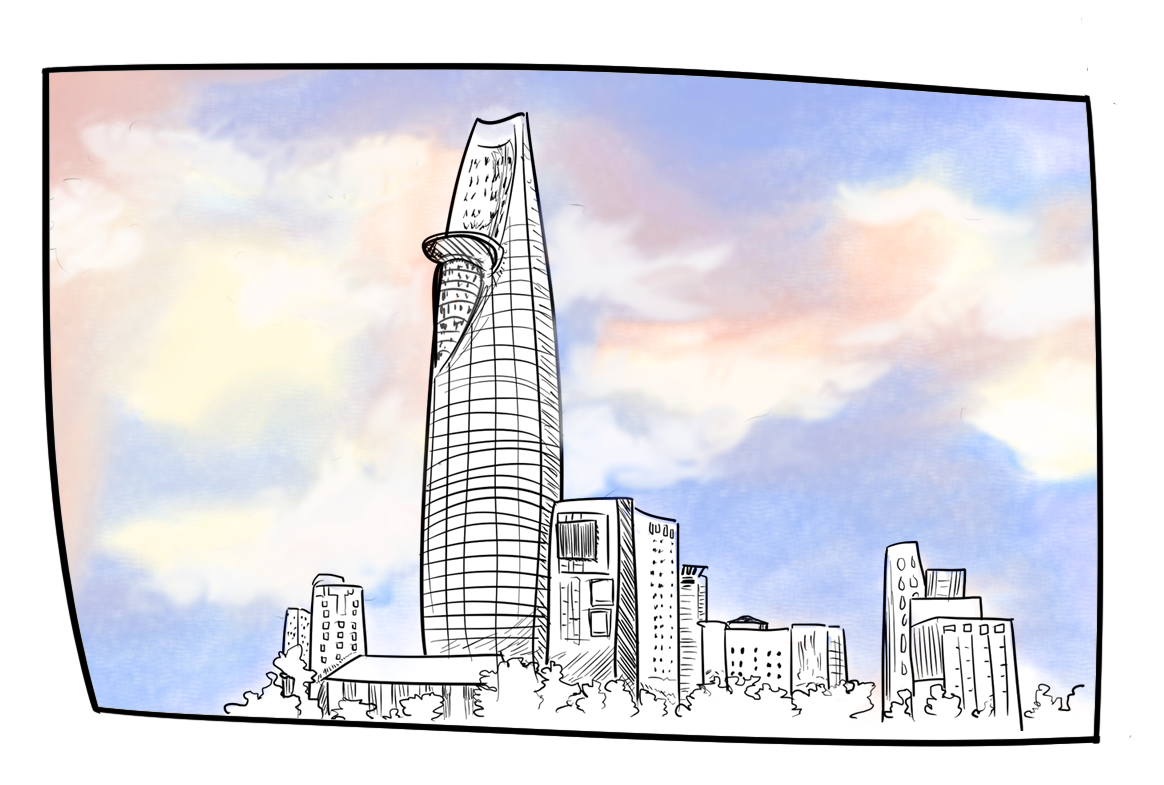
The hotel suite is nice but sparse. It’s clean, bright, and decorated with fake bouquets — faded foliage and jasmine flowers made of plastic. The rooms smell of freshly sprayed floral detergent. So artificial, too, that Gong Jun knows the scent won’t linger. He changes out of his flight shirt and crashes into a chair by the window, one that overlooks the city.
He should unpack his suitcase, he doesn’t want to pay extra for the laundry services. Food, probably, wouldn’t be a bad idea. But he’s had very little thoughts to spare on practicalities, ever since he saw the new messages notification on his phone, on the cab ride to the hotel. He gets his passcode wrong, the first time, and hovers his finger above the envelope icon. It’s silly. The message could be a simple hello, a straightforward dismissal, or a local service provider, informing him that the number is no longer in use. He’ll end up opening it, regardless.
Gong-laoshi, give a man some warning! what if I was swamped?? when are you free? are you here for work?
Gong Jun’s shoulders sag into the armchair with an audible thump. His response takes too long to write. He starts telling Zhehan that he doesn’t want to encroach on his plans, but backtracks, too selfish to invite potential rejection. In another draft, he asks Zhehan to meet him at one, and deletes the suggestion when he sees it’s almost half past twelve, fearing that he’d come across as both unreasonable and desperate.
I’m here for a cousin’s wedding, he writes, deciding that bare bones will spare him the trouble of second-guessing his tone. I’m free all day, but I understand this is very last minute.
The five minutes between his message and the response seem to last forever. He takes a moment to look out of the window, at the city that’s stretching out in front of him. It reminds him of a video game that he used to play—one where he could build his own metropolis, forgoing a sensible city plan, just scattering the buildings about, wherever the boundaries of the game let him. There’s an order to the chaos, he thinks, but he doesn’t try to make sense of it. Curved roads and tiny streets, shaded by trees growing out of pavements and balconies. He looks and he wonders if Zhehan is somewhere his eyes can reach—another motorbike in the overwhelming tide, or a person sipping coffee under an umbrella.
i can always make time for you, don’t worry. when did you land? don’t you want to get some rest?
I’m not tired, Gong Jun writes, and his body begs to differ, shuddering in a big yawn. I’ve been told the coffee here is good for jetlag, anyway.
OH. You have no idea, Zhehan’s message reads.
It’s the fastest one, yet, near instantaneous, and Gong Jun looks out of the window again, overcome with the realisation that yes, they’re in the same country. In the same city, even, and perhaps just a few miles apart.
They talk for a while, a polite exchange about Gong Jun’s plans and the location of his hotel. Zhehan says he’s nearby, and he suggests meeting in an hour. Gong Jun agrees without any shame. He was hoping that his nerves would let up, once he’d get a clear answer, but the prospect of seeing Zhehan so soon, in person, has him feeling even more jittery.
He unpacks his suitcase, refolds his clothes and stacks them in the wardrobe without any order — socks squished between trousers and shirts in the underwear drawer. He splashes cold water on his face, can’t resist tilting it left and right in the stark bathroom light. It hasn’t changed from when he washed it last night, but he’s trying to look at himself through a different pair of eyes—ones that haven’t seen him in four years. Did he have the little scar under his lower lip, back in the day? The last time they met, was he this skinny, or even more?
He lets his family know he’s landed and confirms that he’ll be at the BBQ party at six. “The conference call is tomorrow at noon, your time. Please think about it,” says the latest message from his manager. It lingers at the back of his brain, even as he sends a polite acknowledgement and tells her he’ll check-in later.
At twelve, Gong Jun’s stomach finally remembers that he hasn’t eaten since the previous night. The minibar’s selection is paltry: a lineup of beer cans and cold beef jerky. He’s too nervous to sit around for another thirty minutes and so, remembering a convenience store near the hotel’s entrance, he grabs his room card, phone, and wallet.
“I’ll just be a minute,” he reassures his security guy. The poor man looks tired and pale, like Gong Jun’s knock woke him up from a too-short nap. Maybe that’s why he just nods, letting Gong Jun disappear down the hallway.
When he steps out onto the street, the humidity and heat descend upon him in tandem. He’s forgotten his sunglasses and the vibrance of high noon makes his eyes burn. This is a horrible time to be out, he thinks, but reminds himself it was Zhehan who suggested the time.
The convenience store’s aircon makes him shiver, as he browses the ready meal section with a frown. Empty-looking sandwiches and sweaty sushi, three whole rows of yogurt, and a dessert fridge full of flan. He picks the ham and cheese sandwich with wilted lettuce, grabs a bottle of water, waves away the change and mutters a thank you in terrible Vietnamese.
12.10, he checks, once he’s back out in the sauna. Just enough time to wolf down the food, get changed and—he freezes on the sidewalk, mid-step. There’s a man standing near the hotel entrance, leaning his shoulder on the marble tiles. He’s looking down into his phone, facing Gong Jun from his profile, and recognising him really shouldn’t come as easy as it does. But, over the years, Gong Jun’s had enough practice imagining him so that he knows it’s Zhehan, without a second’s hesitation.
He hears a yell, a honk, and he twists around just in time to jump away from a motorbike, the delivery driver speeding it down the sidewalk, a pyramid of takeout boxes squeezed between his thighs. When Gong Jun catches his bearings, Zhehan’s looking at him. It almost makes his shaky legs buckle completely.
“Zhang-laoshi?” he says, approaching him in slow, careful steps.
Zhehan smirks. Blinks, two times, and reaches out his hand, forgetting about his phone. He pockets it clumsily and rests his palm on Gong Jun’s shoulder. “Junjun,” he says, feigning surprise. “Are you trying to get run over?”
The nickname makes something in Gong Jun’s stomach flutter. He protests, but only weakly. He’s too busy staring, and too high on adrenaline to care. Zhehan’s hair is longer, in a small bun, like he used to wear it towards the end of filming. His face looks a little rounder, fuller. Healthier. “You look well,” he says.
“You too.” Zhehan nods, almost offhand. Gong Jun can see the discreet way his eyes track Gong Jun’s body, down and back up. “But you almost became a smudge on the pavement. Didn’t you hear — ”
“I got distracted,” Gong Jun says.
Zhehan’s snaggletooth catches on his lip as he grins. He rolls his eyes and lets his hand fall. “I can’t believe you’re here. Why — you said it’s for a wedding?”
“Yeah,” Gong Jun says, though there’s nothing he wants to talk about less. He speaks fast, to get it out of the way. “My cousin’s wife is Vietnamese. I missed the ceremony in Beijing.”
Zhehan shakes his head with a weary sigh. “Still working yourself to the bone? Don’t tell me you couldn’t find the time to go to your cousin’s wedding.”
He could, but he doesn’t admit that. It also wouldn’t have been hard to make up another excuse, send the happy couple a generous hongbao and skip out on the second ceremony altogether. He doesn’t want to lie, though, so he simply doesn’t elaborate. “I’m on a holiday now.”
Zhehan doesn’t push. He notices the plastic bag in Gong Jun’s hand and scratches at the back of his neck, suddenly sheepish. “Ah, I got here a little early,” he says. “I wasn’t sure about the traffic. It can get really bad, this time of the day.”
“It’s no problem, I just went to get—”
“Is that your lunch?”
“Yeah,” Gong Jun admits, grimacing.
“Can I convince you to get rid of it?” Zhehan says, giving the convenience store logo an affronted look. “We can go get some real food, if you like.”
It’s terrifyingly easy to agree, and Gong Jun doesn’t even try to come up with an excuse. He’s not one to waste food, but, for a moment, he’s ready to plonk the poor sandwich into the nearest garbage bin. Ignore the leftover hunger pangs and let himself be led to whatever hole-in-the-wall place that Zhehan’s got in mind.
“Do you want to come up?” he asks, pausing on his way to the hotel entrance, rushing to drop the food off and meet Zhehan downstairs, hopefully a little more composed.
“Nah.” Zhehan waves a hand in the air and leans back onto the marble tiles. The sunlight reflects off of them, falling onto Zhehan’s face, and it makes his toothy grin look almost blinding. He’s even more handsome than Gong Jun remembers. “Just hurry up.”
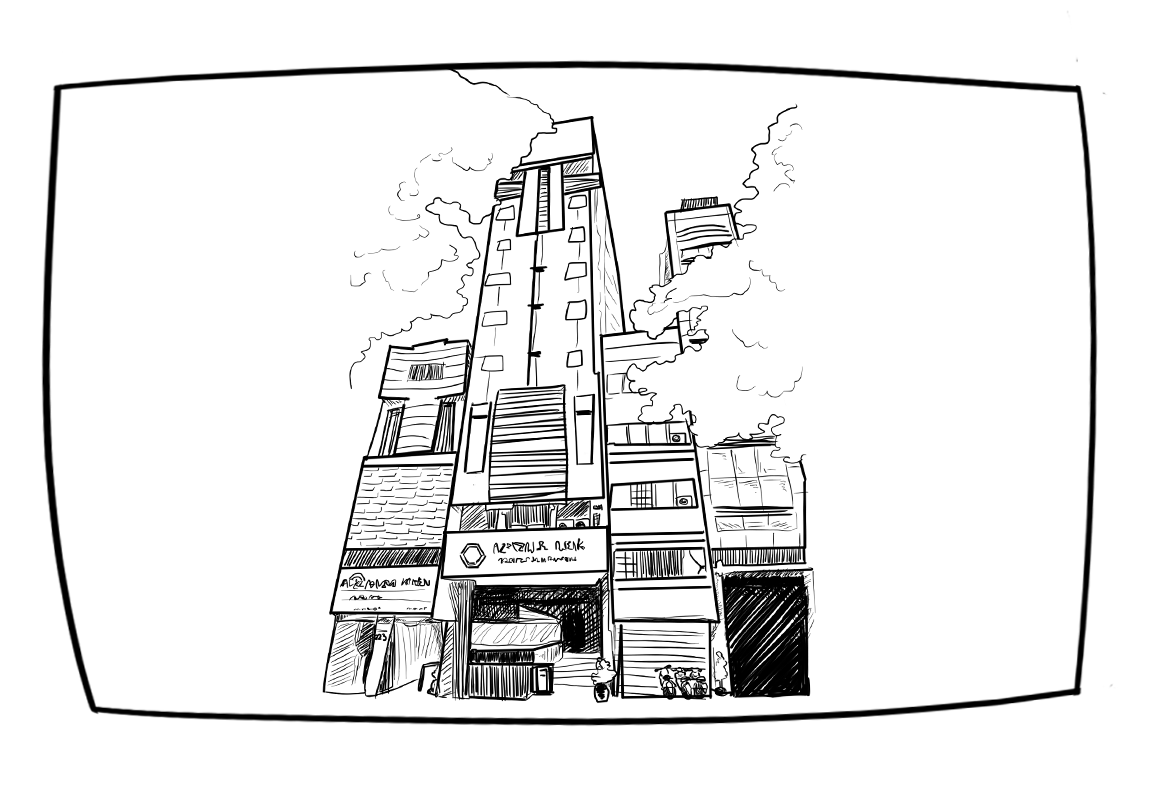
Gong Jun pushes the whole bag into the minibar, knocks over several beer cans, and slams the door closed, like ignoring the chaos will make it disappear. It has no effect on the chaos that’s wrecking his brain, as he runs into the bathroom, sighs about underarm sweat stains, and considers changing. He’s wearing an old sandstone T-shirt, soft with wear, and his most comfortable trousers. He looks like he feels—tired from the overnight flight, stiff from the stress. Zhehan, however, would probably notice if he came out in a wholly different outfit. Gong Jun sprays on some deodorant and curses himself for not dressing up for a convenience store haul.
He contemplates knocking on the door next to his own. The security guard is most likely sleeping, waiting for Gong Jun to let him know when they’ll be leaving for the party. It’d be the smart thing, to let him know. Sensible. He retracts his hand and walks to the elevators, reasoning that nothing bad will happen to him, as long as he sticks to Zhehan’s side. The way he feels so certain about that assumption is equally as ridiculous as how he’s sneaking out of the hotel: like a dumb teenager, or an idiot trying to hide from his own employee.
Zhehan’s waiting for him in the same spot, arms crossed over his chest, looking out onto the street. When Gong Jun approaches, Zhehan bumps their shoulders together and starts walking, gesturing for him to follow. “Let’s go. My bike’s nearby.”
“You’ve got your own bike?” Gong Jun asks, once he falls into step beside him.
“Of course,” Zhehan says, giving him an odd look. “You should try driving. I’m sure Lux wouldn’t mind.”
“Lux — the lady of luminosity?”
Zhehan laughs. “You still play, too?”
They make it to the edge of the road, just about to cross, a never-ending swarm of motorbikes rushing over the pedestrian crossing from both sides. Gong Jun stops, waiting for a break in the colourful, benzene wave, but Zhehan keeps walking. He sticks an arm out and looks into the oncoming traffic like he’s daring the drivers to crash into him. Gong Jun blinks and hurries to keep up with him, syncing up their steps so that he’s shielded by Zhehan’s confident stride. The motorbikes flow around them like water around a piece of stone.
“Yeah, I don’t think I’m driving here,” Gong Jun mutters, once they’re on the opposite side. Zhehan just laughs.
They walk down a smaller street, passing half a dozen men in pale-blue security uniforms — they’re all napping on their plastic stools, the bikes they should be guarding up for anyone’s taking. Zhehan’s bike is waiting for them in a shaded parking lot, amid a sea of motorbikes that is stationary but no less overwhelming. It’s an easy bike to spot. A nice one, Gong Jun knows, even without having a substantial frame of reference. All black with a brown leather seat, it doesn’t look like it fits into the mid-day traffic—not a bike for utilitarian tasks like picking up one’s children, but a bike that’s driven for the thrill of it.
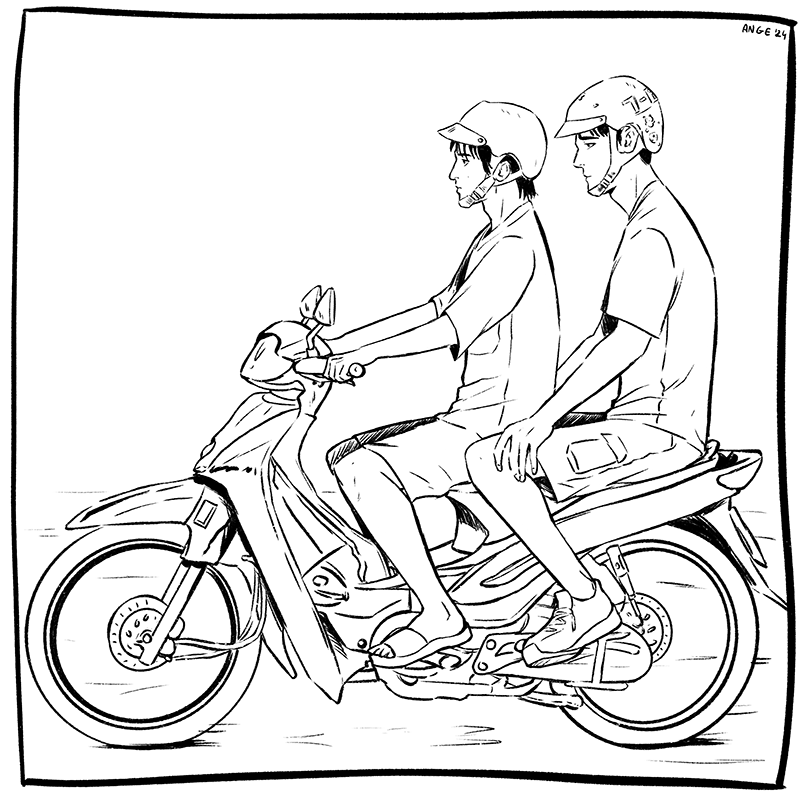
“Nice helmet.” Gong Jun grins, when Zhehan hands him the spare—a clunky thing with the 7-Eleven logo and a set of peeling anime stickers.
“Passengers can’t be choosers,” Zhehan says. He reaches up and helps him fasten the chin strap. Gong Jun flinches—Zhehan’s eyes glint when he sees it happen.
Zhehan sits down first, kicks down the foot pegs and raises an expectant eyebrow. Gong Jun holds his breath until the motorbike comes to life, back ramrod straight, hands awkwardly placed onto the knobs of his knees. He exhales with the engine’s roar. In the side-view mirror, he sees Zhehan bite the inside of his cheek.
“How’s your jetlag?”
“On a scale from 1 to 10?”
Zhehan’s driven them to a local coffee shop, one where the waitress greets him with too much familiarity for it to be a random spot. It’s unassuming, with foldable metal chairs, bamboo coasters, and overflowing ashtrays. The cigarette smoke is thick, where a group of middle-aged men sits near the open window, undershirts rolled up over their bellies.
Gong Jun can see its charm, though. There’s the canal on the opposite side of the road—the pathway almost picturesque, lined with enough street lights, benches and flowers to distract the passerby from the polluted river.
“Boring. On a scale from falling asleep on this table to running lines until 4am.”
Gong Jun bites his bottom lip. Something shifts inside his stomach – dislodging his nerves, or fuelling them? – at hearing Zhehan bring up the memory. “That was one time, Zhang-laoshi,” he says, because if his nerves are bound to spill out of their confines, he might let some old habits loose, too.
Zhehan smiles, though his eyes narrow, almost imperceptibly. “You didn’t answer my question.”
“A solid seven,” Gong Jun allows. “If the blinds got drawn and the music turned off, I could sleep on the table.”
Zhehan chuckles and nods. “Very well.”
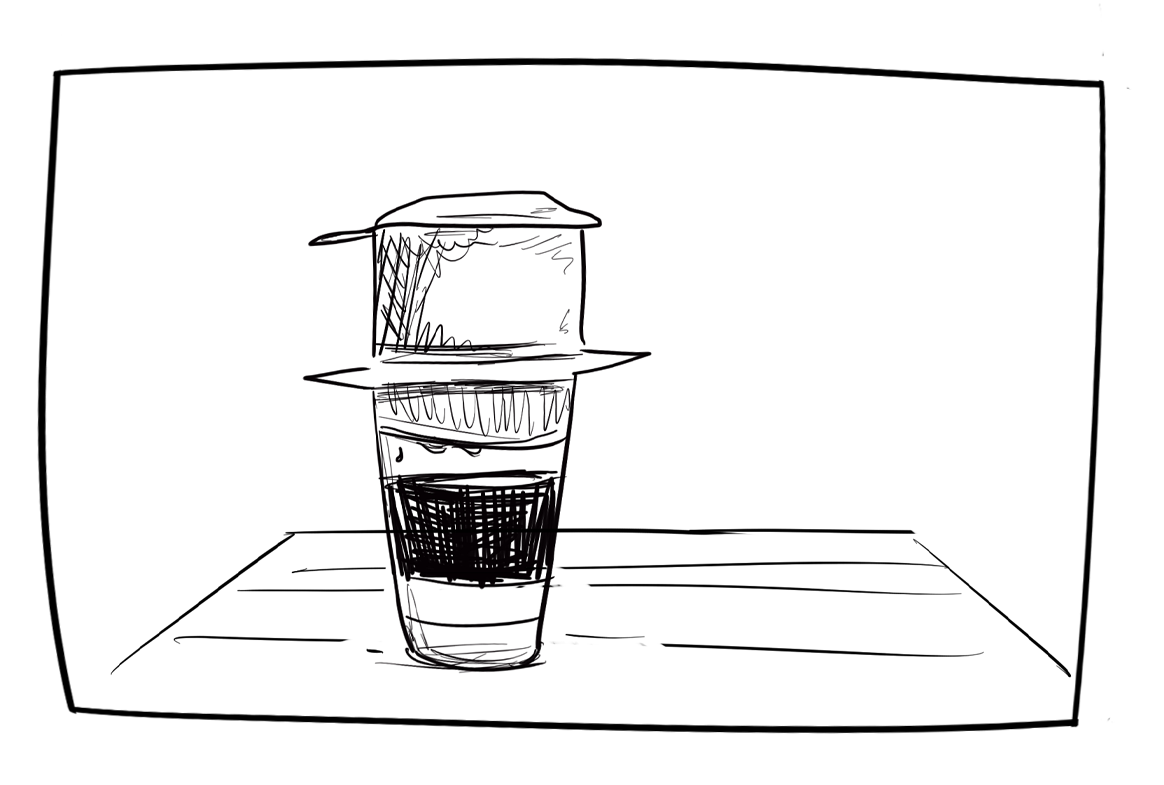
He orders for them both, and although Gong Jun has no idea what, he can make some informed guesses from the way Zhehan almost rubs his hands together in evil glee. It takes the waitress, a young girl in Pokémon crocs, less than two minutes to return with their drinks. She offloads some kind of fruit tea with kumquats and a glass of thick black coffee with a distinct layer of milk at the bottom.
When she leaves, Zhehan slides the coffee towards him, leaving a trail of moisture. “Well?”
Gong Jun rolls his eyes. He gives the ice in his glass a few stirs and watches as it changes colour, going from coal black to burnt caramel. He takes a tentative sip and holds back a groan.
“It’s jet fuel,” Zhehan smiles, satisfied. “You’ll be the main star at the party tonight, no sleep guaranteed.”
Gong Jun pushes the straw away, reeling from the strong-sweet double punch and resolving to pace himself. “How do you know I’m going to a party?” he asks with a raised eyebrow.
“You said you had evening plans.” Zhehan shrugs. “And the ceremony’s tomorrow, right?”
“Yeah.”
“Unless you made up an excuse and you’re going to blow me off to watch TV in your hotel room, I assume there’s a party?”
“Aiya, Zhang-laoshi, so blunt,” Gong Jun says, and stalls for time by doing exactly what he’s told himself he shouldn’t— taking another sip of his drink. The waitress saves him, coming back with their food.
She sets down two identical bowls of something that he knows he’s eaten before, but can’t recall the name of. The broth is steaming, a vibrant orange with bubbles of excess oil, smelling of beef and lemongrass. The thick noodles are hidden under a mountain of pork and beef slices, and there are enough blood cubes to make his nainai proud. Zhehan rolls a pair of chopsticks in his palms, skims a tablespoon of dangerous-looking chilli paste into his bowl, and tops it with enough herbs to make the broth spill over. He doesn’t wait for Gong Jun to start eating, though he gives him an encouraging look, a rusty trail sliding down his chin.
Gong Jun clears his throat. He skips the chilli and pushes the oily film to the side—too hungry to pat it off with a napkin—looping thick rice noodles into a loose knot. He’s expecting the kick, but the first taste makes his eyes water anyway.
“Still can’t handle spice, I see.”
“Some things don’t change,” Gong Jun says, as soon as he feels his tongue again. “At least you can still recognise me.”
“Were you worried about that?” Zhehan asks, leaning closer over his bowl.
“Weren’t you?” Gong Jun fires back, because his wince must be enough of an answer.
Zhehan gives him some breathing space. He picks up more damp herbs, mint and perilla, and plays with the lime wedge. He slurps some broth before saying: “Then, how did you imagine this conversation would go?”
Gong Jun chokes on his noodles.
Zhehan smacks his lips, casual. “You were the one who messaged me. You must’ve thought about it.”
Gong Jun has, but vocalising his thoughts seems reckless. He can’t decide which one would get a worse reaction. I just thought we could catch up, sounds almost laughable in its shallowness. I wanted to make sure you’re okay, runs the risk of being too intimate. Zhehan sees the way he’s mauling his lip, and takes pity on him.
“I did. Today, of course, but even before that,” Zhehan says, and he smirks at the way Gong Jun’s eyes widen. Like he’s trying to force the reaction out of him. “It’s been easy with you. Easy to know what you were working on, at least. But I often wondered how you were doing, you know, where the cameras didn’t reach.”
You could’ve called, Gong Jun wants to say, but he’s terrified of surfing the same wave of honesty. He feels like there are rules to it, to avoid getting sucked under, and he’s not skilled enough to keep his balance. He shrugs. “I was mostly working, you know the drill. From one set to another.”
“Dramas and photo shoots?” Zhehan asks. Implying he’s seen them, perhaps, or just making a calculated assumption. Gong Jun’s stomach still flips.
“And livestreams,” he adds, like he’s in on the joke. He’s enjoyed all of it—the ease of the modelling, the challenges that came with each role, the grind and the payoff—but he can’t help but feel self-conscious about the cyclicality of it all.
“You’ve done well — in your dramas. You’ve definitely improved a lot,” Zhehan says, earnest. It’s foolish, how much the words mean to Gong Jun, when he’s already got the awards to prove it, all that tangible sense of accomplishment he’s always dreamed of, catching dust in his spare room. “Though you’ve had a really quiet year, Gong-laoshi. No good offers?”
The opposite is the truth. Plenty of good offers that turned increasingly mundane with each of Gong Jun’s rejections, leading men fading to love interests, into prestige cameos. The role he’s currently ignoring — the one his manager’s been pestering him about for weeks — is the best one he’s had in ages. He takes a sip of his coffee, shaking off his thoughts. “I’ve been trying to slow down, I guess. The exhaustion gets harder to hide, the older I get.”
Zhehan chuckles, raising his eyebrows in doubt. “You look the same you did five years ago.”
“Tell that to the poor make-up assistants,” Gong Jun says, blushing and shaking his head, to stop his brain from latching onto the words. “They already had their hands full between the rashes and the sweat, remember? No need to add stress wrinkles into the mix.”
“Mm,” Zhehan hums, and once again there’s that melancholic tinge to his smile, a twist that he hides in his bowl of noodles.
Gong Jun internally swears at his own clumsiness and racks his brain for a better conversation topic. “Anyway. You said it yourself, nothing exciting in my life. What have you been up to?”
It works, and Zhehan cackles. “I thought you would lead with that question.”
“Did you prepare an answer?” Gong Jun counters.
“More than one.” Zhehan nods. “Which one would you like to hear?”
The true one, of course. Gong Jun doesn’t say that. “The one you’d like to share.”
“Aiya.” Zhehan pinches his nose, still smiling. “Fine. Let’s go with the short one. I think Xiaoyu told you, right?” He ends on a significant pause, like he’s expecting Gong Jun to interject.
“About your music?”
“I wouldn’t call it my music,” Zhehan says. “It’s my cousin’s production company, and I mostly help with the arrangements. Write, sometimes, when he feels more generous.”
“Is that why you moved here?”
“No, that was for the industrial strength coffee,” Zhehan says, pointing at Gong Jun’s glass, still mostly full and standing in a pool of its own sweat. “Having steady work is a nice bonus, though.”
Gong Jun tamps down the little voice in his head that wants to point out that Zhehan’s currently drinking iced tea. He hums. “I’m glad you get to do that — music. It’s always meant a lot to you,” he says, sees how Zhehan’s face flashes through three different emotions at once, and scolds himself for not teasing him about coffee instead. “It’s just — good to see it’s still the same? Not that there aren’t other —”
“Okay, Junjun, look,” Zhehan says, interrupting him. He sets his chopsticks down and wipes his mouth with a napkin. He balls it up in his fist and sighs. “It’s great that you’re here. Really, I’m so glad to see you.”
The but sits heavy in Gong Jun’s throat. He tries to soothe it with some broth, letting Zhehan think through his next words.
“If you want me to show you around the city, that’d be fun. I can drive you to Chinatown, or around the centre. Or teach you how to drive, for real,” Zhehan says, and he’s saying it all like a joke, with a lightness that’s too prominent to take at face value. “But let’s make some rules.”
Gong Jun presses his lips together, not letting a sound out.
“We don’t talk about it,” Zhehan says, simple, still with that feigned flippancy. “I don’t want to, and I see it makes you uncomfortable, too, so let’s just—not.”
Gong Jun nods, but the back of his neck breaks out in goosebumps. There are many other things left behind, in that same space, too. Their work, their friendship, that one summer — isn’t the past all that they have? He understands Zhehan. He’d understand it if he said goodbye to Gong Jun after their brief lunch and called it a day. And he’ll agree, of course he will. But in the face of four years apart, and an unspoken past, the fragility of the present makes him consider every word.
“Okay.”
“Okay?”
“We won’t talk about it,” Gong Jun says, and plays with the herbs floating atop his bowl. “Let’s start fresh. New country, new us.”
“I’m sure you’re not that different,” Zhehan says, teasing.
“Four years is a long time.” Gong Jun grips his chopsticks tighter. “I know I’ve changed, at least a little bit.” He’s not sure if it’s an excuse, or a preemptive apology.
Zhehan takes a long drag of his tea and sets down the empty glass, ice cubes clinking against each other on impact. “Let’s get to know each other, then. We’ve done well the first time.”
They keep up the charade for a little while, as Zhehan drives them across the city, pointing out various landmarks–the main tourist market, the second tallest skyscraper, the colonial-style opera house–and asks silly questions about Gong Jun’s hobbies and musical preferences. The answers are either old, or predictable, and he seems to tire of the act by the time they’re walking down a downtown pedestrian zone.
“Ah, look at them,” Zhehan says, pointing at a group of teens. They’re rehearsing a dance choreography in the middle of the promenade, school uniforms undone. “To be sixteen again and have your whole life ahead of you.”
Gong Jun frowns at him. “Do you wish you were sixteen again?”
“Gosh, no. One puberty was hard enough,” Zhehan says, but he shrugs. “I think there’s a certain kind of freedom that we lose, the older we get. I wish we didn’t.”
They walk past a young couple, a posing girl in a yellow sundress and a boy kneeling on the ground, face pinched as he tries to get the best angle for his photo. The girl looks at them, and her eyes widen with recognition, but Gong Jun only hears her frantic whispers from behind his back. He hums, belatedly, acknowledging Zhehan’s words. He, too, feels like there is a kind of recklessness that he made himself outgrow and now it’s forever lost to him. It’s hard to bemoan, though, when he feels freer in the moment – walking down the street, practically anonymous – than he has in years.
There’s a dog napping next to Zhehan’s bike, once they walk back, on account of the afternoon monsoon clouds starting to gather. Zhehan bends down to scratch his ears, to wake him up more gently than the engine roar would. Gong Jun’s face softens.
“How’s Lufei?” he asks, once he’s back on the bike.
“Gone.”
“Oh. I’m sorry, I didn’t –”
“Don’t be,” Zhehan says, keeping his eyes on the road, perhaps a little too focused. “He lived a full life.”
Gong Jun stops himself just short of reaching out to squeeze Zhehan’s shoulder. He stares at his sweaty palms instead.
They get to the next spot in what feels like a minute, parking the bike on the sidewalk. Zhehan almost bounces on his heels, saying: “This is my favourite street. It’s all bookshops.”
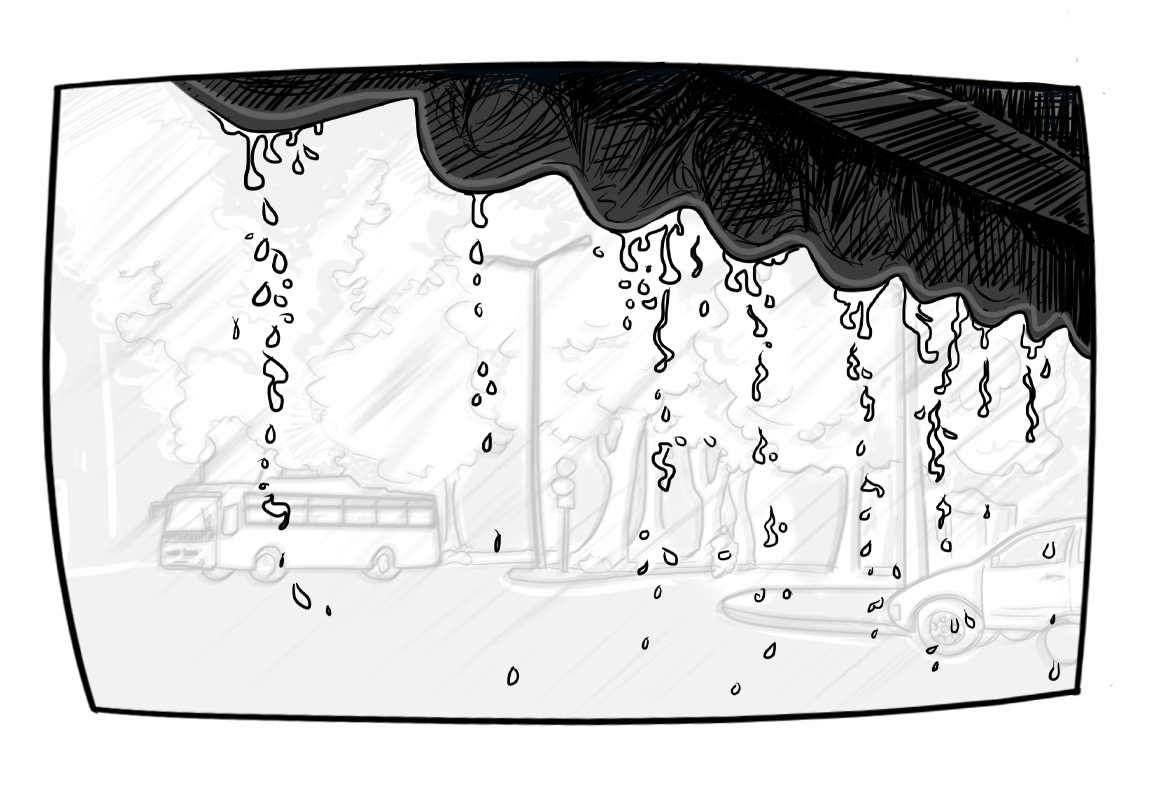
They both jump at the sound of thunder, the sky tearing itself apart with barely a second’s notice. The humidity should’ve warned him, but Gong Jun’s surprised to feel the rain wash over him, sudden, like a bucket of water tipped over in admonishment. Zhehan grabs his wrist and pulls him to the side, close to a store’s window display, where a small awning shelters them from the worst of the downpour. He laughs, shaking the water off his hair, making it stick to his forehead.
Gong Jun’s shirt clings to his nape and he feels stray raindrops slide down his back, mixing with leftover beads of sweat. Through the steady curtain of rain, he can barely make out the opposite side of the road.
“Give it fifteen minutes, tops,” Zhehan says, nudging his foot with his own. “We can make a bet.”
“Eh?”
“If I’m wrong, you can ask about it.”
Gong Jun shifts nervously. He gives Zhehan an uncertain glance, but finds that his face is open. Teasing. “What if you’re right?”
“I’ll teach you how to drive,” Zhehan says, a roll of thunder making it sound like a threat.
“Aiya, Zhang-laoshi! You’re just making more work for yourself,” Gong Jun says with a dramatic sigh. “I don’t want you to die at my hands.”
Zhehan waves, dismissive, and mutters: “Shhh, it’s easy. Kids here learn to drive before they learn to read.”
Gong Jun pretends to mull it over, but he’s a man too weak for the temptation. If he drives well, it means manifesting one of his favourite Zhehan smiles. The proud teacher one which he used to disarm Gong Jun with, after each successful take and each satisfying script rehearsal. If he’s terrible at it—well, Zhehan is nothing but a hands-on teacher. “Okay. Fifteen minutes it is.”
Satisfied, Zhehan leans further into their hiding spot, against the peeling coat of yellow paint on the house. He sticks his hips out and turns to watch the rain, like he’s challenging it to misbehave. Gong Jun chuckles and makes a show of setting up the timer on his phone. As soon as the seconds start running down, Zhehan gives him a nudge. “Tell me something that the public doesn’t know. Something secret.”
“Um.”
“Come on, fifteen minutes. We’re not just going to stand here in silence,” Zhehan says, but he backtracks. “We can. You don’t have to answer —”
“I picked up smoking for a while,” Gong Jun cuts him off. He hopes the quickness of his response doesn’t betray how often he’s thought of making this confession. “Yes, I know. Terrible habit, very out of character, very stupid. I knew what I was doing.”
“That,” Zhehan starts, and purses his lips in hesitation, “is not something I expected. Well played.”
Gong Jun can decipher the unspoken why. Zhehan’s hiding it in the shift of his eyes, scratching it off the skin of his neck. He’s also being careful, Gong Jun supposes. For both their sakes. “Well, it only lasted for a few months and none of the photos leaked, so it’s almost like it never happened.”
“Just as well. No reintroductions necessary, if that’s the worst you got,” Zhehan says. He’s back to teasing, but he waits for several rounds of breath before admitting: “I got a tattoo.”
He cracks up at Gong Jun’s reaction. “Don’t look at me like that! How is it worse than smoking?”
“I didn’t say—what is it?” Gong Jun asks, cheeks warm, hoping his curiosity really could be mistaken for horror. He stops his mind from coming up with flashes of tattoos, and body parts, and Zhehan’s face connected to the body parts. He presses himself against the wall and relishes the way his soaked T-shirt cools his skin.
“It’s embarrassing.” Zhehan rolls his eyes and taps the back of his shoulder. “Susu got me drunk and cried his way out of getting a matching one. He’s been paying for it.”
“Is it a quote?”
“I wish.” Zhehan sighs and his fingers twitch, making Gong Jun think he’s going to pull at his neckline. Instead, he wrings out rain from his hair, making it drip down his collarbones. “It’s just a very ugly picture. Not even sentimental.”
Zhehan’s quick dismissal only serves to make him more suspicious, but Gong Jun doesn’t push. The rain’s still heavy, washing the city of its colour, and there are eight more minutes to go on his timer. He wonders if he should start preparing his question. Being only allowed one, the prospect feels downright daunting.
“Did you get that house you wanted?” Zhehan says, leaning in to peek at the display. “I promise I won’t leak the address.”
Gong Jun nods and pockets his phone, cringes when he realises his trousers are wet, too. “I’ll send you the address when you come visit.”
“Tell me what city, at least. Beijing?”
“Shanghai,” Gong Jun admits. He latches onto the easy questions, their answers safer, but no less intriguing. “Are you renting a place here?”
“Yeah, it’s not that far away.” Zhehan points towards a distant set of high-rises, easy to overlook in the skyline’s patchwork of office towers and neon cranes. With the rain slowing down, Gong Jun’s relieved to realise that he can make out more than silhouettes. “I picked it because it was close to the centre, but it’s a pretty terrible place.”
“How so?”
“They don’t allow pets, for one. The elevators break every other day.”
“That’s pretty bad.”
“The building’s new, so there’s always construction noise,” Zhehan says, too cheerful in contrast to his complaints. “And when the downstairs neighbors are not drilling, the ones upstairs are having karaoke parties.”
“You love those, though,” Gong Jun says, and regrets it almost instantly. Four years ago, Zhehan loved them, but expecting everything to have stayed the same is both selfish and impossible.
Yet, the idea that Zhehan could laugh him off — that the things Gong Jun had once found constant were only temporary — it sets his heart racing.
“Not as much as you,” Zhehan says, and his eyes widen as he gets an idea. “You should come over after your party! You’ll still be high on caffeine and they rarely start before midnight, anyway.”
“I’ll consider it,” Gong Jun jokes, voice rough. He clears his throat. “Do you think you’ll stay there for much longer?”
Zhehan reads the question for what it is — a roundabout way of asking if he’s planning to stay in the country, not just his unfortunate flat. “Not sure. I still have work commitments to last me until winter.”
“That’s good,” Gong Jun says. For once, he’s thankful for his abysmal maths skills, which stop him from calculating the days until December. “You’re enjoying it, then.”
“I’m glad my name’s not attached,” Zhehan says, after humming his agreement. “Some of the songs are pretty bad.”
“You don’t get any credit? That’s—”
“My producer pseudonym does,” Zhehan cuts in. “But the guy’s very uneven. More flops than hits, though he likes to blame the lyrics for it.”
“So you don’t write the lyrics?”
Gong Jun feels the phone vibrate in his pocket, flicks his gaze up to see the rain still going — weaker, now, like a curtain of beads, starting to gleam in the returning sun.
“Don’t speak the language,” Zhehan says, mock-sheepish. There’s a secretive twist to his smile, one that assures Gong Jun that Zhehan is still writing, for himself, not letting his pseudonym take ownership. Having control over what he puts his name on. The realisation makes his eyes sting.
After a minute of silence, Gong Jun makes a show of checking the timer. He acts up his disappointment. “You’ve just made it, Zhang-laoshi,” he says, turning the screen around. “Don’t say I didn’t warn you.”
Calculating the cost of his potential embarrassment in the wake of Zhehan’s excited smile, Gong Jun supposes the loss will be as easy as following Zhehan out into the drizzle.
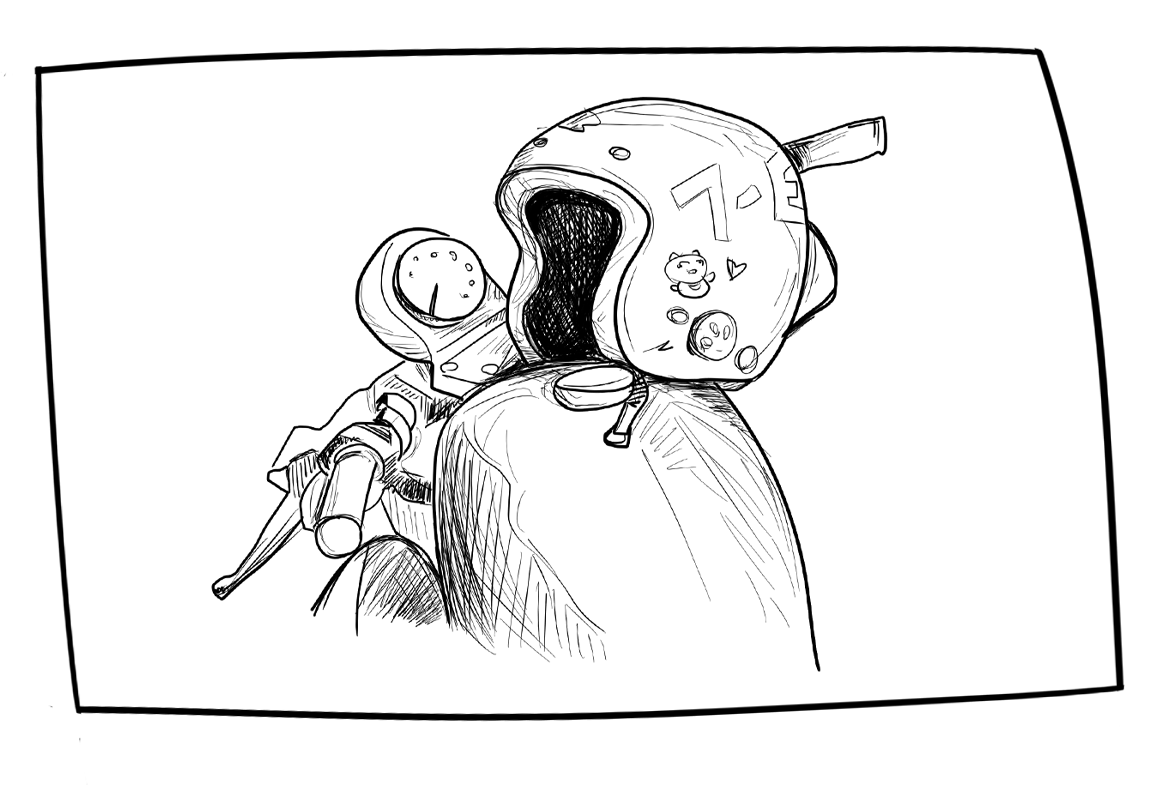
Gong Jun looks up from the handlebars, taking in the expanse of the abandoned parking lot that stretches out in front of him. It’s peaceful, a patch of concrete land in the middle of a dried up field, away from the city’s soundscape. Close to dusk, and with no motorbikes around, he almost feels like he’s fallen asleep, like it’s another blurry dream with just him and Zhehan, not anchored to a time or a place.
“Last chance to save your bike,” he says, flexing his palms on the leather handles.
Zhehan considers him from underneath his helmet. He’s standing a few steps away, where Gong Jun can see his gleeful smirk. He inclines his head as he clicks his tongue. “There’s nobody around to see. If you’re terrible, it’ll just be our secret.”
What a convincing fool, Gong Jun thinks. His protests are gratuitous, an attempt to get Zhehan to sweet talk him into it. Once he’s drunk his fill, he straightens up and nods. “Ok. How can I — “
“Turn the key first,” Zhehan says, pointing at it with his chin. “Hold down the brake.” He puts his hand over Gong Jun’s, on the right handlebar, squeezing softly. The bike stays in place, silent, in charted territory. Gong Jun’s heart, in contrast, feels ready to jump out of his chest.
“Like that?”
“Yeah.”
“And now?”
“Keep holding the brake and slowly pull the accelerator.”
Zhehan leans his body over Gong Jun’s back, not touching, and brings his other hand over Gong Jun’s left. This close, he can smell the floral scent coming off of Zhehan’s skin, rich and heady, one that even the rain couldn’t wash away. Gong Jun’s fingers spasm, as if electrified, and his distraction makes him yelp when the bike comes alive with a roar.
“Don’t worry, you’ve got the brakes,” Zhehan says, dangerously close to Gong Jun’s ear. “Take it a little slower.”
Gong Jun nods, bumps his back into Zhehan’s chest. “Let me try again.”
He realigns his body as he goes through the same motions. Key. Brake. Accelerator. The thrum of the bike feels a little steadier this time, more familiar. He listens as Zhehan tells him to release the brake, and feels the bike move forward, the motion slow and smooth. He concentrates on keeping his balance, on eyeing the little bump — the target they’ve set for his first run. The comforting heat of Zhehan’s body, which he’d come to associate with riding the bike, is soon nowhere to be found. He doesn’t mind as much, as it gets overtaken by a congratulatory breeze of air.
Passing the target spot, his hands panic as he keeps moving towards a pile of rubble that once used to be a wall. He pulls on the brakes and the bike comes to a jerky stop, his butt sliding forward and bumping his knees into the steering wheel. Zhehan jogs to catch up with him, laughing. He claps Gong Jun on the shoulder with a triumphant cheer. “Nice first try!”
It’s exactly the smile that Gong Jun was hoping for — exaggeratedly proud. He clears his throat. “How can I get it to stop more smoothly?”
He listens to Zhehan’s instructions, practices his stops and starts, and attempts a shaky wide turn. When Zhehan demonstrates it, it looks easy, elegant. When he tries to mimic him, Gong Jun almost turns the bike over. He barely yanks it back to balance and Zhehan’s returned to goading him: “Do you think we can try some traffic simulations?”
The sun’s almost disappeared, at this point, the sky fading from a vivid pink into the cooler hues of the early evening. It’s still impossibly humid. Gong Jun’s T-shirt sticks to his back, making his skin itch. When he fidgets, trying to reach a spot just under his left shoulder blade, Zhehan doesn’t blink. He runs his fingertips over the damp cotton, drying up all the protests in Gong Jun’s throat, making him slump forward in the bike seat. “As long as there are no other bikes,” he says, caving.
“That’s the nature of a simulation,” Zhehan says. He stops the scratching and flicks Gong Jun on the back.
“Don’t get all cocky on me!” Gong Jun says, catching his hand.
Zhehan’s face dimples in another smirk. When Gong Jun lets go of his finger, he rubs his palm over his pants, brushing off invisible lint. “Let me show you how to swerve.”
They sit down on the curb, once the excitement has died down and the motorbike is parked a safe distance away. It’s a brief whiff of reality — both of them slouching over their phones — one that Gong’s keen to suppress. He finally messages his security guard, who’s grown reasonably concerned. He sends a quick text to his cousin, and a polite reply to his mom, whose questions he’s left unread since his plane landed. His manager’s new message, he ignores. Even four years later, Zhehan is still an exception to his rules, one of the few people in whose company the phone doesn’t feel like a shield.
“What time’s your party?” Zhehan asks, chin in hand.
“Starts at six.”
Zhehan frowns at him, unlocks his phone again, and his mouth drops open. “It’s six fifteen.”
“Not going to make it.” Gong Jun shrugs, and smiles at the way Zhehan’s face smooths out, the satisfaction obvious. His excuse is all but perfunctory. “Too tired.”
“Want me to drive you back to the hotel?”
“No,” Gong Jun says. I want you to keep me company, he keeps to himself, and looks at the skyline, with the sun fading away behind purple clouds, the pollution disappearing into the shadows of the night sky. “Can you show me more of the city?”
“Sure,” Zhehan says. He tries to push off from the curb, but winces at the effort, grabbing onto his knee. Gong Jun’s quick to jump up, to steady him and help him stand.
“Easy,” he says, and Zhehan squeezes his palm in silent gratitude. Gong Jun’s not sure if it’s muscle memory, or that the driving lesson has been its own kind of shock therapy, but the casual touch no longer sends his pulse skyrocketing.
“Are you hungry yet?” Zhehan asks.
He isn’t—not for food, at least—but Gong Jun’s not about to admit that. There’s no way he can say no to Zhehan’s buzzing enthusiasm.
The city has a different energy at night. In the vivid sunshine, it seemed like an anthill, thrumming with a steady workbeat — the swarming roads enough to offset the sight of taxi drivers stealing a cigarette break on sidewalk hammocks, and office workers congregating around park benches, polystyrene boxes laden with barbecued pork and steaming rice. The heat of the day, too, had a presence of its own. It made Gong Jun’s limbs feel heavy, like it was sitting atop his shoulders.
The night has stayed warm, but a pleasant wind picks up as Zhehan drives them over a bridge and into the bustling city, now alive with sounds and sights of well-deserved leisure.
Gong Jun watches the other scooters pass them by. Families, mostly, but also couples pressed together, some of them dressed up to the nines, girls sitting side-saddle with arms clutched around their partners’ waists. He keeps his hands to himself, even as the memory of Zhehan’s palms on his back feels as alive as the lit-up streets. Calculates a careful distance, not enough to touch, but close enough to stare at the little patch of exposed skin on Zhehan’s nape and wonder if he can feel his breath.
“Do you feel like walking?” Zhehan asks, while they’re sitting at a traffic light. He leans back, hands coming to rest on his thighs, and Gong Jun’s struck by the horrifying realisation that this, too—a mundane show of Zhehan’s driving competence, his exposed ankles, and the way he lets the engine run, not sparing the road a single wasted glance—has him seeking more space on the bike, shuffling backwards.
He agrees, and the lights turn green. When he lets out another sigh, he sees the goosebumps on Zhehan’s neck.
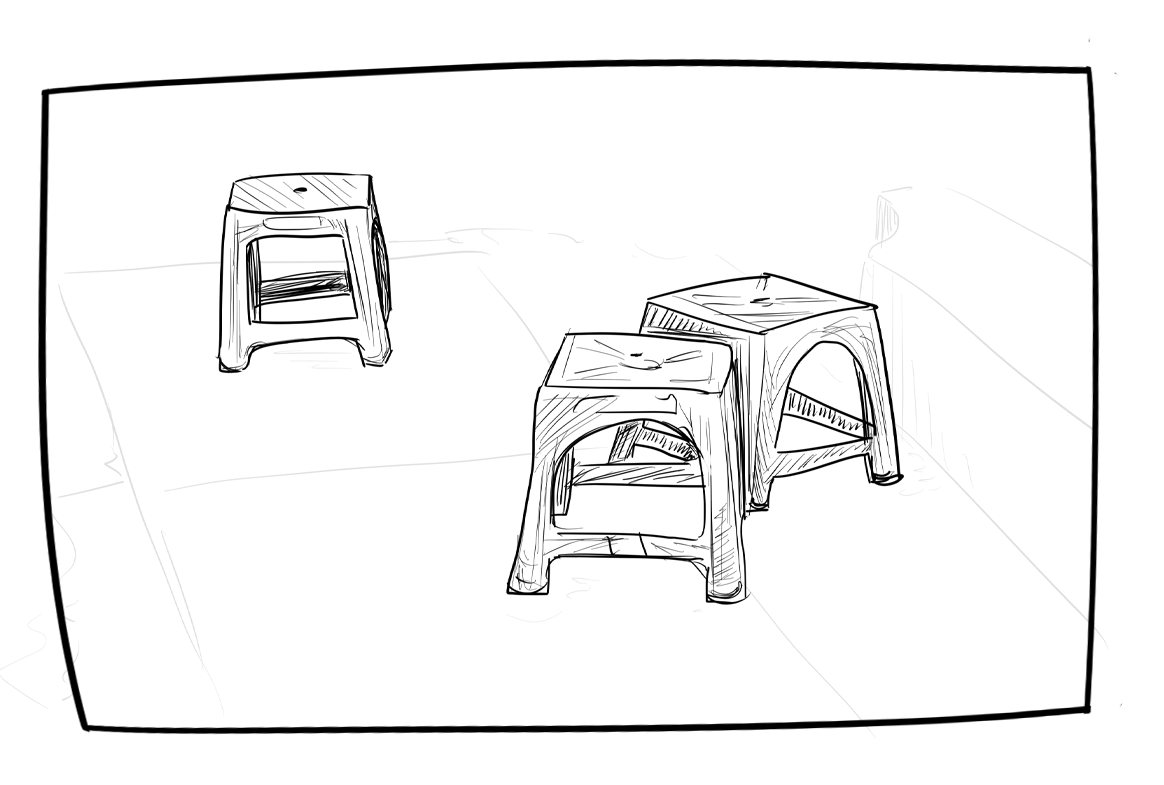
In the rundown parking lot, Gong Jun pockets the ticket, then struggles with the latch of his helmet. Zhehan helps him unbluckle it. There’s a permanent ghost of a smile on his face, as he nudges Gong Jun with his shoulder and starts walking them in the right direction. A seafood place on the right, a noodle stall on the opposite side, he keeps pointing out the dinner options. They go from a busy street–pavement taken over by parked scooters, groups of people sitting on tiny chairs, drinking beer and chatting over bubbling hotpots–into a busier one, with market stalls stretched along the road.
“What do you feel like having?” Zhehan asks, leading him full-on into the chaos of sizzling pans, shouted orders, and workers drunk on socialising.
“What are your favourites?”
Zhehan doesn’t answer. He sets his jaw, challenge accepted, and surveys the vendors and their stalls, while Gong Jun waits for his steps to stutter. Even in the middle of the bustling market, oncoming motorbikes keep forcing their way through the crowd, making his shoulders bump into Zhehan’s with every unexpected honk.
“You like shrimp, right?”
“Mn.”
Gong Jun relishes the feeling of being pulled along by the crowd — just one more pedestrian, onlooker, customer, a curious set of eyes searching for the perfect dinner, a body that’s more than the sum of its parts. He’s not Gong Jun the actor and nobody spares him a second glance. It’s freeing, and it’s dazzling, especially when Zhehan finally stops in his tracks, gives him a meaningful grin, and points at a huddle of unassuming carts on the street corner, where the market diverges into a smaller alley.
“You can speak some of it,” Gong Jun says, once they’ve grabbed a pair of tiny footstools and Zhehan has charmed his way through an order in careful Vietnamese, the translation app on his phone ready to fill in the gaps.
“I’ve lived here for almost two years,” Zhehan says, rolling his eyes. “That was nothing to be proud of.”
“You can order yourself food,” Gong Jun says, flinching when a motorbike flies past at such close distance it makes his hair flutter. “That counts for something.”
Zhehan grimaces, but his smile is pleased. “Let’s see if we get what I wanted.”
Their table turns into a small buffet: spring rolls with three types of sauces from one cart, two plastic bags of what looks like mango salad with strips of rice paper, plates of shellfish in buttery herbs, and glasses of fruit, floating in coconut milk. Right away, Gong Jun bites into a chilli that sets his mouth on fire. He drowns the pain in coconut slush and grimaces at the combination, while Zhehan watches him with amusement, chewing on a spring roll.
“Do you eat out a lot?” Gong Jun asks, once he’s back to sweating because of the warm evening, not the spicy salad.
“Don’t you remember?” Zhehan scolds, jokingly. “I’m a terrible cook.”
“Maybe you’ve improved,” Gong Jun says, giving him the benefit of the doubt.
“Still hopeless,” Zhehan says, saluting, like he’s proud of it. He picks up another spring roll, but stops himself just short of biting into it. “I miss Chinese food, though. There’s lots of options around, but not that much Jiangxi fare.”
Gong Jun spoons a lychee out of his glass, chews on it, and stares at the other side of the market road, where a number of tables have been pushed together and a lady in bright pink pyjama pants is plugging in a karaoke machine. He purses his lips, careful. “I could cook something for you tomorrow, if you want. What do you miss the most?”
Zhehan’s mouth falls open, and the sauce drips down from his spring roll, down his wrist and onto the dark pavement. He wolfs it down in a bite, wipes his hand, and hums. Like he’s thought about it, accepted it, and has no further questions. “Xinyu noodles. Good river snails. And I’d kill for anything with Yugan peppers.”
“Is there someplace you can buy those?”
“Yeah, there’s a market near my cousin’s house. But they’re pretty expensive and — ” Zhehan says and his face falls a little, at last, making Gong Jun panic, “I can’t keep you. You’ve got the wedding tomorrow, and we already spent the day together.”
That’s barely enough, Gong Jun has to bite his tongue, not to blurt out his thoughts, tamp them down with a polite shake of his head. He sets the now-empty dessert glass on the table and smiles. “I haven’t had Jiangxi food in ages. It would be half selfish, don’t worry.”
It’s not the full truth, but it’s genuine enough that his body isn’t showing any of his usual tells — the nervous jump of his right knee, the way he likes to accordion his fingers, squeezing at the knuckles. He hasn’t had Jiangxi dishes in over a year, that’s the honest bit. The unspoken reason is that the last time he had fen zheng rou was at an end-of-filming party, and the only thing he remembers from the occasion is the heavy way the pork sat in his stomach, like a stone.
He hated it, at the time. How an innocuous meal could turn the banquet into a personal pity party. How it could, almost four years later, make him remember Zhehan and bring on that specific kind of pain. Phantom pain, he’d call it in his mind — one that felt real enough to draw tears, but didn’t feel justified enough to let them fall. He wasn’t allowed the pain, not the full brunt of it. In the tapestry of Zhehan’s life, Gong Jun’s significance seemed only temporary — like the two motorbikes on the corner, yielding briefly to one another on the way to their own private destination.
“Remind me to buy a wok,” Zhehan says, interrupting his thoughts. “And a better set of —”
His words get drowned out by the burgeoning karaoke party. The participants muddle their way through the first verse, passing around a pair of flashing mics, then erupt into a passionate and tuneless chorus. Those walking by barely spare them more than an amused glance, the vendors keep shouting over the music, and motorbikes add to the soundscape with their intermittent honks. Gong Jun feels the synth beat reverberate through his body and he’s charmed by the chaos, as Zhehan seems to be too, although when Gong Jun turns around, it’s not the singers he’s looking at.
“Want to join them?” Zhehan says, bumping his knee with his own.
“And steal all the attention?” Gong Jun points out.
“I miss your singing,” Zhehan says. His tone is teasing, but his smile is altogether too fond.
“I still do it,” Gong Jun says, and has to repeat himself, when his words get drowned out by a particularly loud attempt at harmony. “Just private concerts, these days. Figured I might as well capitalise on the skill.”
As much as it’s a joke, it’s also a deflection. For years, his singing remained a favourite skit for many a variety host, something that his manager would try to persuade him to do, because everyone loves it, it makes you real. He didn’t mind the ribbing, or the gentle teasing, but he cut himself off when he realised that a part of him — and the hosts, too — would forever associate his tuneless attempts with the melodious missing half. As long as you’re happy.
“I miss your singing, too,” Gong Jun says, and he turns his face away from Zhehan, pretending to observe how the singers bicker it out over what mournful ballad to put on next.
Two young girls garrison the karaoke machine, newcomers who’ve just parked nearby and hurried to join the festivities. Their voices are captivating enough that Gong Jun relaxes, enjoying the show — for a few minutes, the girls’ singing truly seems to slow down the street. When the illusion’s broken, Zhehan piles up their empty dishes and looks at him with an obvious question.
“Are you tired?”
“No.”
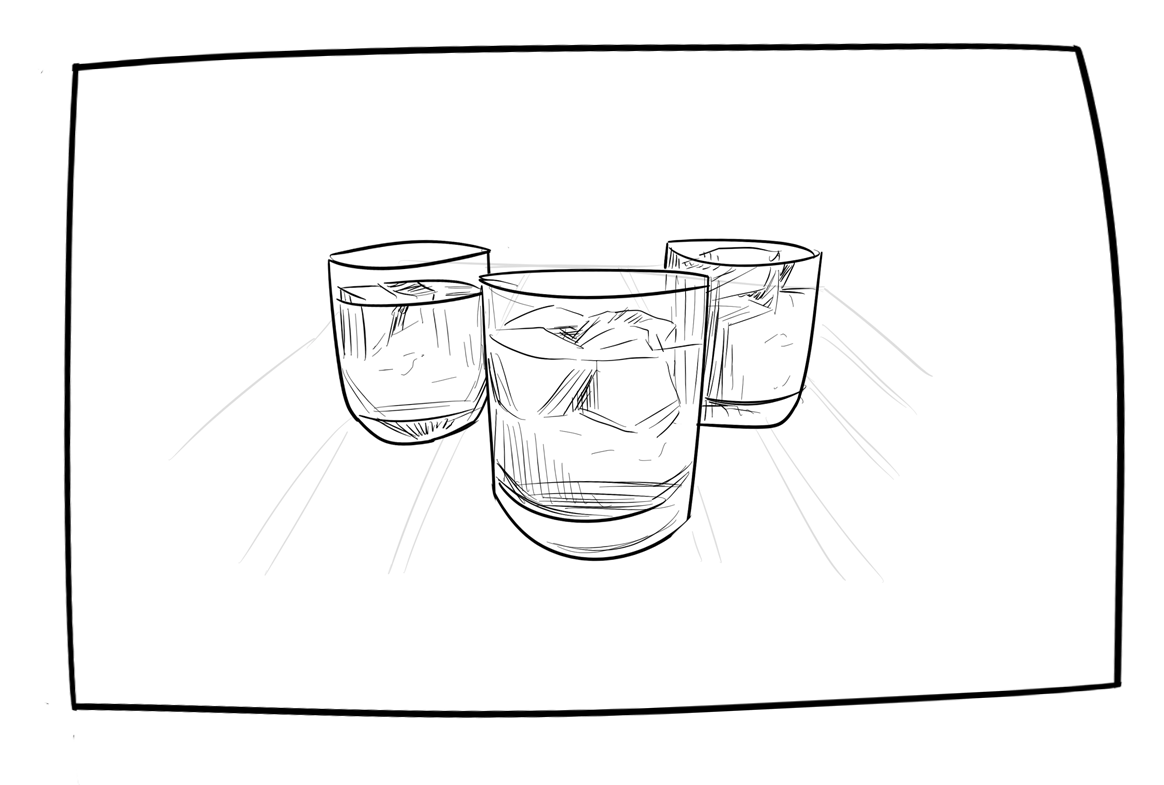
Zhehan drives them out into the city and cruises down random streets, without much purpose at all. The humidity is still so thick it feels like the bike is cutting through it on sheer force of will. Gong Jun sees the sweat pool on the edge of Zhehan’s collar, on that little patch of skin that’s going to be seared into his mind for days to come.
“Let me know if you see more than five passengers. I’ve got a bet going with Xiaoyu,” Zhehan says, as they get overtaken by another motorbike that’s carrying a family of five — father behind the handlebars, mother cushioning the back, and three toddlers squeezed between their bodies like hawthorns on a tanghulu stick.
He keeps inclining his head, muttering this or that innocuous comment, as they pass alongside the river canal. It looks more romantic, at night, with wrought iron street lamps and sparse traffic that almost gives them privacy.
“This district reminds me of downtown Shanghai,” Zhehan says, when they swerve back into a maze of streets and alleys, the colourful business signs blurring before Gong Jun’s eyes as he struggles to make out the district number.
District 10, he finally figures out, while waiting for a greenlight. He could just as well be a body dropped into the middle of a desert, with no compass and no coordinates, the number means nothing to him. He makes a mental note of it, though, and the mismatched buildings — a rundown temple with a green rooftop, a luxurious dim sum hall, a hospital with a fleet of motorbike taxi drivers, smoking by the entrance — to catalogue inside his mind, for later, when he’ll write it down into his messy notes app.
They get off the bike at a park, a patch of greenery surrounded by a soaring mass of concrete. The deeper they walk, the easier it gets to tune out the flashing lights of the business towers and the neon hotel names, to hide under the treetops instead.
“I just realised,” Zhehan says, quieter, like he’s respecting the serene ambiance of the park. “Are you even allowed to roam the city by yourself?”
“I’m not alone,” Gong Jun says, ignoring the point. Just like he ignored the last three calls from his security guard, set his phone on vibrate, then turned it off altogether. Shameful. “I’m in good hands, right?”
Zhehan’s smile flashes something doubtful, but he nods, falling silent as they walk by a group of older men exercising on the clunky park equipment. “Just checking,” he says, arriving at one of the stone benches. “I don’t want to get into trouble with your manager.”
“She’s in China.” Gong Jun sits down with a little sigh and stretches out his legs. “She has to go along with my decisions, anyway, even when she doesn’t like them.”
“Does that happen a lot?” Zhehan says. He still sounds concerned, but also amused.
“Too often for her liking, I’m afraid,” Gong Jun says. He waves away a mosquito that’s lured in by his sweaty T-shirt, tries to squash it between his palms. He misses, but Zhehan finishes the task a mere second later, trapping the mosquito on his own thigh.
“Do you have any interesting roles coming up?” Zhehan asks, brushing his palm on his trousers. It doesn’t leave a stain. Gong Jun takes his time to answer.
“There are some options,” he says, noncommittal. It’s easier than explaining how he’s turned down the last ten interesting roles that came across his table, or bringing up the latest offer. It’s a good role, a challenging one—a sci-fi movie with an award-winning director and a strong script—and his younger self would cry tears of joy at even being considered. The conference call tomorrow could revitalise his whole career. He winces. “I don’t know how much longer I want to keep acting.”
Zhehan considers him. The broken lamp next to their bench makes it hard to gauge his expression, but there’s still enough light reflected on his face that Gong Jun can see his hesitation. “Are you bored with it?”
“No,” he says, immediately. Saying yes would be a lie, and an inconsiderate one, at that, in Zhehan’s company. “I love acting, but it’s everything else that’s the problem.” He chews on his lip, basks in the darkness of the park, in the calmness of it that seeps into his bones and allows him to ask: “What was it like, moving on?”
There’s no immediate response. Zhehan hums, letting him know that he’s thinking of an answer. He kicks at the rubble under his feet, a stone flying towards a patch of grass. “Well, I didn’t have a choice, so don’t take me for an example,” he says, with a humourless chuckle. “Being forced to stop was – painful. Like a part of me was torn away, except it sometimes felt like it wasn’t just one part. I don’t know. It hurt like hell.” He doesn’t look at Gong Jun, keeps digging a small dimple into the gravel. “I always knew I would let it go when it felt right, but I wanted to make that choice.”
Gong Jun nods, looking at his own feet, and addresses them, aware that he’s breaking the one rule that Zhehan set out for their day. “Did it stop hurting?”
“Not really,” Zhehan says. He grimaces, like the admission itself aches. “I miss acting. But like you said, all the rest of it—leaving that behind was a relief, I think.”
Gong Jun lets the ensuing silence stretch. He exhales, a little shaky, before saying: “I’m sorry. For everything.”
It’s the first time he can say it, straight to Zhehan’s face. The first time he’s not just sending a message into the responseless void, and the first time he’s putting Zhehan on the spot, forcing him to react in some way. Yell at him, for getting off scot-free, voice the very same frustration that has been plaguing Gong Jun’s mind for months following the heartbreak. Get up and leave him in the strange park, like he sometimes feels he’s left Zhehan. It’s ridiculous, all things considered–he attempted to keep in touch, did try to call, did harass Xiaoyu into giving him monthly updates–but, sometimes, Gong Jun still wonders if he didn’t give up too easily.
“Please,” Zhehan says, a little pained. He doesn’t yell and he doesn’t leave. He also doesn’t say anything else.
A group of teenagers gathers around the nearest park bench, five of them bringing over drinks in plastic sleeves and bags of snacks from a convenience store. Gong Jun lets their upbeat chatter wash over him and distract him from the awkwardness he’s brought upon their spot. Is this it? Is this how they’ll say goodbye?
One of the girls whips out her phone and starts playing a song, full blast. It’s a pleasant tune, mostly just guitar and some drums, but Zhehan visibly cringes when the singing starts. Gong Jun’s eyebrows shoot up.
“Is that one of yours?”
Zhehan doesn’t admit it, but the way his lips curl up is proof enough. Gong Jun looks back at the teens, listening to the song with more intent. He must stare with so much intensity that one of them looks up in concern and nudges her friend. Gong Jun averts his gaze in embarrassment.
“It’s nice,” he says, once the song’s sounded off. Nice, but missing something, he doesn’t finish.
“It’s generic,” Zhehan adds in his stead. “You can say it.”
“I don’t think it’s generic,” Gong Jun denies, shrugging. “Just different from your other songs.”
Another tune starts on their right, a melancholic duet that Gong Jun doesn’t need to understand to be able to guess at the lyrics. Zhehan nudges his shoulder, sheepish. “Do you want to hear a secret?”
Gong Jun hopes his nod is not too eager.
“I could put my name on the songs, if I wanted,” Zhehan says. “Nobody forced me to use the pseudonym. Not here.”
“Then why didn’t you?”
“It’ll sound horrible.” Zhehan’s smile is rueful. “Writing for other people is — it’s all about compromise. Things never turn out the way you imagine, and I didn’t want to put my name on something I wasn’t proud of. I think I wanted to be selfish with it, even if it’s silly.”
Gong Jun fights to keep his voice steady. “I think it makes complete sense.”
“Yeah?”
“Yeah.” He knocks his knee into Zhehan’s, gentle, less than a tap. “Does that mean you’re still writing your own songs?”
Instead of answering, Zhehan retaliates with a bump of his own. Their knees stay pressed together, as he hums, and Gong Jun refuses to see it as intentional. “I think that’s enough secrets for an evening,” Zhehan says, lifting an eyebrow — half playful, half tentative. “But tomorrow’s another day?”
“I’m expecting a private concert.”
“A little demanding, Junjun, don’t you think?” Zhehan lets out a breath, rolls his eyes, and stands up. “Since you bailed on the last one.”
They make a few loops around the park, walking just for the sake of walking. Or, perhaps, to make the conversation feel less loaded. It helps Gong Jun. He compartmentalises the way Zhehan’s body seems to draw towards his own, like magnets, and focuses on keeping his steps even, his words straight.
“Do you think you would’ve stayed in China, if your cousin didn’t give you the job?” he asks, fiddling with his palms.
“Probably,” Zhehan says. He’s got his own hands in his pockets, just so, the tops peeking out, like he’s stuffed them in there to keep himself from swinging them into dangerous places. “I was glad to leave, though. Being there felt suffocating.”
“It’s a big country,” Gong Jun shrugs. “I feel like I still barely know it. I’d like to travel around properly, when I have the time. Pick a place that feels right and try to move on with my life. Maybe somewhere quiet.”
“You’d go crazy in a small city,” Zhehan teases, shaking his head. “No work, bad wifi, you’d be back to Shanghai in a week.”
“Give me some credit,” Gong Jun says, mock-offended. “I think I’ve gotten it out of my system, at this point. I’m already dreading going back.”
Zhehan doesn’t have a response to that, and Gong Jun isn’t sure what kind of response he’d like to hear. He speeds up his steps, makes another half-loop around the dilapidated gazebo in the park’s centre. Zhehan follows, changing the topic to Jay Chou’s latest album, to his cousin’s terrible work ethic, to a videogame he’s been playing. They’re still discussing it when they get back to the bike.
“Let’s get you back,” Zhehan says, as he buckles the helmet under Gong Jun’s chin. His fingers touch his jaw and all Gong Jun can do is nod, bite down the silly protests that want to beg off another chunk of Zhehan’s time. He sits on the bike and fidgets with his phone, and swallows heavily when he sees the screen — almost 1am and five missed calls. He doesn’t even check the number of new messages.
In the after hours, the city is quieter, with most of the restaurants and shops shuttered. They only pass a handful of vendors, the speakers on their carts crying out into the night, looking for misplaced souls hungry for a midnight snack — fried corn, dried squid, improvised BBQ with packets of ketchup and hot sauce. Gong Jun watches the skyscraper silhouettes reflected on the river, and something about the empty streets’ privacy makes him scoot a little closer to Zhehan and put his hands on his shoulders. It’s not a romantic gesture, and it could easily pass for a friendly hold, to steady himself on the scooter. Zhehan’s muscles relax under his touch, though, and Gong Jun has to try his hardest not to lean his head forward, too.
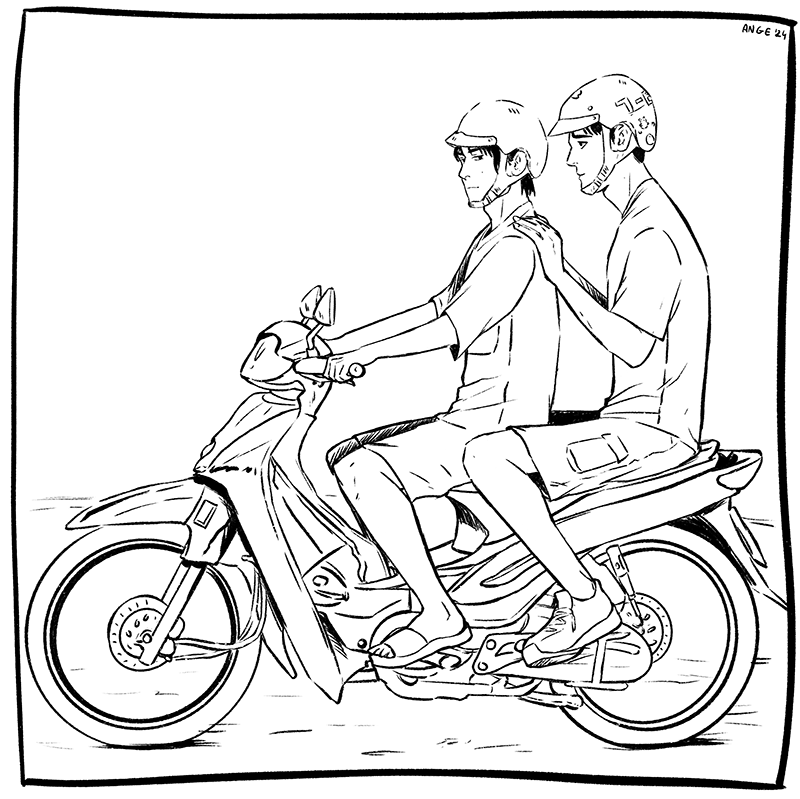
“Do you have any work tomorrow?” Gong Jun asks, standing on the curb in front of his hotel.
“Don’t you have a wedding tomorrow?”
Gong Jun shrugs and finds that, with each passing hour, his guilt has subsided—to the point where he barely has any reservations left. “We’re not that close.”
Zhehan hisses, like he’s reprimanding him, but his expression is all delight. “Cool. I’ll make an itinerary.”
“Please get some sleep.”
“Who needs sleep when there’s coffee?”
“That’s really not how it works. Do you even drink the coffee?”
He means it as a joke, but the off-hand observation seems to take Zhehan by surprise. His eyebrows lift, but his smile only grows wider. “Fine. We’ll plan as we go along.”
Gong Jun unclasps the helmet, belatedly, and hands it over to Zhehan, who reaches out for it at the same time. His touch lingers, intent, over Gong Jun’s fingers. “Eight, same place. Get some sleep.”
“You too,” Gong Jun says, squeezing Zhehan’s hand in reply.
He watches Zhehan stash the 7-Eleven helmet, turn the key, and give him one last cursory smile before he speeds down the road. Gong Jun has dreaded the sight all day — Zhehan’s motorbike fading into a single spot of light, disappearing altogether — but he feels calm now, knowing his departure is only temporary. He watches Zhehan leave, and he’ll see him return, at least once more. It’s more than he’s ever allowed himself to wish for.
When Gong Jun wakes up the next morning, it’s with a jolt. He jumps up to grab his phone, to make sure he hasn’t overslept. It’s just past six. His body won’t thank him for trying to run on less than five hours of sleep, but the thought of his morning plans makes him too jittery to consider lying back down.
Checking the messages on his phone spruces him up better than a cold shower. His mother, his manager, his poor assistant, who’s seemingly been bombarded by the rest of his team, on her own weekend vacation. Gong Jun replies to her first, reassuring her that he’s fine, though he doesn’t go into details. Out of all of them, she’s the one most likely to know why he agreed to go to the ceremony in the first place.
His manager is a tougher nut to crack. Please call me when you see this, her last message reads, and he decidedly ignores the request and types out an apologetic response. Sightseeing, catching up with family, he covers all his bases and tells her that he won’t make the noon meeting, that he’s promised his time to a maternal granduncle with ailing health.
He feels bad about it, but not like he would’ve felt with Da Xiong. His new manager is extremely competent and she’s likeable in the way a strict older aunt can be, when she’s targeting her ire at people who’ve harmed you. Their relationship is strictly transactional, and that’s why Da Xiong recommended her, after all, once she got fed up with the stress of having two full time jobs — managing Gong Jun as an actor, and protecting him, as a friend.
He scrolls down to their last conversation, some three months ago, and sends her a quick note. She’s probably spending time with her family, finally has enough of it to spare on her actual kids, not on the precarious manchild who’s dragged her into his own problems. It’s a job, she used to say, and he’d always hum his agreement.
Once again, picking his outfit is a battle between Gong Jun’s common sense (go for something nice but unassuming) and his baser instincts (wear the fitted slacks he’s brought for the wedding, and his nicest peach-pink shirt). He goes with his gut, aware that he’ll sweat through the clothes the moment he steps outside. He doesn’t know when he’ll get to see Zhehan, after today.
The next smart thing to do would be to message his bodyguard. Even smarter, he could stand up and knock on his door, bring along an apologetic beer or the promise of a bonus. As an employee, he’d happily hold his tongue, accept it as a part of his duties. But like a kid caught drawing on a wall, Gong Jun doesn’t want to face the man, and he’s intrigued by the newfound thrill of breaking his own rules. Like when he was driving that motorbike. Or admitting to Zhehan, however indirectly, that he’s barely over him.
He doesn’t do these kinds of things, not anymore. He used to be an impulsive child, jumping into puddles before thinking, staying up late watching cartoons instead of doing his homework. Choosing to be an actor, he knew he would have to tone down that brashness, and worked hard at hiding it, until letting go has become the bigger challenge. The closest he’s come to achieving a balance, he thinks, was when he got to embody Wen Kexing, and the few wonderful months that followed. Less than a year of seeing that freedom as a possibility, and, in the end, it still backfired — locked him even further into himself.
It’s a childlike form of revolt, he knows, but Gong Jun puts his phone on mute and doesn’t say anything to his security guard before leaving the hotel. The heat seems even more potent than the previous day. His outfit is wholly impractical. He lets his body cool down in the shade of the convenience store’s canopy, where customer after customer sets off the automated welcome message and lets cold air spill out onto the street.
Zhehan arrives with an exaggerated wave, stops by the curb and gives Gong Jun an obvious once-over. He extends the old helmet out to him, smirking, and doesn’t even bother with a greeting, until Gong Jun’s sitting behind his back.
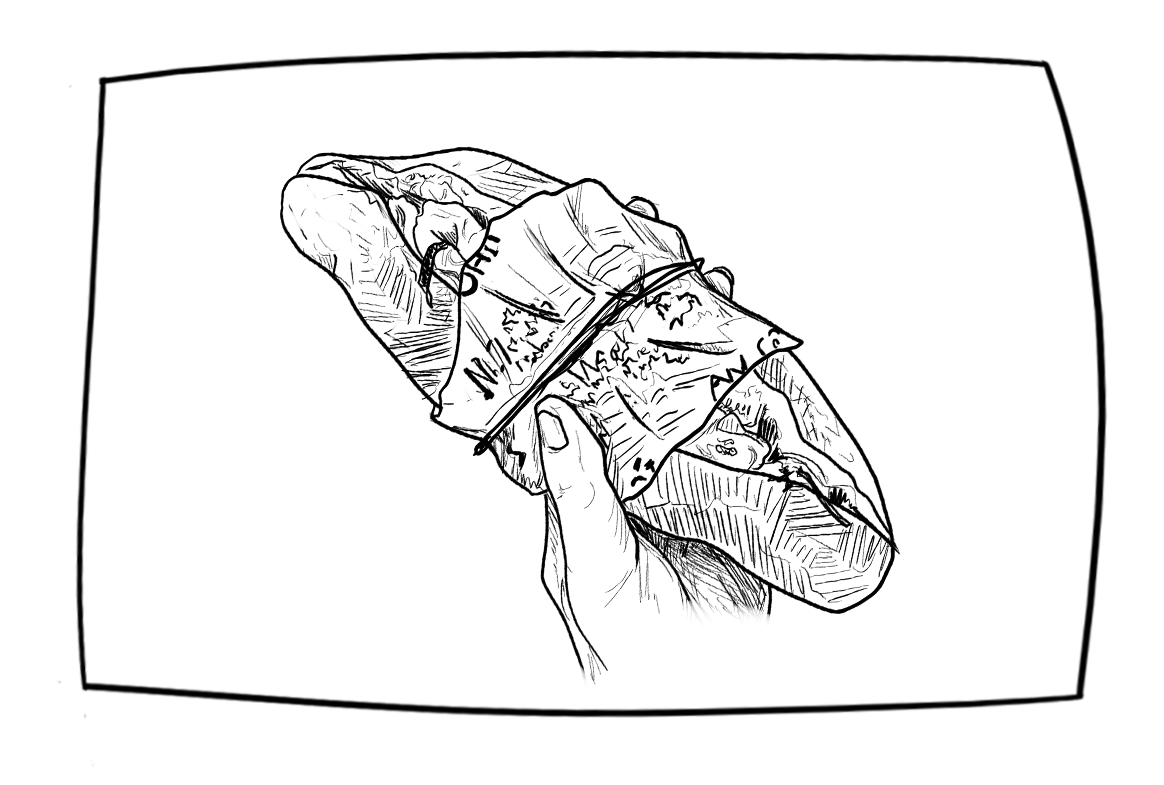
“Here, I hope you didn’t have breakfast,” Zhehan says and whips out a cup of cold coffee and a bánh mì wrapped in old newspapers. He pushes them into Gong Jun’s hands, accepting no protests, and turns the bike back on.
“You shouldn’t have,” Gong Jun says, but he’s grateful to take a sip of the coffee — strong and sweet, just like yesterday — for a shot of energy his body is craving. The day is long, and he’s intending to make the most of it.
“I gotta run some errands, if that’s okay? Take it as an apology breakfast.”
The morning commuters are an eclectic variety of office workers, policemen, aunties returning from markets, and students that look too young to drive. Gong Jun devours the food much quicker than intended — soft bread, still warm, with two eggs and enough mayo to blow his usual diet to pieces — and listens to Zhehan as he explains the plans he’s forgotten about. Omitted to mention, rather, Gong Jun suspects, as Zhehan shoots down the suggestion of meeting up later.
“I’ll just drop off these papers, twenty minutes at most,” Zhehan says, over the noise of a rumbling construction site. The dust of it has Gong Jun holding in his breath, squinting. “Then I’m all yours.”
Gong Jun doesn’t mind the diversion. He relaxes into the ride, puts his hands on Zhehan’s shoulders again, and only feels self-conscious about it for a minute or two.
“This shirt was a bad idea,” Zhehan says, acknowledging his touch. He’s wearing a dark blue one, linen and soft.
“Looks good to me,” Gong Jun says, quiet enough that the words could get lost in the street’s commotion. They don’t, and Zhehan chuckles.
“At least the intention’s paid off,” he says, turning his face a little, so Gong Jun can see his amusement. “You look good, too, by the way.”
Gong Jun stifles the urge to hide his self-satisfied grin in the dip between Zhehan’s shoulder blades.
The errands really don’t take more than half an hour. Zhehan picks up a folder from a small PR office, then drives them to his cousin’s production company. He talks about the job, more freely than yesterday – the things he’s in charge of, and the bits that get pushed onto his table, mostly administrative work that doesn’t require him to speak the language. He talks about the artists who take his songs and rework them to the point of being unrecognisable. Admits that he doesn’t have the right to complain, since that’s what they’re paying for, and mentions, on the flip side, the clients he enjoys working with, despite the language barrier. Their names fly right past Gong Jun’s head.
“Your English must be really good, now,” he says, trying not to sound too impressed.
“It’s horrible. Half of the work is having enough patience to try and understand each other,” Zhehan huffs. “Have you been learning?”
“No time,” Gong Jun says. “But I can order food, so I meet my own proficiency criteria.”
Zhehan doesn’t let him get off the bike when they arrive at his workplace, saying he’ll only be a minute. It’s not just an empty promise. He emerges almost as soon as he’s gone in, grinning, his posture a little looser. He puts his helmet back on and leans into Gong Jun’s back, on the pretense of asking: “Do you want to see Chinatown?”
“Do you spend a lot of time there?” Gong Jun wonders, once they’re on their way.
“Too much, honestly. But I avoided it for a long time after I moved here.”
“Why?”
“It was so familiar I felt like I was failing, I don’t know, my own mission to live in a different place. What’s the point, if I just surround myself with things that remind me of home?”
“Did you start missing it, after a while?” Gong Jun asks.
“Of course,” Zhehan says, with a self-effacing chuckle. “Almost immediately.”
At first glance, the Chinese district is not that different from all the others they’ve passed that morning. The Vietnamese alphabet turns into well-known characters, and Gong Jun feels a little less off balance, being able to read the signs – even if it just means knowing that the little corner shop is selling computer parts, and that the next street is part of the tailors’ quarter. The aesthetic remains the same, almost familiar, slightly off, with tall and narrow houses, cafes set-up in private family front yards, with pavements littered in motorbikes, street food stalls, and actual trash, plastic cups and bags melting in the morning sun.
“What do you want to do first? Market, or temple-hopping?”
They decide it’s too early for the former, and Zhehan turns off the main road, into an alley with colorful lanterns and birdcages adorning every second house. There’s a large temple, smack dab in the middle of the street, and the smell of incense hits Gong Jun almost as strongly as the morning shot of caffeine.
It isn’t until he’s off the bike that he feels his body grow cold, struck with horror. Zhehan’s parking, completely nonchalant, like they’re about to go into a supermarket or another coffee shop — not walk through a set temple gates, playing tourists. The realisation that makes Gong Jun want to rewind the last five minutes and erase the suggestion of temple visits altogether.
The building itself is inconspicuous, nothing they couldn’t find on a random Shanghai corner. But they’re not in Shanghai, and they’re not here to pay their respects.
Zhehan sits on the bike for a few seconds, even after the engine’s gone quiet. Gong Jun only sees his back. The way it straightens and slumps, then straightens again. There’s no hesitation on Zhehan’s face when he walks toward him and leads the way in through a side door.
Gong Jun follows, and watches him, like Zhehan’s one of the precious birds harmonising outside. Gives him space, almost expecting him to fly off, and keeps his mouth shut. It’s only customary, for a temple, the silence a show of respect rather than a shadow of the memory’s amorphous presence. It’s not even his memory, and maybe it’s not even Zhehan’s. He’s often thought about that: how much of the day had Zhehan remembered, before someone else plucked it out of a void. Was it, perhaps, just lying in a distant corner of his mind, smelling faintly of sakura blossoms, nothing but a sketch of other tourists’ mirrored excitement?
Between the shadows of the pillars, the smoke of the incense, and the flashing lights on each of the altars, Gong Jun can’t shake off the feeling that they’re being watched. He joins Zhehan by the front, presses close to him and tries to hold his gaze. Zhehan’s smile is small, strained at both corners, but he swallows and lets their hands brush.
They don’t talk, the whole time they’re inside the temple. It’s bigger than it looks from the street, branches out into a courtyard and a small garden. Zhehan walks around with an aloofness that’s always one breath too heavy, and he keeps slowing his feet, turning to look around. Catch Gong Jun’s gaze, and hold it, like he’s anchoring himself, but also like he’s saying something. With each minute, it feels more and more like they’re circling each other – a glance from behind the tower of fruit offerings, eyes meeting in their reflection on a fruit tray. Like a dance that’s choreographed to the swaying of the smoke in the air. It feels inappropriate, in a way, and also too important. Gong Jun smiles to himself over the silly thought, but he can’t help but wonder if this is what it feels like, making a memory.
Emerging from the temple, the heat’s still near sweltering, and it comes as a shock to Gong Jun’s system – to see the world speeding right ahead, motorbikes undisturbed, sun unrelenting.
“Next temple?” Zhehan asks, handing him the helmet, starting the motorbike.
“We don’t have to,” Gong Jun says, surprised at how even his voice is.
“I’ll take that as a yes.”
The ride takes less than a minute, as Zhehan takes a shortcut and drives on the wrong side of the road, to avoid the barrier in its centre. Nobody pays it any mind. They walk through the assembly hall with similar silence to their last destination, but once they’ve seen everything there is to see, Zhehan comes up to Gong Jun and says, careful: “Please stop looking at me like that.”
“Like what?”
“Like I’m a child in pain or something.” Zhehan squares his shoulders, uncomfortable. “It’s fine. I’ve been here many times.” He presses his lips together, and something complicated flashes in his expression, like he’s berating himself. He relaxes, in the end. Says: “We can walk to the next one.”
Zhehan sticks close to Gong Jun inside another smokey hall, where two dogs are chasing each other under the altar, and an elderly monk seems to be napping in his chair. “I avoided the district because of the temples, too,” he leans in to whisper.
Gong Jun doesn’t dare ask for details. He lets his gaze speak, and hopes that Zhehan will take the lead. He does. “Really, the temples couldn’t be more different. But there are bigger crowds, usually. And I was anxious – thought I’d make a scene.”
He talks, quietly, avoiding the echo of the sacred space, but relaxing in its serenity — walking in the shadows of the incense coils, suspended overhead, with nobody but the dogs and the sleeping monk around — as if the liminal space makes the words come easier. It wasn’t just the temples, Zhehan admits, it was the feeling he’d started getting in crowds, like there were too many sets of eyes, too big of a risk of somebody watching, hovering, camera at the ready. Nothing like the eager flashes of his fans, or posing on a red carpet. More vicious, calculated.
He lights one of the incense sticks, leaving money in the donation box next to the lighter, and hands one to Gong Jun, too. Keeps his quiet while they bow, then continues, rolling his eyes when he confesses that it took him almost a year to feel comfortable, stepping outside his house.
I don’t think I could do it, Gong Jun wants to say. He recalls the way it felt, those first few weeks after everything had shattered — going to work, headphones in, head down, avoiding anyone’s gaze. He suffered, being in the spotlight. Zhehan made it out, being under fire.
“And then I came here, and nobody gave a crap,” Zhehan says, when they’re back on the street, walking to the motorbike. He’s still talking a little too quietly, and Gong Jun leans down, a practised motion that’s easy to fall back into. “I guess I ran away? It sounds so egotistical when I say it out loud. Obviously not everyone back home cared —”
“It doesn’t,” Gong Jun cuts him off. “You didn’t run away. You gave yourself a fresh start — that’s brave.”
Zhehan holds his gaze for a moment, blinks and smiles, looking down at the pavement. He doesn’t say anything more, before they make it to the bike, but it doesn’t feel strained anymore — more like he’s relieved, a weight lifted off his shoulders. He plays with the scooter keys, twisting them around his finger, takes the extra helmet with a flourish and plops it down on Gong Jun’s head.
Before he’s drowned out by the engine, Gong Jun says: “But you don’t have to talk about it. I know we agreed not to.”
“You say that now, after I’ve bared my soul to you?” Zhehan clicks his tongue, amused. When Gong Jun hesitates, he quickly amends: “That was yesterday. Let’s make a different deal today.”
“What do you have in mind?”
“Total honesty,” Zhehan says. He plays with the accelerator, making the engine roar into life, as they’re still standing in place. Lets it quieten and turns around. “What do you think?”
Gong Jun thinks that agreeing to such a proposition, considering who Zhehan is, and what secrets he’s been holding onto for the last four years, would be utterly foolish. He says yes.
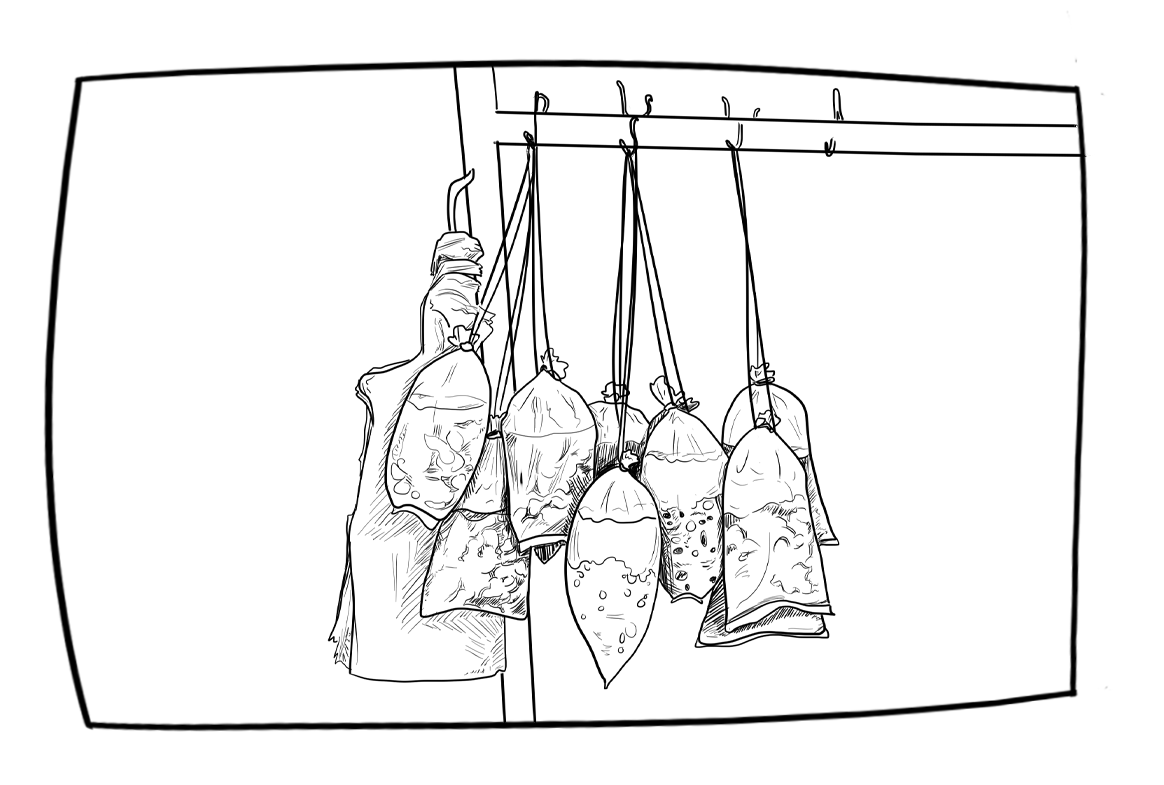
When they make it to the market, the place is positively buzzing with energy, bikes pulling up to the curb from each direction, shedding whole families, petite mothers with infants wrapped around their chest, or grandmas with their faces hidden — face masks, and goggles, and hats pulled low to hide from the sun.
It’s a familiar maze, even though Gong Jun can’t remember the last time he’s been to a proper market. Going with his family, friends, or inspecting local wares while traveling, it used to be second nature, until it wasn’t. The frenzy of it, the rapid-speed haggling, customers leaving with more plastic bags than they can carry, and vendors stashing their money into old ice-cream boxes — all of it feels like a memory from a different life, and he embraces it happily.
He cools down as they walk through the aisles lined with dried fruit and preserves. Zhehan’s asking questions — has been, since they stepped off the bike — but he’s doing it jokingly, not expecting Gong Jun to answer.
“Did you ever just want to run away? Leave a set and don’t come back?”
“Any co-stars that drove you nuts?”
“Okay, be honest now. Why’d you never release an album?”
Gong Jun replies to each of the questions with so little hesitation it catches him off-guard, too. Admits that, yeah, he’s wanted to run away many times, especially at networking events. Explains why he’s avoided any publicity with the leading actress from an older drama, but also makes sure to list her nicer qualities, blaming the whole situation on a personality clash. Laughs, and shakes his head, and bemoans the fact that most recording companies just take themselves too seriously.
They pick up ingredients for lunch — fresh pork, wormwood, about five different kinds of peppers — and Gong Jun hides his concern with each pot, pan, and ladle that gets added to their haul. Zhehan haggles with the river snails seller, shoots Gong Jun playful grimaces as he struggles through his Vietnamese, resorting to gestures and finger counts.
“Do you shop at the markets a lot?” Gong Jun asks, charmed. He’s never been good at this kind of transactional talk, even in Chinese. Zhehan seems to delight in it, however, even as the auntie frowns at him from behind her scales, good-naturedly, like she’s impressed by his stubbornness.
“Yeah, it’s cheaper.”
Gong Jun raises an eyebrow. He wants to tease Zhehan that, surely, he doesn’t need to worry about money too much. Bites into his tongue to remind himself that though the money paled in comparison to other repercussions, Zhehan still had to pay up, in the literal sense.
“Don’t laugh! I know I always made fun of you for pinching pennies,” Zhehan says, reading his expression wrong. “But it’s the principle of it! I won’t pay three times the price for wilted supermarket herbs when I can buy them fresh.”
“I didn’t say anything,” Gong Jun says, smiling. “But what do you even do with the fresh herbs? I thought you didn’t cook?”
“I can chop some herbs to go with my instant ramen, thank you very much,” Zhehan says.
“And I suppose you buy the ramen at the market, too?”
“Hush!”
With most of the ingredients acquired, they take a lazy loop around the food court in the middle of the market. It’s about as busy as expected, given the approaching lunchtime, but having to push their way through the hungry crowds still feels completely bizarre to Gong Jun — nobody is trying to snap a quick picture, or score a signature for their magazine. It has its disadvantages, like the elbows that dig into his sides when he’s not careful, or the level of noise, which makes speaking to Zhehan impossible. But he keeps leaning down, they share knowing smiles, and Zhehan tugs at his wrist, at one point, dragging him towards a small dessert stall near the market’s entrance.
“Okay, more questions,” he says, once he’s bought them both a plastic cup filled with ginger syrup and rice balls. It feels a little senseless to Gong Jun to eat dessert before he’s even started cooking lunch, but then, nothing about the day would fit into his sensible routine. He wipes the guilt from his mind and eats the biggest dumpling in one go. It’s not such a great idea, as he almost chokes on it when Zhehan asks: “Do you have a partner that you’re hiding from your fans?”
Zhehan’s smirking as he says it, but the way he lowers his gaze and focuses on fishing out a rice ball makes the question feel more loaded. Total honesty, Gong Jun remembers his words. “No,” he answers, simply, and resists the urge to elbow Zhehan and play it off as a silly question. “You?”
“No,” Zhehan says, with an amount of deliberateness that has Gong Jun biting at his lower lip. “Wouldn’t have to hide anyone, these days.”
Even years ago, Gong Jun thinks, Zhehan wouldn’t have felt comfortable hiding anyone. He was good at viewing acting as his job, a separate persona, one with bits and pieces concealed but not erased. Sometimes, he’d let them peek through — a controlled blurring of the edges that might’ve seemed unintentional. Maybe that’s why everything happened.
Gong Jun’s always felt torn about acknowledging Zhehan’s small transgressions — it skirted too close to blaming the victim. But ignoring them, on the other hand, meant ignoring some of the things that made him love the man.
“Have you dated anyone since coming here?” Gong Jun asks. Now that the door’s been opened, he finds it hard not to indulge his curiosity.
“It’s been two years,” Zhehan says with a shrug, like it would be ridiculous to think otherwise. Gong Jun needs to remind himself that, for most people, it probably is. His failures to find anything past a brief acquaintance are nobody’s fault but his own, and there’s absolutely no reason to feel a spike of jealousy at Zhehan’s words.
“What about you?”
“I tried,” Gong Jun says, mimicking the leisurely shrug. “Didn’t work very well with my schedule.”
It’s a paltry excuse, at best, but one he hopes Zhehan will empathise with. He best knows what the rush of filming feels like. The quick pull of it, the satisfaction that comes from disappearing into a role and blocking out the outside world. On a conscious level, Gong Jun’s aware that investing so much of himself in the fiction — that of his characters, and that of Gong Jun the actor — is not healthy, nor worthwhile. On a deeper, primal level, the urge to throw himself into his work, to ignore all the cracks in private Gong Jun’s life, has always been greater.
His fingers flex around his cup, fighting off the sudden urge to whip out his phone. Cut the charade off, instead of biding his time.
“Aiya, I told you you shouldn’t put your career first,” Zhehan jokes, and Gong Jun’s grateful for the distraction. “Who’s going to take care of you, when you’re old and grey? You can’t keep your poor assistant around forever.”
“I pay her nicely, I don’t think she’d mind,” Gong Jun jokes, swallowing the last rice ball and grimacing at the sting of raw ginger. “Or I’ll move to the US. Retire in one of those big resorts.”
“You don’t even speak the language,” Zhehan says, rolling his eyes.
“I’ll have plenty of time to learn between games of chess and reading.”
Gong Jun’s happy to let the conversation move into easier territory — joking about their retirement pursuits, how they’d like to live out the clichéd world travel fantasies and take pictures at overpriced tourist sites. He’s not done with the previous topic, but he knows, now, that Zhehan will tell him everything, so long as he asks. And he’s not in a rush to push. Not yet.
Gong Jun gets back on the bike with ease, the motions almost routine: Zhehan kicks down the pegs, he straddles the backseat, and they back out of the spot without waiting, the traffic flowing around them.
“Are you still reading a lot?”
“I try to,” Zhehan says, leaning his head back. A few metres ahead, a bus honks as it joins their line, and Gong Juns squeezes his side, making sure he’s paying attention. It’s unnecessary, momentary adrenaline making him act before he thinks. Zhehan doesn’t mention it. “Are you after recommendations?”
“Maybe. Do you have any?”
Zhehan recaps his latest read — a somewhat philosophical tale about loneliness and chance encounters — and the two before that. Gong Jun offers some picks from his own list, and indulges in the proud look that he can decipher under Zhehan’s helmet. “You’ve been reading a lot more, huh?”
“I try to,” Gong Jun echoes, settling for a half truth. Not total honesty, but only a lie by omission. It might not even count, he reasons, since Zhehan’s asked him about reading, not writing. “You were right that reading scripts is not the same.”
“What about the fan stories,” Zhehan says, honking as they fly through a junction, not bothering to check the sideroads, “do you still read those?”
Gong Jun flushes. This answer, he can give with total peace of mind. “No.”
The building Zhehan lives in could be a line for line, window for window copy of his former Shanghai apartment tower. Thirty stories of concrete and polished glass, and a uniformed girl behind the front desk who greets them with a polite bow. The elevator plays an advertising jingle as Gong Jun stares at the overjoyed family on a poster advertising fish sauce, to distract himself from the way Zhehan leans towards his side, with nobody but them in the expanse of the cabin.
“It’s very empty,” Zhehan warns, fumbling with his key. The hallway on his floor looks and smells exactly like the lobby, of disinfectant and fresh paint. “I don’t spend much time here.”
The first thing Gong Jun notices, stepping into the dark flat, is the way his ill-advised shirt clings to his skin, the sweat pooling on his lower back. As if on cue, before Zhehan even opens the curtains or turns the lights on, he rushes to switch on the aircon. Both of them seem a little out of breath, despite the elevator ride.
“You can put everything over there,” Zhehan says, pointing towards the kitchen area.
Gong Jun’s taken it upon himself to carry all of their bags, and underestimated the collective weight of their purchases. There’ll be way too much food, and he’ll probably leave Zhehan with enough leftovers for the whole week. Something about that thought makes his heart jump.
The room is narrow but long, and looks both empty and like an overgrown storage space. The little furniture Zhehan has — a sofa with a TV right by the balcony doors, a keyboard in the middle of the room, an expensive dinner table pushed into a corner — is arranged haphazardly.
Gong Jun’s no stranger to random apartment layouts, but the place feels less lived in than some of his short term rentals. The only spot with discernable character is the dinner table, its surface clean and polished, but littered with everything from laundry to tangled-up chargers. Whoever’s been responsible for the cleaning must have lifted the bric-a-brac, wiped the table, and put them down in the same spot. He teases Zhehan about it.
“I tip extra for it,” he says, not the least bit apologetic. He claps his hands together with enthusiasm. “Tell me what I need to chop.”
“I don’t think that’s a good idea,” Gong Jun says, smiling. He starts unpacking the groceries, familiarizing himself with the kitchen space. “Do you remember what happened when we made the snail noodle soup?”
“That was ages ago, maybe I’ve improved,” Zhehan says, laughing at the memory.
It was the last time they had dinner together in Gong Jun’s trailer, a week before filming wrapped. The days had been strange, filled with last minute reshoots, long hours that seemed to pass in a flash, and both of them had felt a little on edge. Drawn back. Quiet. Until Zhehan chopped his nail off while cutting peppers, and the tension seemed to drip out of him alongside the blood.
“What will you do when I’m not around?” Gong Jun teased him, first-aid kit at the ready, holding his hand as he wrapped the bandage around his thumb.
“You’ll just have to stick around,” Zhehan said, then, like he needed to hear himself say it out loud.
“Do you want anything to drink?” he asks, now, opening the fridge.
It’s emptier than Gong Jun’s minibar and he cringes, taking a peek. “Are you sure you want chopping duty?”
“Have some faith,” Zhehan says. He pours them both a glass of something orange that smells of artificial fruit syrup.
Having successfully skirted in and out of dangerous territory all morning, Gong Jun takes a sip and asks: “You really don’t drink the coffee, do you?”
“It’s too sweet,” Zhehan says, but given the pointed raise of his illicit sludge, he’s aware of how weak the lie is. More than that, he’s being deliberate, asking for further questions, inviting Gong Jun to play the game.
“Please don’t say it’s a weight thing,” he says, giving up on the drink and setting it down on the kitchen counter. He used to love orange juice, but he barely drinks soda these days.”You never worried about that.”
“Oh, I did,” Zhehan says, shrugging. “It’s part of the industry, it would be naive to think that looks don’t play a role.”
“But you like exercising,” Gong Jun says, and pauses, catching himself in the assumption. He hopes it’s still true. Zhehan often said that the gym was one of the few places that helped him clear his mind, and losing that, alongside everything else, would be another cruel stroke of fate.
“Luckily,” Zhehan says, and downs the rest of his drink. The ice-cubes have barely melted. “I always took it for granted, too, until I got injured. You’d never guess, but getting out of shape after surgery makes casting agents less generous.”
Gong Jun hums, but he’s not sure where to steer the conversation. He moves towards the sink and starts washing the vegetables, drowning out his thoughts in the sound of running water. Zhehan joins him, after flaunting the rice cooker — it still has the warranty sticker on the lid — and starts drying the vegetables with a kitchen towel, ostentatious, like he’s performing a culinary trick worthy of a Michelin chef.
“I had trouble sleeping, for a while,” Zhehan says, once they fall into a rhythm. “Stopped drinking coffee and tea and then it was hard to get back to it. It just makes me anxious.”
Gong Jun washes the peppers for much longer than he needs to. Their hands brush when Gong Jun passes them on, and he worries at his lower lip. “Are you sleeping better these days?”
Zhehan just gives him a pointed look, something between exasperation and fondness, but he hums. “Yeah.”
As they talk — more questions, fewer answers — Gong Jun’s grateful that he’s a good enough cook for the motions to feel mechanical. He’s thankful for the distraction, too, that he has something to do with his hands, while Zhehan asks him about his family, his fans, the esports teams he’s rooting for these days. He retaliates in kind, and marvels at the way things can completely change in four years’ time, and still stay the same.
“Xiaoyu never mentioned that he got married,” he mutters, while he’s shallow-frying the snails with garlic and ginger.
“He probably didn’t think you’d care.” At Gong Jun’s panicked look, Zhehan continues: “Don’t be offended, the two of you are not exactly close. You have one conversation topic.”
“Have you read any of the messages?” Gong Jun asks, because Zhehan’s right, and he doesn’t like it. His question’s met with a longer silence, as Zhehan circles the kitchen island and folds his arms over it, leaning forward.
“Some of them,” Zhehan admits.
It makes Gong Jun flush, though he’d considered that a possibility, each time he sent a new one. Zhehan’s right that the intermittent communication between him and Xiaoyu always had a singular focus. Gong Jun kept the exchanges brief, neutral, like he was checking the weather forecast — and Xiaoyu answered in the same manner, shooting off quick responses of ‘all good’, ‘he’s fine’, ‘relax’. He’d fired back at Gong Jun, once, telling him to address his questions elsewhere. The request got steadfastly ignored and he went back to the reassurances, up until six months ago, when Gong Jun had stopped asking.
“Why did you never reply?”
He sees Zhehan fidget, scratch at the skin below his ear. Gong Jun narrows his gaze. “Total honesty,” Gong Jun says under his breath, like it’s not a shield he’s using to deflect the fear of having to explain his own skeletons.
Zhehan avoids Gong Jun’s gaze as he thinks his words through. “I didn’t want to get anyone else involved in the mess,” he says, nice and general, though his tone is strangely pointed. “Figured that cutting you off was the safest thing to do.”
Please unfollow me. Gong Jun remembers Zhehan’s last messages, could recite them in his sleep. Don’t message me, Gong-laoshi.
His stirring picks up in intensity as he squares his jaw. It’s what he’d hoped for, sometimes. That Zhehan’s silence was a sign that he cared, in some way, to some extent. That he wasn’t the only one who’d kept their summer close to his heart, and that, despite everything, Zhehan still trusted him enough to try and protect him.
It’s what he feared, too, the possibility of Zhehan pulling such a self-sacrificing stunt, while everything else had already been ripped away from him. That, stripped of his voice to speak out for himself, he applied the rest of his abilities to make other choices. Not in his own interest, but that of the people he had no reason to trust.
“That was stupid of you,” Gong Jun mutters, barely a whisper, easy to miss between the crackling of the oil in the wok, and the unnecessary nervous clicks of his chopsticks against the iron bottom.
“Maybe,” Zhehan says.
Gong Jun doesn’t turn around, feels like it would be a dangerous thing to do, while he’s still schooling his expression back into something less hurt. He feels the weight of Zhehan’s eyes on his back, though. Zhehan coughs before he speaks again. “Why did you keep asking?”
Of course. Total honesty. Gong Jun sighs, turns the heat off and starts beating some eggs, relishing the chance to apply his nervousness to the task. “You know why.”
“It was just a few months,” Zhehan says, after another heavy pause. “I didn’t think it’d meant that much to you.”
“It meant —”
Everything? He can’t bring himself to say it, an altogether silly and sentimental confession that’s too close for comfort. At times, he’s even felt resentful about it. It’s not like Gong Jun set out to have his life thrown upside down by one stupid summer, by one stupid man. He moved on, got new roles, found other men, kept repeating to himself that what he felt was not grief, and that there was no point dwelling on it. Still, there was no denying that his life had changed, irrevocably, after that one summer.
“It meant a lot,” he finishes, faint, inadequate. He cracks another egg into the bowl, just for something else to do, like he can’t afford to let his hands still. Some of the contents spill out to leave splatters across the kitchen counter as he beats them, but he doesn’t stop, not until the eggs start turning foamy and he hears Zhehan let out a heavy breath.
The sound of footsteps warns Gong Jun, but he still freezes when he first feels the arms wrap around his back. He almost fights them off, the frantic whipping motion hard to pause, even as Zhehan locks his elbows across his chest and rests his head between Gong Jun’s shoulder blades.
“I’m sorry,” Zhehan says, into the sweaty mess that’s Gong Jun’s shirt.
“Stop it. You shouldn’t be —”
“It meant a lot to me, too.” Zhehan squeezes him, shifts his head so that he’s resting the side of his face against Gong Jun’s back.
The first time they stood this close, it was on the pretense of acting. Zhou Zishu and Wen Kexing, it was natural to wear their closeness along with the costumes, and if they found themselves pressed hip to hip even between takes, neither of them questioned it.
The last time, it was on the pretense of simple friendship. The show was done, the concert, too, and everyone was ready to move on. Zhehan had promised him forever, and Gong Jun hugged him before leaving for the airport — quick and perfunctory, in the hotel hallway, because he didn’t dare do anything that would make Zhehan take back that promise.
He expects the levity of the admission to cool Zhehan off. When he lets go of Gong Jun, though, he joins him by the kitchen counter, makes feeble attempts at helping, and keeps looking, in a way that’s nothing if not intentional.
“Do you sometimes feel like the memories aren’t real?” he asks, when most of the food is finished and Gong Jun’s letting him get the rice ready, under close supervision.
“What do you mean?” Gong Jun furrows his brows.
“No, real isn’t the right word,” Zhehan mutters, mostly to himself. His face disappears in the steam from the rice cooker, as he thinks his question through. “I feel like I can’t trust my own memories, sometimes, because of how it all turned out. In hindsight, everything seems more meaningful — and I sometimes can’t tell where the reality ends, and it’s just pure sentiment instead.”
Gong Jun feels like he could talk for hours about it. He’s written about it for hours, at the very least. He just nods. “I went to therapy.”
Zhehan shoots him a sideways glance, too quick, belying some of his surprise. He sighs with something like relief. “Me too.” He finishes the task and turns the machine off, opening three separate cupboards in his effort to find them some cutlery. “Did it help you?”
“It did,” Gong Jun admits. He’s never been secretive about it, though some of his therapist’s advice — be more mindful, look not just at your emotions, but also what’s causing them, it won’t help if you just skim the surface — he’s yet to internalise. “You?”
“The third time,” Zhehan says. “The first two — let’s just say the therapists had an idea of who I was.”
Gong Jun’s anger flares up quickly. He huffs and Zhehan puts a hand on his elbow, steadying him before he has a chance to let it bubble out. “It’s fine. It was a long time ago.”
It’s not a good excuse, and Gong Jun opens his mouth to say something, but he stops himself. Zhehan’s the one who had to deal with it, the one whose anger is righteous and apt and doesn’t need to be justified. Gong Jun’s learned to keep his temper on a short leash, because he wasn’t the one with a future to mourn or a potential that got quashed.
Not where it counted, anyway.
Zhehan doesn’t bother cleaning up the dining table, and neither has Gong Jun expected him to. He’s content to settle down on the sofa, leaning slightly sideways, the food spread out in front of them on the low conference table. Just like he’s calculated, there’s enough to fill up at least two shelves in Zhehan’s empty fridge with tupperware leftovers. If nothing else, Gong Jun can write that off as an accomplishment.
Zhehan pauses after he digs into his food, wrinkles his forehead, and inclines his head, chewing slowly. Gong Jun shoots him a worried look.
“I swear I saw you using the peppers,” Zhehan says, with a teasing lilt. “But it’s like the heat completely disappeared.”
Gong Jun’s shoulders relax and he rolls his eyes. “That’s what the condiments are for,” he says, pointing his elbow at the array of sauces and chopped up chillies that he’s arranged on the table. He finally tries the food himself and sinks further into the sofa, satisfied. Not a bad attempt at all, considering how rarely he’s tried to imitate Jiangxi flavours.
After the initial jab, Zhehan makes a show of eating every single dish, often with exaggerated words of praise. He keeps chatting, which works well for Gong Jun, whose bashfulness fades into encouraging hums and fervent nods. Zhehan talks about his mom, and how she’s opened up a new store, a little boutique where she works with his cousin. He makes fun of Xiaoyu being a married man, predicting that, within a year, he’ll be the most quiet, stubbornly supportive father. He sighs about how much he misses proper Sichuan hotpot, bemoaning the local Haidilao for skimping on the meat.
“Well, that hit the spot,” he says, once he sets down an empty bowl and wipes his mouth. The sudden glint in his eyes alarms Gong Jun — rightfully so. “You’re really wasted on single life, Junjun. They’re right, calling you husband material.”
“Please don’t start,” Gong Jun deadpans, feeling the flush spread across the back of his neck. He’s thankful he still has some food left, and stuffs his mouth full of rice.
“It’s true,” Zhehan says, shrugging. “I know you’ve given me the time excuse, but it wasn’t very convincing. If you met the right person, you’d make the time. I think you just haven’t been looking hard enough.”
He hasn’t, Gong Jun knows. He’s tried a few times, agreed to relationships with people who were nice, and good-looking, and interesting, in the way a field of study can be interesting, when you know nothing about it. He’d agree to a few dates, hoping more time together would make something click — that the vague interest would give way to affection, maybe, or at least attraction. And then he got tired of trying, overwhelmed by the task of finding the right person at the right time. Cursing his younger self, who’d thought a missed connection was just that — a single slip, easily remedied, one opportunity of many.
“It shouldn’t feel like a chore, should it?” Gong Jun asks, after rethinking his answer. “There’s no point forcing it. It’s just a waste of time and energy.”
“That’s very defeatist,” Zhehan says, frowning. “You can’t expect life to hand things over to you. Just like with your career, you’ve had to work hard to reap the rewards. Relationships are not any different.”
“If it doesn’t feel right, why push it?”
“People are layered. It’s impossible to write them off so quickly,” Zhehan says, but he’s smiling — enjoying the chance to fire back his own arguments. “We didn’t click straight away, either.”
Gong Jun doesn’t know what to say to that, so he concentrates on scooping up the last bits of pork from his bowl. He doesn’t want to admit to Zhehan, just like he didn’t want to admit to himself, that their connection is the one he keeps measuring all others against. He tried to stop, once he had grown conscious of it. But none of the men he’s met ever passed the stupid litmus test. They couldn’t make him laugh, the way Zhehan did. They couldn’t laugh at him the same way, good-natured taunts built on fond exasperation.
He hoped time would make it easier, and he’d stop comparing completely nice people to someone who wasn’t even his fling, just a brief friend, an intense connection that sometimes felt like a fever dream. Memories failed him, then, making Zhehan into even more of an ideal. Memories fail him, now, because they all pale in comparison to the man himself.
Zhehan notes his hesitation and seems to take pity on him. “Look, I’m not saying relationships can be forced. I just think you should be open to them.”
“I am,” Gong Jun says, eyes shifting sideways, and he starts picking up the dirty dishes and cutlery. No matter what he says, the change of topic is going to be clumsy, so he keeps his mouth shut and lets Zhehan stare at him with a curious twist to his brows.
He comes to help with the washing up, coos at the sight of seven leftover containers crammed into his enormous fridge. Gong Jun ends up nursing another glass of the syrupy drink that he’s barely sipping, and they sit back down on the sofa, discussing the superhero movie that’s just come out.
“We should’ve checked earlier,” Zhehan says, scrolling through his phone as he browses the cinema listings. “There’s only one screening tonight, at seven.”
“It’s fine,” Gong Jun says, a little sluggish. The lunch has exacerbated his tiredness, the lack of sleep finally catching up to him. He does his best not to succumb. Zhehan watches it happen with amusement.
“You should take a nap,” he says, standing up and slapping Gong Jun’s ankle, where he’s got his legs curled up to his chest. He disappears into another room and comes back with a blanket and a pillow, throws them at Gong Jun with vehemence that invites no further protests.
“It’s fine,” Gong Jun repeats, but he rearranges himself on the sofa, spreading out his long legs and sinking his head into the softness of the pillow. “We can talk. I’ll just rest for a bit.”
Zhehan hums, not convinced, but he sits down all the same, lifting Gong Jun’s blanket-wrapped feet into his lap. “So there’s this book that I read last month —”
Gong Jun tries his best to hang onto the words, to follow Zhehan’s storytelling and react at the appropriate emotional beats. He fights to keep his eyes open, by tracing the lines of Zhehan’s profile, stark in the early afternoon golden hour. He counts his inhales and exhales, thinking that if he concentrates hard enough, his brain will surely stay awake. None of it works. He falls asleep with Zhehan’s palms squeezing his ankles.
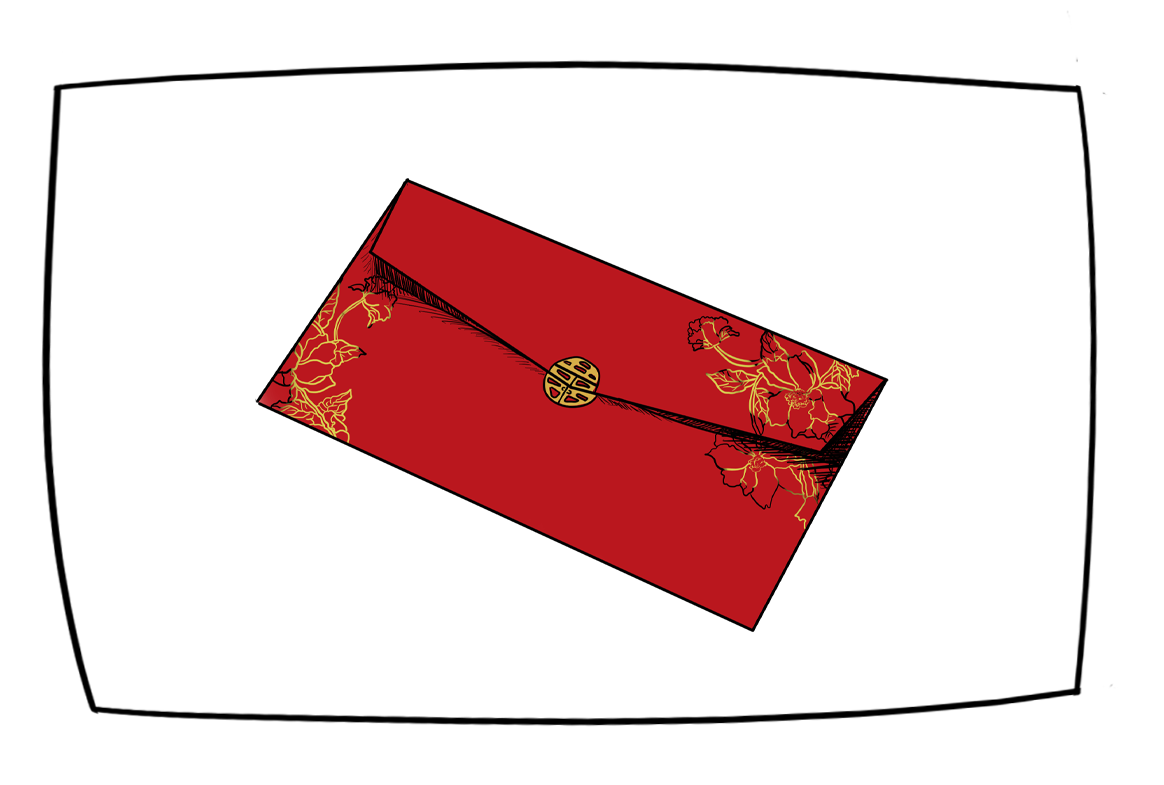
When he comes to, the room is visibly dimmer. It takes Gong Jun a few blinks to realise that he’s not in China, definitely not in his hotel room, and that the Zhehan he sees — sitting behind the dining table, laptop squashed amid the clutter — is not just a figment of his imagination. Zhehan’s glaring at the screen, tapping the keys with vigour, and Gong Jun lets himself watch.
His content smile disappears when he catches sight of the clock above Zhehan’s fridge, and he scrambles to sit up.
“Crap,” he mutters, rubbing the remains of sleep from his eyes. It’s almost five. He has a wedding to attend in an hour, and he’s wasted the rest of their time on napping.
Zhehan startles at the swearing, but grins at Gong Jun with delight. “Good morning,” he says, with a teasing lilt, and it works, because Gong Jun suddenly finds it very hard to frown at him.
He reaches for his phone, left on silent on the conference table. His screen is littered with notifications and chat bubbles, missed calls and concerned texts. He knows he should feel guilty, but it only comes as an afterthought, an unpleasant residue under his sharper disappointment.
“I’m sorry, I would have woken you up in a bit,” Zhehan says, misinterpreting his knitted brows. “But you looked like you could use the sleep.”
“Thank you,” Gong Jun says. He swallows to make his throat feel less scratchy. Like this, freshly back from sleep and with his perspective slightly shifted, he’s not equipped to build up his defenses. He sighs, every bit the petulant child he feels like channeling, and says: “It’s not that. I didn’t want to sleep for so long.”
“I can drive you to the hotel now,” Zhehan says, clapping his laptop shut and coming to sit on the sofa. He looks guilty, which, in turn, makes Gong Jun feel even worse. “Or you can shower here, if you need. I’ll just take you to the venue.”
“It’s not that,” Gong Jun repeats, biting the inside of his cheek. He stares at his phone until the messages all blur and he doesn’t know where his cousin’s worried queries begin and his manager’s tough love advice ends. He takes a deep breath. “Do you have any plans for the evening?”
Zhehan doesn’t say anything, just tilts his head.
Another breath. “Do you want to come with me?”
“To the wedding?” Zhehan says, poker-faced.
“Yeah. No.” Gong Jun feels his thoughts skipping one over the other, his sleep-addled brain still struggling to catch up. “I just have to make an appearance. Congratulate them, give them some money, and then we could — “ He doesn’t know what to suggest. They could go for another drive? Go get dinner? Hang out in the park again, collecting mosquito bites? He’d take all of it, just to spend more time together. “Then we could dash.”
Zhehan looks at him, quiet. His eyes slip to Gong Jun’s phone, back up to his face, and down to the ankles he’s put his hands on, like he’s only just noticing. He nods. “Sure. Let me get changed.”
Gong Jun’s so relieved by his easy agreement that his face splits into a blinding grin. Zhehan chuckles in turn. His thumb grazes the skin of Gong Jun’s calf, shooting goosebumps up his spine. Zhehan repeats the small motion, deliberate, and gives Gong Jun’s feet a parting pat. “Right. I don’t know if I own anything wedding appropriate.”
“Don’t sweat it,” Gong Jun says, still a touch dazed.
“Uh, that will definitely be a problem,” Zhehan says, before disappearing into one of the rooms.
Gong Jun straightens his spine, unlocking his phone again. I’m still with my family, he lies to his manager. Sorry, I slept through the day. I’m on my way, he tells his cousin, the groom’s sister, after skimming her string of increasingly alarmed voicemails. I’m glad you’re doing well, he texts Da Xiong, who thanked him for finally checking in, then stormed his inbox with photos of her new garden, her dogs, and her sons.
He finds the bathroom and tries to tame his bed head, splash enough water onto his face to look like he’s put at least 5 minutes into his appearance. He could jump into the shower, maybe, but it would be pushing it, if not in terms of Zhehan’s hospitality, then definitely in terms of their time constraints. Zhehan barges in just as he’s contemplating washing his armpits in the sink, shirt halfway undone, and he blinks in surprise, freezing in the doorway.
“Uh, do you want a change of clothes? They might not fit perfectly, but I’ve got some shirts you could –” he trails off, not even pretending to address Gong Jun’s face. He swallows, trailing his eyes back up, schooling his expression into one of perfect innocence. “Or a towel?”
Gong Jun follows him out into the bedroom, with only one button redone and a badly suppressed smirk. The first shirt is a little too tight, the second is short in the sleeves, but he rolls them up to his elbows and shrugs. They’ll already be the subject of his family’s whispers – for leaving before dinner, for Gong Jun’s unexpected plus one, for his very identity – what’s one more inappropriate shirt going to do?
He’s stupidly proud of himself, when they step out into the hallway, for how little he cares. He watches Zhehan walk backwards to the elevators, unexpectedly dashing and elegant in his black slacks and an oversized ivory shirt. Grateful as Gong Jun is for the picture he paints, he’d happily miss out on the wedding altogether, just for the chance to spend another hour with him.
It’s rained while Gong Jun was napping and the air feels cooler. It’s nowhere near cold enough to justify huddling for warmth, but he embraces some of his old impulsiveness. No need to be reasonable with so little time left. They’re joining the line of motorbikes on the main road, their tail lights blinding in the imminent dusk, when he shifts his arms, wraps them lower around Zhehan’s middle and presses closer.
Zhehan doesn’t say anything, but he goes soft and pliant under his hold. The traffic moves slowly, blocked by several flashy SUVs trying to squeeze their way onto a narrow bridge, and Zhehan’s chest swells with his apologetic sigh. “ I should’ve known the traffic would be ridiculous.”
“It’s okay,” Gong Jun says, sincere. It feels good to give up the obsessive need to control every aspect of his day, from a perfectly calculated breakfast meal, to perfectly scheduled social media posts to promote all his endorsements.
He glances at the motorbikes around them, sees the couples again, their affection open and loud in the anonymity of the darkening roads. He brings his head to Zhehan’s back, like Zhehan’s done to him earlier in the kitchen, ear resting against the knobs of his spine. He smells of the same scent that’s now become familiar — a sweet floral note, with something rich and musky underneath — but it’s stronger, here, so close to his neck. Gong Jun wrecks his brain trying to place it, and although he fails, the task distracts him well while they’re standing in the jam.
“Should I just wait for you outside?” Zhehan asks, turning his head sideways — gently, like he’s trying not to disturb Gong Jun’s hold.
“No,” Gong Jun says, squeezing his middle for emphasis. “Unless you don’t feel comfortable. If that’s —”
“No, I’ll go with you,” Zhehan says, amiable.
They arrive at the wedding center a few minutes later. The building is massive, seven floors of ostentatiously decorated wedding halls and a maze of an underground parking lot. The foyer is packed with frenzied guests, heads whipping around in the effort to find their newlywed couple.
Gong Jun doesn’t feel quite as anonymous, inside, leading the way towards the elevators. With guests taking pictures left and right, in the confines of the building’s reflective tiles, he feels more likely to get recognised and keeps his head down. It stops him from reaching out to catch Zhehan’s hand, something he almost allows himself to do as they stride through the long corridors.
“There,” he says, when they get off on the fifth floor and he spots a heart-shaped picture of his cousin and his wife. There’s a platoon of people in front of the wedding hall, lined up for photo ops and to drop their hongbao into the ruby-coloured treasure chest. Gong Jun freezes when one of his relatives spots him and starts elbowing everyone around her, not the least bit subtle about her pointing.
Zhehan, attuned to his sudden tension, bumps his shoulder and gives him a close-lipped smile. He’s been quiet, Gong Jun realises, much more than he’s been throughout the rest of the weekend. He really hopes the smile means this wasn’t a horrible idea.
“Junjun, finally! We thought you wouldn’t come!” one of his relatives calls out — an aunt twice-removed — in accented Chinese. They’re instantly surrounded with people greeting him and patting him on the shoulder, some of them blinking at rapid speed, like their eyes might be deceiving them.
He tries to put names to their faces, see past the heavy make-up and wrinkles that are missing from his childhood memories. He recognises the younger relatives from their social media, but the older ones, faces familiar from pixelated video calls and old photo albums, are harder to place. He greets them all politely, with miniscule bows, and brushes off the performative whispers of he’s even more handsome than he is on camera, and, so thin, I hope he’s not too busy to eat properly.
Zhehan stands a few steps behind, obviously out of place but observing the commotion with amusement. Jiamei, the groom’s sister, notices him while she’s scolding Gong Jun and her mouth drops open. “Is that —?”
“Where’s the happy couple? I can’t stay long, and I want to congratulate them properly,” Gong Jun cuts her off.
“You won’t be staying for the banquet?” Jiamei asks, one eyebrow raised in disapproval. She resembles his mother so much that Gong Jun withers a little under her gaze.
“Something’s come up,” he says, stopping himself from glancing sideways, looking for Zhehan’s silent support.
Jiamei doesn’t buy it. She gives Zhehan a considering once-over and folds her arms across her chest. Moving up on the motherly displeasure scale, Gong Jun thinks. “You didn’t ask for a plus one, did you?” She turns on her heel, not waiting for an answer.
Zhehan touches his elbow after a second and gives him a questioning look. Trying to escape the curious mob’s attention, Gong Jun jerks his head towards the donation box, asking Zhehan to follow.
“My cousin went off to scheme,” he says, suppressing a sigh. “I think she’s trying to score you a seat.”
Zhehan’s guilty wince is not particularly convincing, but it serves to put Gong Jun at ease. He shuffles towards the kitschy treasure chest and drops in the envelope he’s been carrying around all day, thanking his morning self for being sanguine enough to risk having it stolen. Zhehan surprises him, dropping in a similar red package.
“You don’t have to —”
“I came here uninvited,” Zhehan says, blasé. “It’s the least I should do.”
When Jiamei returns, she’s dragging the bridegroom along by the sleeve of his tuxedo jacket. She’s always been the more forceful sibling, Gong Jun remembers, and he’s immediately endeared by the familiar dynamic, even if his guilt makes him fidget with the sleeves of his — Zhehan’s — shirt.
“Of course we’ll find you a seat,” Mingyi says after a round of quickfire introductions. Zhehan barely has time to shoot Gong Jun a panicked look before Jiamei latches onto him and steers him inside the dinner hall. When Gong Jun moves to follow, Mingyi steadies him with a pat on the shoulder and smirks, admonishing. “So that’s why you missed the party last night?”
Since Gong Jun’s blush must give him away, he doesn’t attempt to deny the claim. He diverts the topic entirely, congratulating his cousin with way more vigour than the task warrants, then gasps with fake horror and rushes off to find the bride.
The dinner goes well. They get through the courses — abalone soup, bacon-wrapped shrimp, various salads and noodles and tofu in sweet ginger sauce — so quickly that Gong Jun completely forgets to watch the time. Zhehan’s extra seat is pushed right alongside his, their shoulders almost brushing. His presence feels comforting, a steady weight that lets Gong Jun relax while he chats with the other tablemates, some of whom speak no Chinese whatsoever. The two-way interpreting dance that the other relatives dive into is enough of a diversion that, by the time they’re done with dessert, it’s almost nine.
His dismay must show, because Zhehan elbows him as soon as he pockets his phone. “Do you want to dash?” he asks with a smirk, recalling the original plan. Well, Gong Jun wasn’t the one who got charmed into staying. Not the only one, at least.
“Do you want to go home?” he asks. He dreads the answer so much he knows he needs to confront it sooner, rather than later.
“No,” Zhehan says, rolling his eyes. He doesn’t elaborate, but takes a sip of his coke and starts folding the napkin spread across his knees. Gong Jun gets caught staring at his eyelashes.
“You must visit more often,” one of his aunties says, a minute later, as Gong Jun bends down to bow his farewells.
“Eat more. And get more rest. Aiya, I’m so glad none of my sons are actors!” Another auntie wails, patting him on the head.
They hurry to say goodbye to the happy couple, and to Jiamei, who’s on her fifth iced beer and visibly more bubbly. She pinches both their sides and almost shoos them away. “I’m calling you later,” she says, pointedly, to Gong Jun, before she turns back to her husband, convincing him to go up on the stage for the next round of karaoke.
Gong Jun only realises how tightly his shoulders have been wound once they make it out of the wedding hall. He holds in his sigh, but his exhale sounds obvious and fluttery, and Zhehan laughs beside him. “What a nice free dinner. Thanks, Junjun.”
“It wasn’t exactly free,” Gong Jun counters.
“What’s a little meeting-the-family excitement?” Zhehan shrugs. “Much better than my original plans for the weekend.”
“Which were?” Gong Jun asks. They’re back in the elevator, squeezed in with another dozen wedding guests who pay them no mind. This time, neither of them tries to keep their distance. Zhehan’s breathing right into the crook of Gong Jun’s neck, and their knuckles are brushing.
“Working. Napping. Watching some golf on TV.”
“How dreary,” Gong Jun says, his smile a little pinched. “Glad to have helped.”
As the elevator makes its descent, he watches the numbers flash, and builds up his courage with each guest offloaded or arriving. The countdown is a stark reminder of the other one, the one he’s choosing to ignore. It’s also the reason why, when they make it to the garage floor, he grabs Zhehan’s hand as he follows him back to his motorbike. Zhehan doesn’t even seem to acknowledge it, just grips his fingers tighter and smiles under his nose. He holds on until he’s buckling the helmet under Gong Jun’s jaw — same as he’s done a number of times in the last two days, and still different. There’s a playfulness in his gaze, but also something careful, something that manifests in the gentle way he slides his palm down Gong Jun’s throat.
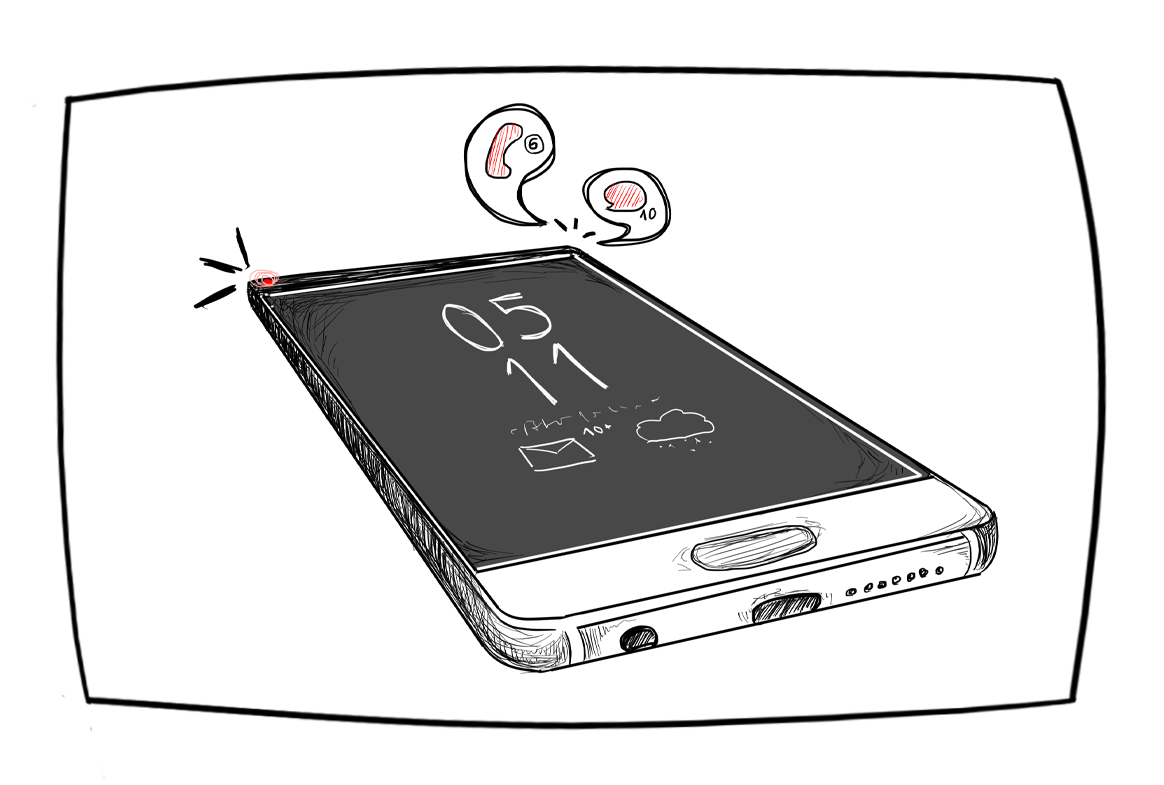
Joining the traffic, this time around, feels like relief. Like freedom. He hangs onto Zhehan’s middle, and doesn’t feel afraid of the way his heart keeps hammering in his chest. Doesn’t feel like it’s betraying him by saying something he doesn’t mean. Years ago, he’d have balked, at this stage. He has balked, as has Zhehan. But when they stop at a traffic light, Zhehan takes his right hand off the handlebars and squeezes Gong Jun’s wrist, then doesn’t let go, even as the motorbike spurs back into life.
They don’t talk, and Zhehan doesn’t hint at where he’s taking them. Gong Jun almost laughs when he sees the destination.
“We just had dinner,” he says with a smirk, hesitant to relinquish his hold on Zhehan’s back.
“I need coffee,” Zhehan says.
The 7-Eleven is busy with teens shovelling in cup-o-noodles and tapping away at their phones, and serious looking office workers crumpling their suits on wooden bar stools. Gong Jun doesn’t follow Zhehan into the store, but hurries to snag them the last free table outside, under the convenience store’s awning. When Zhehan joins him, carrying two cups and a bag of spicy crisps, he takes a look at the sky and hums. “It’s going to rain.”
Gong Jun follows his gaze, but he sees nothing except darkness, stars obscured by the light pollution and the moon hovering behind a long wispy cloud. Still, he smiles. “Wanna bet?”
Zhehan simply slides one of the cups towards him and takes a seat on the opposite side of the table, pulling his chair closer with a hair-raising drag of plastic on concrete. He opens the bag of snacks, clumsily, half of the contents almost spilling out of the tear, and sets it down between them. He crunches on the crisps, takes a first tentative sip of his coffee, and finally nods. “Sure. I say it’s going to start within ten minutes.”
“What’s your wager?” Gong Jun asks, playing with the sweaty paper cup of his orange juice. Half of the contents are missing already, the icy liquid proving to be the perfect antidote to the humid air.
“You’ll have to follow me around all night,” Zhehan says, smirking into his coffee. He holds Gong Jun’s gaze as he speaks.
Gong Jun pretends to think about it, though the words leave his gut tight and his mouth dry. It’s nothing to think about. There’s nothing he can bet in his own interest that he’d want more. Almost. “Deal,” he says, hitting his paper cup against Zhehan’s in a small toast. “If it doesn’t rain, I want to hear one of your songs.”
That seems to take Zhehan by surprise — he blinks, twice, in rapid succession, but he ends up nodding all the same. “Deal.”
Almost ten, the city is still wide awake, people sweeping and casting long shadows on the pavements, backlit by neon signage. The 7-Eleven is on one of the quieter streets, off a busy main road. The eastern side is crowded with electronics shops, the opposite a mixture of restaurants and karaoke parlours. Every now and again, a heavy bass beat or a mournful lament spills out of the soundproof buildings. Amid the motorbike honks, the 7-Eleven tune and the lively chatter of the students sitting on their right, the karaoke is easy to tune out. Gong Jun listens out for it, endeared by each out-of-tune wail.
He doesn’t need to check his phone to know that Zhehan has won the bet — the rain starts heavy and thick, drowning out all other sounds — with plenty of time to spare. Zhehan preens and celebrates his victory with a handful of crisps.
“So,” Gong Jun says, turning his cup around to distract his nervous hands. “What’s the first stop, when it stops raining?”
“Oh no, we’re not waiting for it to stop,” Zhehan says, pointing a finger up like he’s addressing the night sky. “This will go on for a bit. We don’t have the time.”
It’s his first admission of the fact that the night can’t go on, and won’t go on, forever. An uncomfortable stab, one that Gong Jun softens for himself by focusing on the implication — that Zhehan wants to spend time with him, rain be damned. It makes him want to be bolder, once again, and retaliate in kind, like he used to do on set. Hip check for hip check, a suggestive line to follow Zhehan’s, while the crew rolled their eyes and sighed good-naturedly. He’s out of habit, but out of excuses, too. “Was it the same for you, then? Back when we were filming?”
It accomplishes what he’s set out to do — makes Zhehan pause, eyes shifting toward Gong Jun in surprise. He’s slow with his answer, but he doesn’t hold back. “You mean was I head over heels for you the whole summer?”
Gong Jun guffaws, despite his best intentions to hold back. “That’s one way of putting it,” he says, tapping his nails against the table. “A little presumptuous, maybe.”
“Oh, don’t try to deny it.” Zhehan laughs, and crumples up his now empty paper cup. “You had it worse than me.”
Gong Jun hums, but raises an eyebrow. He opens his mouth, reconsiders, then reminds himself. Total honesty. He’s getting on a plane in less than ten hours. “Why didn’t you say anything, if I was so obvious?”
“Many reasons,” Zhehan says. He’s still open, smiling, but he sighs with something like regret before he begins listing the reasons on his fingers: “Didn’t want it to ruin the shoot or our friendship. I thought maybe we were confused, because of our characters. Thought it would go away. Thought it was doomed to fail. Didn’t want to jeopardise — “
“That’s not like you,” Gong Jun interjects. He feels uncomfortable at how Zhehan’s explanations perfectly mirror his own, and further so, at how flimsy he finds them, spoken out loud.
“What do you mean?”
“I always got the sense that you’d go for the things you wanted,” Gong Jun says, shrugging, hoping he’s not completely off target, “and worry about the consequences later.”
“Well,” Zhehan says, biting at his lip. That’s an unusual tick for him, too. Gong Jun stops his incessant tapping, wondering if they’re both overcompensating for their honesty. He expects Zhehan to defend himself, and he’s curious to judge that defense and blow holes into it. But Zhehan simply finishes with: “Not always.”
“Would you say something,” Gong Jun says, before he can think better of it, “if we got to do it again?”
Zhehan shakes his head. “It would be stupid.”
Gong Jun knows he has no right feeling hurt, but he still bristles at that answer, and at the painful way it tugs at his feebly built resolve. Zhehan must see it, in the way his face falls, and he hurries to elaborate. “I just mean — we know what happened. I think not telling you was for the best.”
It doesn’t help. If anything, Gong Jun suddenly feels the urge to wrap his arms around himself, defensive. He takes a long inhale and reminds himself to be reasonable. It might have been for Zhehan’s best, really, even if he’s doubtful the equation runs both ways.
“It wasn’t the right time,” Zhehan adds, after he’s watched the internal struggle play out across Gong Jun’s features. To mollify him, he reaches out a hand and wraps it around Gong Jun’s fingers, which are still drumming nervous patterns into the table. He turns them around, and tries to slot their palms together, not minding the awkward angle and the way it tugs at his wrist. Gong Jun’s half-horrified by how well it works. He deflates almost instantly.
“Is this the right time, though?” he asks, quiet and more measured than he feels.
Zhehan watches him for a moment. He doesn’t seem unsure, though. Only inquisitive. “Does it feel right?”
“Yeah.”
“Then that’s — more important.”
They sit under the awning for a few more minutes, quiet, just holding hands. The rain slides off the plastic cover, splattering droplets on the ends of their table, some of them forceful enough to land on Gong Jun’s shirt. The roads are completely wet, now, with puddles so big the motorbikes are practically washing each other in rainwater, sending it flying in all directions. The prospect of having to step out into the rain feels both stupid and exhilirating.
Zhehan lets go of his palm when he collects their empty cups and goes to throw them into a nearby bin. He returns, holding out his hand and helps Gong Jun stand up. It’s a calculated motion, and he must know, if his cheeky grin is any indication. Gong Jun only sees a fragment of it, close as they stand, and soon loses sight of it completely, as Zhehan brings their lips together and swallows his sound of surprise.
Gong Jun melts into him at once, catching hold of his shoulders and pressing closer. He’s wanted to do this so many times. Had dreams about it, spaced out during filming, after, inbetween, looking at Zhehan’s lips and wondering what they tasted like. He’s got his answer, now, subtle but traceable under the sweetness of the coffee. It reminds him that this is real, not just another elaborate daydream from his younger self’s repository. When they part, and Zhehan dives straight back, biting gently at his lower lip, Gong Jun bunches up Zhehan’s shirt in his fist, holding onto it as he lets his thoughts drift off.
Zhehan looks about as dazed as Gong Jun feels, when they break apart. He also looks self-satisfied, upper teeth biting into his lips. They’re pink, and slightly swollen, and Gong Jun can’t quite believe that he’s done that. He plunges in for another kiss, just to convince himself, and just because he can.
When they get back on the road, it’s still drizzling. Zhehan’s offered to take his raincoat out of the bike, but Gong Jun waved him off. The rain feels nice on his skin, where it’s still burning from the kiss, and he watches the droplets under the streetlights, holding onto Zhehan’s waist.
They weave their way through smaller alleys, squeezing in by the curb, taking a shortcut on a sidewalk, and the wind picks up speed. Soon, the rain is so heavy that Gong Jun can barely see anything but the blurry white outline of Zhehan’s shoulders.It prickles his skin, bounces off the concrete, and dirty puddle-water splashes where it can’t reach. The streets become a smudge and he can feel the rain everywhere — sliding down his exposed neck, his nose, licking at his ankles. He presses himself tighter into Zhehan’s space and laughs.
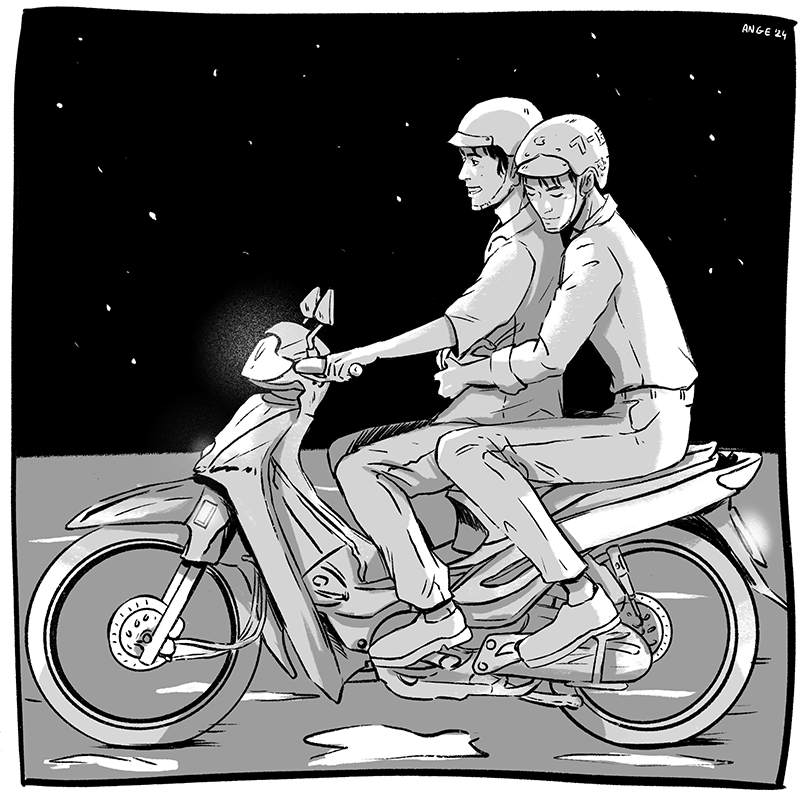
Zhehan navigates the traffic without wavering. It almost feels too soon when he comes to a stop, and Gong Jun has to let him go.
“Should’ve taken the raincoat,” Zhehan says, almost inaudible in the pitter-patter. He lets the bike run, brandishes a door remote, and aims it at the house they’re standing in front of. Gong Jun struggles to see more than its tall and narrow silhouette, the decorative trees on each side of the garage gate, and the soft orange glow coming from inside, as it rolls up.
They park alongside two other bikes and Gong Jun takes in the surroundings — a dark room with boxes, empty flowerpots, windchimes, shoes, and an assortment of plastic toys.
Zhehan nudges him, amused by his befuddlement. “My cousin’s house,” he says, like it’s self-explanatory. He slides off the bike, rainwater leaving a trail as he moves to take his shoes off, and he hesitates when he sees Gong Jun still sitting in the passenger seat.
“Won’t your cousin mind?”
In answer, Zhehan walks back, helps slide Gong Jun’s helmet off, and tugs him towards a small set of stairs, up into the main hallway. He walks through it like he’s leading them through his own house, and Gong Jun feels torn — they’re both soaked, dripping on the floor, and decidedly not presentable. But Zhehan holds up a finger to his lips, squeezens Gong Jun’s hand, and pulls him up three stories of the quiet house, with no hesitation.
“This doesn’t feel right,” Gong Jun says, not very convincing, when Zhehan ushers him into a dark room. He clicks his tongue, dismissive, and pinches Gong Jun’s side, before he turns the lights on to reveal a small bedroom, washed in the dim golden hue of the bedside lamps.
“It’s so stuffy,” Zhehan huffs. He opens a window, letting in the stormy cacophony, and turns on two fans, the waft of air making Gong Jun shiver. He’s still standing near the door, unmoving, and Zhehan glances at him with a shrug. “It’s fine. I stay over a lot.”
Looking around again, Gong Jun softens in understanding. The place looks too well-used for a guest room, clean but not immaculate. Up close, he can see the little ridges on the desk, the scratches on the wooden floor, the way the window panes must’ve kept hitting the wall in the same spot, until the plaster came off. There are books, too, on the bedside tables, and stacked on the desk, and clothes visible through the opaque doors of the wardrobe. The bed is wide and low, with a thin mattress and no blankets to be seen. Even the stale air smells of familiar flowers.
Zhehan doesn’t waste time offering further explanations. He steps into Gong Jun’s space and kisses him, like that’s reassurance enough. It almost is, but Gong Jun breaks away after a minute, holding Zhehan back by the collar of his wet shirt.
“Do you bring all your dates over? Is your cousin’s house a private love hotel?”
Zhehan smirks. “Maybe,” he says. He kisses a patch of skin under Gong Jun’s ear and slowly traces his way back to his lips. Gong Jun tightens his hold on the shirt.
“We could’ve gone back to my hotel,” he says, less uncomfortable, more teasing.
“Didn’t want to drive so far in the rain,” Zhehan mutters, covering Gong Jun’s hands with his own. He squeezes them as he rolls his eyes. “Do you want to go meet them? Should I go tell them that I brought my date over?” He grins, and pretends to take a step towards the door.
“If that’s what we’re calling it,” Gong Jun says, feigning nonchalance, though he suddenly finds speaking hard over the lump in his throat.
He grabs Zhehan by the wrist, keeping him in place, tugging him closer. Zhehan goes with no resistance.
“It’s easier,” Zhehan says, once he’s left a bright red mark on Gong Jun’s throat, “than explaining…” He lets the words fade, leaning in for another kiss. Gong Jum hums into it, like a question. He levels Zhehan with a curious gaze when they part, bracketing his face with his arms, and Zhehan squirms, shifty but pleased. “Explaining that I finally made a move on my crush from four years ago.”
Gong Jun laughs, a shock of a chuckle that he fails to contain. “You can always say it was my idea.”
“What was?” Zhehan quirks an eyebrow.
“Ravishing you in your cousin’s house,” Gong Jun mutters into the skin of Zhehan’s neck. He feels the way the air escapes through Zhehan’s mouth, at his words, and sucks at a spot near his collarbone.
“Is that the plan?” Zhehan says, after he gets his wits back.
He gently walks Gong Jun backwards, until he feels his legs hit the bed frame, and has to tighten his hold on Zhehan’s shoulders in fear of tipping backwards. “Do you have better ideas?” he asks, and Zhehan betrays him, doing away with all his effort and shoving him unceremoniously onto the mattress.
“I think,” Zhehan says, and Gong Jun’s mouth goes dry when he undoes the first two buttons of his shirt, then tugs the rest of it off over his head, “the ravishing ought to be mutual.”
Gong Jun doesn’t bother agreeing. Words seem unnecessary when everything in him is screaming his approval. He follows Zhehan’s example, fumbles with the cuffs at his elbows and the way the wet cotton sticks to his back, but it’s just a temporary obstacle. He’s rewarded by Zhehan straddling his hips, hovering over him with a smug grin, and brushing against his skin as he kisses his way down Gong Jun’s neck.
He takes his time exploring Gong Jun’s chest, with soft nips and curious fingers, and he’s completely hard and aching by the time Zhehan unbuttons his slacks and pushes them down. The skin of his thighs is still wet from the rain, and he shivers a little in the fan-blown air, but Zhehan distracts him immediately, nosing at his underwear, impatient.
This, too, he’s imagined many times before. Consciously, spacing out as he gazed at Zhehan’s throat in one too many scenes, as he pressed into the heat of his body when they rehearsed their sparring scenes, when he and Zhehan parted, night after night, in the hotel lobby, each walking off to their separate rooms. Unconsciously, too, which made him blush each time he woke up to stained sheets, like he was a damn teenager, not a man approaching thirty.
It’s much better than all his daydreams, and completely overwhelming. He spills down Zhehan’s throat too fast, when Zhehan halts his protests and holds his hips down. When he catches his breath, Gong Jun reaches out for him, pulls him up to return the favour, and finds that Zhehan’s already taken care of his own problem, hands sticky where they fall on Gong Jun’s waist and belly.
“Unfair,” he mutters, biting the skin of Zhehan’s neck, a lackluster punishment that doesn’t reflect the degree of his disappointment. Zhehan preens, pinching the skin under his ribs, and slapping Gong Jun’s hand away when he goes to retaliate.
“Don’t whine,” he says. “Give me a few minutes and you can do whatever you want.”
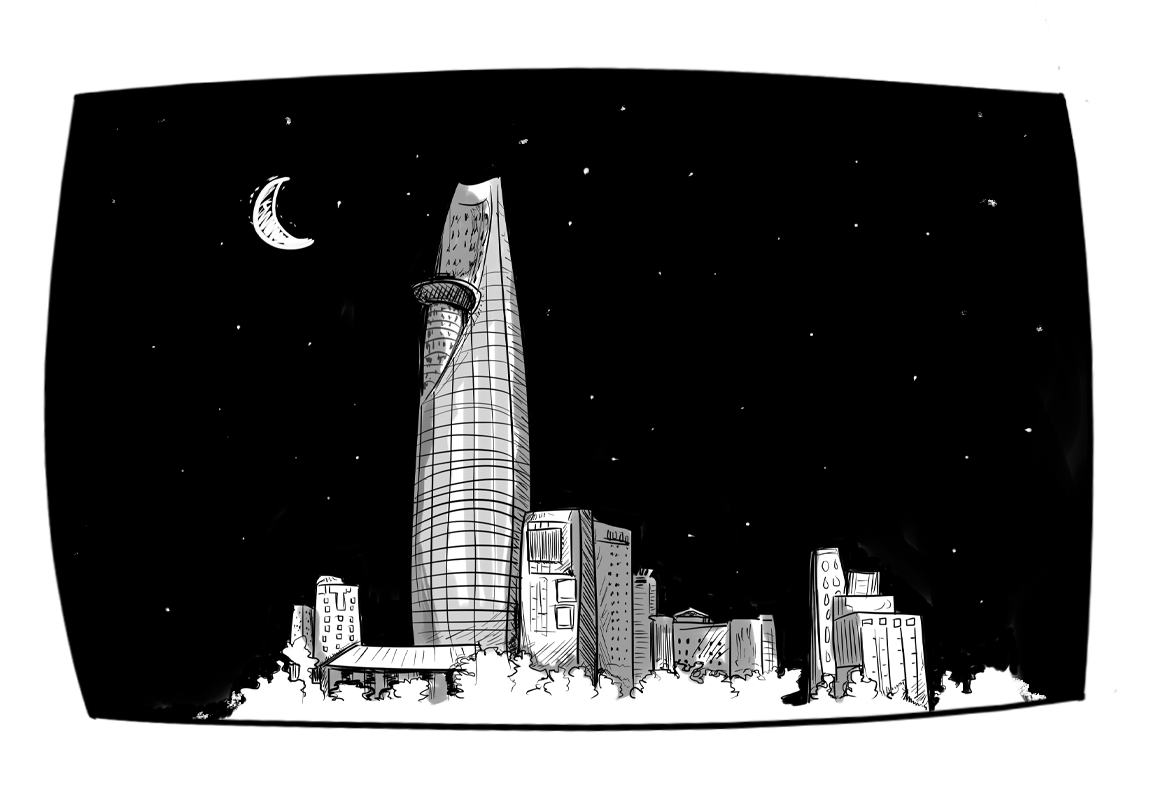
They lie on their backs, a few fantasies come true later. Gong Jun feels completely spaced out — like he’s lost control of his limbs, along with his mental capacities. Zhehan’s body is the only thing anchoring him in space and time, as he stares at the white ceiling and slowly returns to himself, sweaty, and sticky, and happier than he’s been in ages.
Zhehan rolls over, laying his head into the crook of Gong Jun’s neck, and throws an arm around his chest. He’s quiet, smiling to himself, and Gong Jun can only guess what’s going through his mind. One half of him feels victorious, safe in the knowledge that they’re both finally on the same page. The other half punches him back into reality, reminding him that this — everything they’ve got here — is temporary.
He tries to think of other things, of the practicalities, like the sticky residue he should go wash off his thighs and belly, or the wet clothes lying on the ground unattended. He doesn’t want to move though, and he’s thankful when the decision’s taken out of his hands — the overhead fan stopping halfway through a rotation, the lights going out.
Zhehan groans, and Gong Jun feels it vibrate on his skin. “Power cut,” he explains, barely above a whisper, and Gong Jun hums, uncaring.
There’s only a patch of moonlight falling across Zhehan’s skin, right on his shoulder, where Gong Jun notices the little tattoo. It’s not the minimalist, chic design that he was expecting, but rather a dark blob of ink in the shape of a French bulldog. Fond, Gong Jun traces it with his finger, and suppresses a gasp when his touch draws goosebumps. He’s glad for the lack of blankets, now that the fans are off and he feels the humid air envelop them. Zhehan doesn’t let him go into the bathroom, holding on tighter. He relents.
“Is this what you do with all your other dates?” he asks, teasing. The answer is obvious, given the contents of the bedside drawer, and Gong Jun does his best to tamp down his jealousy, hoping instead that nobody but Zhehan cleans the room in his absence.
“Some of them,” Zhehan says, unabashed.
“You’ve been with other men, then?” Gong Jun asks, though he also supposes the question is irrelevant. He feels the obligation to ask, for the sake of his younger self — who’s wondered and second-guessed and talked his way out of asking, many times over.
“A few times,” Zhehan admits. He squeezes Gong Jun’s body, again, like he’s reminding him that none of that matters. Not for the moment, and not for the next few hours. Gong Jun swallows around the lump in his throat.
“Have you been with girls?” Zhehan asks, supporting his head in his palm and looking at Gong Jun from between his lashes. It’s doubly calculating — seductive and pointed, like he’s also wondered. Gong Jun fights to blink away the sudden urge to cry.
“No,” he says, simply. It’s not the complete truth, but he doesn’t consider his freshman experiences important enough to mention. None of his previous experiences seem important at all, and he regrets his question, making himself draw that comparison when he knows —
“I’ll have to leave in a few hours,” he says, his voice scratchy as he pushes the words out.
“I know,” Zhehan hums, averting his gaze.
“What do we do?” Gong Jun asks, nails biting into Zhehan’s skin.
He takes a moment to think about it, breathing slow and steady, making the hair on Gong Jun’s arms raise. He doesn’t look up, until he rolls himself over Gong Jun’s body, bringing their faces close. He smiles. “Enjoy it.”
The power doesn’t come back within the next hour. They lie on the bed for a little longer, until Zhehan finally allows him to stand up and wash himself in the en-suite bathroom, smirking as he holds the phone flashlight up to the ceiling. He follows his example, while Gong Jun stares nervously at the gecko climbing up the shower door, then finds them both clean clothes from the wardrobe.
Without the fan’s gentle whirring, Gong Jun feels like he sweats through the cotton T-shirt almost immediately. It doesn’t help that, with the newfound permission, Zhehan grows as sticky as he’s always hoped for. He lets Zhehan’s hands roam, and they distract him from the discomfort. After he flecks a bead of sweat off his forehead, however, Zhehan drags him out of the room and onto the rooftop, quelling his protests by explaining it’s his favourite place in the whole house. Gong Jun can see why, the moment they step out.
The neighborhood is dark and quiet, houses fading into an amorphous shadow, only one or two casting dim lights onto the streets, amid the thrum of their own generators. Above that, the city is as vibrant as ever. Like Shanghai, he thinks, but not as violent in its enormity. It’s coming up to two, but the roads are still busy with traffic, streets loud with barks, and honks, and the same vendors that have been circling the city on their motorbikes since dawn.
“I love the view,” Zhehan says, watching Gong Jun take it in.
A gentle breeze picks up as he leans on the half-wall enclosing the rooftop. He looks around, hit by the scent he’s spent the better part of the night drinking in from Zhehan’s skin. His mouth quirks up when he finally places it, finding the jasmine bush in the corner, the white flowers a stark contrast to the darkness of their surroundings.
There’s a grill amid the flower and vegetable planters, and a perfectly nice sitting area with cushioned chairs and armrests. But Zhehan sits down onto the tiled floor, resting his back against the wall, and looks up expectantly. Gong Jun rolls his eyes and squeezes himself into his side.
“I’m glad you kept checking on me, for what it’s worth,” Zhehan says, out of nowhere, staring up into the sky.
“It was selfish. I needed to know — you were,” Gong Jun pauses, considers letting the sentence trail off, then finishes with a slight wince, “okay.”
Zhehan dips his head down. Half his face is illuminated by the distant city lights, his pinched lip and furrowed brows painted in hues of orange, green and purple. Gong Jun doesn’t like the force of his gaze, even where it’s not aimed at him. He shifts on the tiles, feeling pebbles drag across his skin through the thin fabric of borrowed joggers.
“I wasn’t, not really. Especially in the first few weeks,” Zhehan says, after the stretch of silence. His words get followed by a long honk, and an even longer croak of a rooster — too early for the hour, and too ill-timed for Gong Jun to laugh, like Zhehan does. “Sorry, I didn’t mean to — we don’t have to talk about it.”
“Please.” Gong Jun tries to relax, but his skin suddenly seems too tight. He reflexively squeezes Zhehan’s hand, feeling the tendons and the bones, his grip desperate, like a vice he’s trying to keep on this reality.
“I felt like things were falling away from me,” Zhehan continues, and he makes a motion, like he’s scratching at his forehead, struggling to articulate himself and looking for help in his own nervous energy. “Like I didn’t know who I was, anymore. Acting was bad enough, making me feel like five different people sometimes. But then all the images people had of me —”
“What do you mean?” Gong Jun asks, not looking up.
“Some days I got angry. And sometimes I felt like I deserved it. It was like I had no choices — in how I felt, or how people saw me,” Zhehan says. He lets out a sigh — his biggest, yet, in all the time they’ve spent together — and smiles at Gong Jun, a feeble lifeline in the shadow of the jasmine bush. “But my family and friends, and you — it was good to know that others still cared.”
Gong Jun hesitates, before leaning in and kissing him, hoping the gentle press of his lips can say more than any of his words can. One, I’m glad you’re here. Two, you didn’t deserve any of it. Three, I’m happy you didn’t have to go it alone. He leans his head on Zhehan’s shoulder, when they break apart, and he pulls Gong Jun closer, tickling a soft kiss into the palm of his hand.
“A lot of things have changed,” Gong Jun says, speaking into the void of the dark sky, hoping it won’t laugh at his naivété. “Have you ever thought of going back?”
“All the time,” Zhehan laughs. Bitter, but not exasperated, definitely not affronted. Not like he’s taunting Gong Jun for asking the wrong question, or deeming to keep his answers short.
“And —”
“I think that ship’s sailed now,” he says, voice firm. “Even if they let me.”
Gong Jun hums and nuzzles into his neck, hiding his seasoned anger. His relief. He’s gone over the arguments, in his head, multiple times. Wishful imagined spats that would try to lure Zhehan back, on the account of his fans, his co-workers, the whole variety industry — which would cry in delight, to have him back. They were for his entertainment only, and even as he’d let them play out, he knew they were made for a different reality. One where Zhehan hadn’t been forced out like a traitor, based on nothing but a few blurry photographs.
“You don’t owe them anything,” he says, and he feels Zhehan’s throat tighten, his jaw working. “You deserve to be as selfish as you want.”
“So do you,” Zhehan says, and he taps Gong Jun on the knee with his hand, curled into a gentle fist. Admonishing, but not really. A gentle pressure meant to make him pay attention. “You’re your own person. You have a right to your privacy, and your time, and — you don’t have to keep playing that role forever.”
He doesn’t need to specify for Gong Jun to know what role he means. There’s probably nobody who understands it better than Zhehan. The way he goes from drama scripts to the one that employs his other persona, Gong Jun the actor. Doing what others expect of him, towing the line, keeping up the fantasies, knowing that fame and support come at a price. “I know.”
That’s not why he’s kept it up, anyway. His family, as well as his savings account, have been taken care of for a while. He doesn’t need accolades and endorsements to feed his ego. But he’s accepted acting as his job, one that he enjoys and likes being good at. Faced with the possibility of giving it up, he’s always balked at the thought of having to reinvent himself at thirty. He likes keeping himself and his career separate, but they’re linked where his fulfillment’s concerned, the goals and dreams he’s been pursuing since he was a boy.
Even then, he knew the path would be uncomfortable. He knew his limitations, and that he’d have to contort himself into a shape that might not resemble his true self. Back then, perhaps, he thought the money and the fame would be enough to protect him — that the golden cage would keep him away from people’s malice, not lock him in as its target. Gong Jun, the actor, the perfect husband, the doting boyfriend, loyal, patriotic, straight. All labels, not unlike the little role tags he would get with each new script.
“Have you ever thought of quitting?” Zhehan asks, and lets him sit with the question for another round of thoughtful silence. It’s the inverse of what Gong Jun’s asked him, and he’s grateful to latch onto it, to finally let go of what feels like his dirty little secret. Silly, he knows, when his actions in the past few months have made it nothing but apparent.
“All the time,” he echoes Zhehan’s words. Zhehan doesn’t ask for an elaboration, nor does he question why, then, has Gong Jun never gone through with it. Perhaps that’s what lets him continue. “I’ve been writing, actually.”
He leans backwards, and twists his neck so that he can see Zhehan’s reaction. He’s hoping for surprise, dreading some derision. Out of the two of them, Zhehan’s always been the one who preferred spending lunch breaks with a book, the introspective senior who’d had enough life experience to give out advice in the form of anecdotes. Zhehan’s eyes widen, but he looks simply curious. “Writing?”
“A book,” Gong Jun finishes with a nod. He says it like it’s a confession, the first time he’s let himself consider the full weight of it. He already told his manager, of course, and a few people have been working behind the scenes, trying to gauge how much perspective the venture could have. For his acting career, mostly. They tried to persuade him into something lighter — a children’s book, another lighthearted and funny memoir, dedicated to his younger self — but he’s only taken their advice with humming disregard.
Zhehan scans his face, perhaps checking for sincerity. He must find it, and his mouth slowly quirks up. “What kind of book?”
“A mystery novel,” Gong Jun says, playing up the pomp. “A man has lost the memories of his last ten years, and the book is about how he tries to get them back. Realises, as he does, that he doesn’t like himself much.”
As he says it, he thinks he ought to have planned it better. Prepared more than the curt elevator pitch that he’s given his team, something that would make Zhehan see the book for what he wants it to be. A thriller on its surface, but, at its heart, a journey of self-discovery, a celebration of possibilities.
It’s silly. He didn’t even know if he’d get to talk to Zhehan, two days ago, much less feel the weight of Zhehan’s arm across his shoulder, when he sits up to look at him head-on. He hung his hopes on nothing but luck and an uncertain idea that maybe, just maybe, time has healed them both enough that meeting up wouldn’t bring them more pain.
“What made you start writing?” Zhehan asks, thoughtful.
“I felt like I had something to say,” Gong Jun says, rubbing his chin, “and acting no longer felt like the best way to do that.”
Zhehan tilts his head. He considers Gong Jun’s face, his eyes, and comes to rest his gaze on his lips. He lifts up a finger and pokes at a dimple in Gong Jun’s cheek, smirking. “Tell me more about your book, Gong-laoshi.”
He asks about the character, and about the tone. How much of it is already written, and where does Gong Jun find the time for it. With each question, Gong Jun feels himself hovering closer and closer to the edge of the cliff, one that he’s been moving towards all through the weekend. His heart beats out a painful melody as he stares at its bottom, looks resolutely past the way he’s dangling his acting career over the pit, seemingly by a thread. Zhehan could extend an arm to him and bring it up the other way. Instead, his words make Gong Jun crave the drop.
“Anyway, I don’t know if it’s good,” he says, after he’s given Zhehan the bare bones of the plot, resisting the urge to give away the ending.
“Has anyone read it?”
“Not yet,” he shakes his head. “It’s like you said — I don’t want to put my name on something that I’m not proud of.” At Zhehan’s quiet smile, he rushes to add: “But I can let you know — when it feels ready.”
Instead of laughing, or thanking him, or doing a bad job of pretending he cares, Zhehan kisses him to show that he does. It works wonders to squash the residues of Gong Jun’s anxiety. So much so that, embarrassingly, he has to shift his face mid-kiss, overcome with the urge to yawn. Zhehan laughs and pushes Gong Jun’s head back onto his shoulder. “Tired?”
“No,” Gong Jun lies, blinking the tears out of his eyes. He is, and he isn’t. At this point, time has lost all meaning, and he’s happy for it. His eyelids feel heavier, but he fights against their pull, not caring for the sting, either. The power is still off, and there’s not much to see in the darkness, but he focuses on the other rooftops, watches hangers and clotheslines sway in the gentle breeze and counts the windows on the opposite building, trying to make sense of its layout.
Zhehan’s singing starts quiet and soft, simple humming, sending goosebumps down his spine. The whispers turn into words, and the words into the verse, and by the time he’s singing the first chorus, it’s all Gong Jun can hear — losing track of not only the hour, but also space, and everything that is not Zhehan’s voice. It’s a new song, he knows that right away. Would know that, even if he didn’t have his discography memorised front and back, from the careful cadence of the lyrics. About fate and coincidence, and whether they even matter, if a person’s confident to stand for their own choices.
His voice is like it used to be, airy like a windchime, light as it skips over the melodies — but there’s a new depth to it, too, Gong Jun thinks. Like the wrinkles on both their faces and the bones that ache a little more, with each passing year. It speaks of time, and growth, and fits him so well Gong Jun almost tears up again, from his own volition.
“I’m so glad,” he says, when the last tones fade into the night and Zhehan hugs him closer.
“Hm?”
Gong Jun angles his head so that he can meet Zhehan’s eyes. They look much more alert than his own — perhaps from the coffee, perhaps from a sense of anticipation, having just bared a piece of himself that nobody else gets to see. “That you’re still making music,” Gong Jun says, smiling.
Zhehan’s nerves must be abated by that, somewhat, because he starts humming another song, and a new one after that. Gong Jun fights a battle against his exhaustion, telling himself this is probably the most important moment of their whole weekend, and that he needs to stay present, to savour every second. Zhehan’s voice is altogether too calming, however, and he loses the fight within another few heavy blinks. He dozes off on Zhehan’s shoulder, with the dawn slowly breaking, the songs a perfect lullaby for his content little heart.
When Gong Jun wakes, this time, it’s to the sound of traffic, the loudspeaker and the bellchime of the ice-cream man on his rusty old bicycle. He’s bent into an uncomfortable half-seat, the concrete wall and stone ground biting into his skin, leaving patterns from the rubble. There’s a heavy weight pressing at his side, and the crown of his head, and Zhehan shifts when he feels his movement, squeezing his arm where it’s still curled around Gong Jun’s shoulders.
“Good morning,” he mutters, voice a little scratchy, like he’s also just coming back awake.
“The best,” Gong Jun says, too sincere with his internal filter still drowsing. At this point, he’s beyond regrets, anyway. There’s very little he wouldn’t let slip, in Zhehan’s warm hold.
Despite the downpour, the air has stayed hot and humid throughout the night, and they’re both sweaty, with puffy eyes, in need of a proper shower. Still, they don’t rush, getting off the rooftop. Gong Jun lingers in the irrational sense of calmness that the scene sets for him. As he watches a man on a distant rooftop stretch for his morning exercise, and a pair of aunties, in their pyjamas, climbing up rickety stairs to take forgotten bed sheets off the clothesline. The air smells of coffee, fried fish, and fresh bread. When Zhehan tugs him up and kisses him, Gong Jun isn’t sure if the scent of jasmine still lingers on his skin, or if it’s coming from the unassuming little shrub, the only witness to their nightly shenanigans.
“Let’s clean up,” Zhehan says, not particularly convincing. “Then we can go downstairs for breakfast?”
Gong Jun is nervous about agreeing. They’ve spent the night together, he’s a stranger in the family’s home, and, spin the situation as they might, Zhehan’s cousin would be hard-pressed to believe any of their lackluster excuses. But the invitation is hard to say no to, especially combined with the way Zhehan looks at him, head tilted downwards, eyelashes fanned out across his sunburnt cheeks.
He checks his phone when they get back inside the room. He’s left it lying on the bedside table and when they walk in, it’s lit up, orange, meaning he’s missed another round of calls and messages. After a cursory glance, he puts it back down and lets himself be pulled into the bathroom, for the least efficient shower of his life.
The family doesn’t ask any questions. Zhehan’s cousin welcomes him with a bright smile, only gaping for a few seconds while the recognition sets in. His wife seems to have no idea who Gong Jun is, but she also greets him in accented Chinese, and invites him to the table with no qualms. They’ve got two kids, a girl who’s too busy staring into her tablet to care about the stranger encroaching on their hospitality, and a boy who keeps sneaking glances at him, obviously confused by the conversation that’s taking place before his bowl of soup.
“He doesn’t really speak Chinese,” Zhehan’s cousin explains, switching languages to tease his son until the boy turns red and averts his curious gaze. “Zhehan tutors him, sometimes.”
Zhehan refutes the statement, but his heart isn’t really in it. He nudges the big pot of rice towards Gong Jun, and refills his glass of iced tea. He keeps his palm on Gong Jun’s thigh, through the whole breakfast.
When they go back up to the room, Zhehan sits on the bed, legs splayed out, and Gong Jun can’t meet his expectant gaze. It’s eager, questioning, but mostly sad — he’s trying hard, but his smile doesn’t quite reach his eyes. Gong Jun fights against the urge to sit down next to him, or press him back into the bed, trap himself under his weight, and hide there, shirking all his responsibilities. He leans against the wardrobe, letting his breath puff out, and takes the phone out of his back pocket.
Instead of checking the messages and voicemails, he gets stuck staring at the time. It’s a few minutes past eight. His phone is already reminding him that he’s got a plane to catch, the boarding pass ready to be opened and scanned. He drags the notification off of his screen and puts the phone away, clasping his hands together. Zhehan’s eyebrow raises.
“Can you drive me?” Gong Jun asks. He feels as though he should say more, but even the few words make his throat burn. They make something shift in Zhehan’s face, too. Like a curtain falling closed, his eyes growing dimmer.
They drag their feet, slow to get downstairs to say goodbye to the family. While Gong Jun promises the wife to treat them all to a meal, if they ever visit Shanghai, Zhehan has a whispered conversation with his cousin that he hears perfectly through the open kitchen doors. It’s mostly the cousin’s teasing and Zhehan’s admonishments — good-natured, but prickly, like he hasn’t got the patience for them, not now. He avoids Gong Jun’s gaze as they approach the motorbike, hands him the helmet without looking up, making their hands smash. Gong Jun steadies himself with a heavy breath, raps his knuckles on the helmet’s plastic surface, and scoots closer to Zhehan, who’s pretending to play with the handlebars.
“Can you show me the street you mentioned?” he asks, hoping that Zhehan will look up, and he won’t have to deliver the words to his side profile. It works. “The one you talked about yesterday. With all the book shops.”
Zhehan’s mouth drops, his hand spasming on the leather handle. “Now?” he asks, after a few unsuccessful attempts to get any sounds to come out of his mouth. “It’s almost half past eight. You’re going to miss your plane.”
“Yeah,” Gong Jun says, nodding.
Before Zhehan has a chance to say anything else, he straps on the helmet and sits himself on the bike. When Zhehan follows, still a little wobbly, he leans his whole body across his back, burying his face in his nape. It smells of jasmine and he takes a deep breath.
“I had a whole speech prepared,” Zhehan says. He catches Gong Jun’s wrists in his hands, and caresses them with something like wonder. Tightens his grip, before letting the garage gate roll up, like he’s making sure his mind isn’t playing tricks on him.
“You can tell me later.”
When they squeeze their way out of the alley, onto a main road, the air is already hazy with heat. The city is buoyant, an orchestra of honks, broomsticks sweeping invisible dust, ominous hooting of impatient buses. Zhehan keeps one hand on Gong Jun’s wrist, stroking it each time they stop at a redlight. Gong Jun watches the colourful barrage of signs and billboards, backpacks with cartoon prints, trees growing out of cracked sidewalks. It’s the opposite of peaceful, an onslaught of sights, smells and sounds, but that’s exactly how Gong Jun feels, holding onto Zhehan’s waist as he drives them towards whatever destination he has in mind.
There’ll be things to sort out, apologies to be given, and plans to figure out, but for now, he doesn’t worry about any of it. They’ve got time.