
Chapter Text
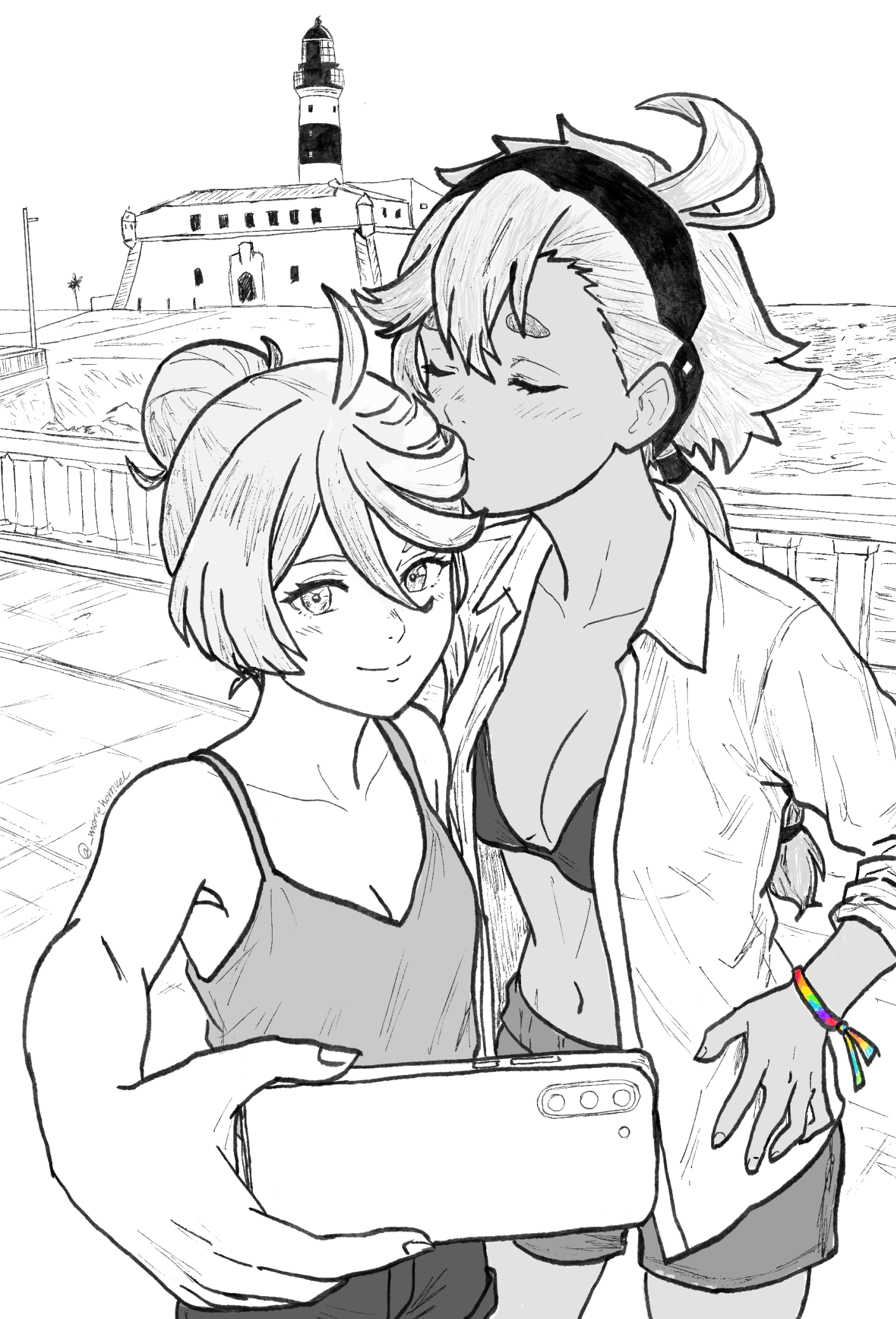
“What a fucking hell,” grumbled the driver.
He wiped his forehead with his shirt sleeve. The fabric under his arms was already dark, a sweat stain spreading aggressively across his uniform.
Suletta checked her watch. 7:42 AM. The Physics I class started at 8:00. And the bus wasn’t moving.
In her rush, she’d forgotten her headphones in Chuchu’s guest room—which was actually a glorified pantry in a small apartment in the Butantã neighborhood, improvised with an air mattress. “Ride with me, Su,” Chuchu had said, greasing her bike chain at six in the morning. “Traffic on Afrânio is a slow, horrible death.”
Suletta had refused. She was afraid of the motorcycles. She was afraid of Chuchu. But now, pressed between the turnstile and the backpack of another student—likely a Geography major, smelling of weed and resignation—Suletta regretted it.
Without her headphones, the city entered her head without any filter. The engine roaring. The symphony of concrete outside. Horns. Motorcycles cutting through the lanes like kamikaze missiles.
Normally, Suletta’s curiosity would win out. She’d observe the people. The way Paulistanos sleep standing up, holding the iron bar with a loose hand, trusting luck to keep them from falling.
But not today. Today was her debut in the academic world. The FUVEST entrance exam had been difficult, a war of Xs and numbers that she won by acing the Exact Sciences section. But this? Standing in an overcrowded bus, where moving a leg meant never being able to put it back on the floor? This seemed much harder.
The bus jerked. It braked abruptly. The human mass swayed. Forward. Backward.
Suletta was thrown against the Geography student’s shoulder.
“S-S-Sorry!” she said. Too loud. Too much of a Bahian accent.
No one responded. They just readjusted, tired bodies seeking a new center of gravity.
Suletta squeezed her backpack strap. She looked out the dirty window. Gate 1 of USP was right there. So close. And so unreachable.
Chuchu must be there already, she thought. Sitting down. Laughing at my face.
***
The air conditioning units in the School of Administration were punishing. It was an aggressive cold, an industrial imitation of Alaska designed to keep the brains of future CEOs in a state of maximum alert.
Miorine had been the first to arrive. Arriving early meant picking the most isolated spot. It meant not having to greet anyone. It meant controlling the most chaotic variable in the universe: other people.
The room smelled of damp concrete and cheap white paint. The smell of a public institution, even one that trained the country’s financial elite.
But Miorine, who had stepped out of an imported car with controlled temperature, carried her own atmosphere. She smelled like something that didn’t exist in São Paulo. Her perfume had the citric edge of bergamot. The green coolness of bamboo. And, hidden deep down, protected by layers of white musk, a touch of peach—a sweetness she allowed no one to access.
It was an expensive scent. The scent of someone who never had to run after a bus.
Miorine organized her pens on the desk. Aligned. Equidistant.
She looked out the window. Outside, the heat melted the asphalt. But inside, silence was a luxury she insisted on enjoying.
Moronic introductions, she thought. Degenerate parties. May the week end before it even begins.
The FEA-USP building always seemed to have a bit more care put into it than the others. The floor shone brighter. The chairs were upholstered. Perhaps it was to please the heirs, the Faria Limers playing at studying before taking over their fathers’ companies.
Miorine hated all of them. Almost as much as she hated the fact that she fit in perfectly.
The silence, unfortunately, had an expiration date. And it expired with the sound of heavy shoes on waxed linoleum.
“LOOK WHO ARRIVED EARLY! THE LITTLE PRINCESS OF BENERIT!”
Miorine didn’t turn around. She knew that voice. It was a voice that sounded like it had been marinated in misdirected testosterone. Guel Jeturk. The upperclassman who looked like he’d fail Macroeconomics II due to “ideological differences” with the professor.
He pulled out the chair next to her, turning it backward to sit with his legs wide, occupying two square meters of personal space that didn’t belong to him.
“What’s up, Miorine?” Guel grinned. His teeth were too white, a toothpaste commercial smile hiding a profound existential void. “Ready for the hazing? We chose a special paint this year. Hypoallergenic, of course. We respect dermatological minorities.”
Miorine closed her pencil case with a dry click.
“Guel,” she said, without looking at him, focused on an invisible point on the whiteboard. “Your existence, at this moment, is consuming an amount of oxygen that could be used by much more useful organisms. Like fungi. Or lichens.”
Guel laughed. He thought it was flirting.
“Always sharp, right? I love that. But seriously, Shaddiq is organizing the reception and…”
He was interrupted by the sound coming from the hallway. The boom-boom-patapum. The Bateria. That sonorous manifestation of barbarism. A group of twenty sweaty people beating drums inside an enclosed space.
“Ah! The Poli is here!” Guel stood up, excited like a lobotomized wolf.
The noise increased. It was deafening. The “Samba da Aclamação”—or whatever the name of that auditory torture was—invaded the room. Miorine felt a vein pulse in her temple. She stood up abruptly.
“Where are you going?” Guel shouted over the noise.
“Anywhere where the average IQ is higher than the ambient temperature,” she said, tossing her bag over her shoulder. “Which excludes anywhere within a hundred-meter radius of you, Jeturk.”
She walked out, heels clicking on the floor, marching away from the university joy. She needed silence. She needed humanity to stop, just for five minutes, being so human.
***
On the other side of campus, in the Physics building, the air was dense. Suletta had managed to enter the room sweating and apologizing to the door.
The professor was already there. A tall, bald man with the expression of someone who ate bats for breakfast. He was tapping a ruler on the desk.
“Late,” he growled. “Sit down. The exam has already started.”
“E-Exam?” Suletta’s voice came out shrill. “B-But it’s… the first day…”
“At USP, there is no first day, freshman. There is natural selection.” He tossed a sheet of letterhead paper onto her desk. “You have ten minutes. Worth your final grade.”
The blood drained from Suletta’s face. The letters on the page danced. She knew how to calculate a satellite’s trajectory. She knew the mass of the sun. But this?
Around her, the other students were writing frantically. Suletta felt her throat tighten. Tears rose, hot and salty, stinging behind her eyes. I don’t belong here, she thought. Mom, I want to go back. I want to sell my art on the beach.
She gripped her pen. Her hand shook so much it felt like she was holding a live wire. She was going to fail. On the first day.
Suddenly, the classroom door burst open.
A Spider-Man entered with a somersault that failed miserably, resulting in him landing flat on his back on the cold floor.
“STOP EVERYTHING!” shouted Spider-Man, getting up and throwing confetti into the air. “IT’S HAZING, YOU IDIOTS!”
The room exploded in laughter. The bald “professor” started laughing and pulled off a latex wig, revealing spiked purple hair underneath.
“WELCOME TO HELL!” he shouted.
And then, the balloons flew. And it soon became apparent that it wasn’t water but… paint. Gouache. Red. Blue. Yellow.
Suletta didn’t have time to react. A red balloon, fat and heavy, hit her square in the chest. Splat. The explosion was cold and damp. The paint ran down her neck. Down the white shirt she had ironed with such care. It went up her nose.
She stood paralyzed. A statue of shock covered in fake blood. She tried to wipe it. She moved her hand. It spread. It got worse. Now she looked like a crime scene.
“Hey, freshman! You look great! Matches your hair!” someone shouted.
Suletta couldn’t take it. Their laughter was acidic. She grabbed her backpack and ran.
***
The “Secret Garden” of USP wasn’t all that secret, but it was behind the Biology building, where the Wi-Fi didn’t reach, guaranteeing the absence of 90% of the students. There was an old garden hose, some bromeliads, and a wooden bench that, miraculously, hadn’t been tagged with graffiti.
Miorine was there, eyes closed, trying to recalibrate her chakras—or just counting to ten to avoid committing willful homicide against Guel.
The silence was broken by a sniffle. A damp, sad sound. Miorine opened one eye.
A girl was standing near the faucet. She was tall. Her red hair was tied in a disheveled ponytail. And she was, technically, destroyed. Her white shirt stained red. Her face smeared with blue and yellow. She sobbed quietly, trying to rub the paint off her arm with a dry hand, which only irritated her dark skin.
It was pathetic. It was the saddest thing Miorine had seen all morning.
Miorine sighed. A long, heavy sigh that carried the weight of someone forced to interact with the world.
She stood up. Walked over to the faucet. The girl flinched, like a stray dog expecting a kick. Her eyes were large, blue, terrified.
Miorine said nothing. She grabbed the end of the hose. She turned the tap. The water came out weak, lukewarm. She pointed the flow at the girl’s hands. Suletta blinked. Looked at the water. Miorine gestured with her chin: Go on. Wash.
Suletta did as told. She put her hands under the water. The paint began to come off, creating colorful puddles on the dry earth. The silence between them was filled with the sound of water. Of wind in the leaves.
Miorine watched. She saw the water run down the girl’s wrists. She saw how her eyelashes, wet with tears, clumped together. She saw a drop of red paint run down her collarbone, disappearing inside her collar.
Miorine felt something strange in her stomach. It was curiosity, not her usual irritation. A… tightening, perhaps. As if she had swallowed a magnet.
She looked up. Locked eyes with Suletta. Suletta stared back, her face wet, dripping with water and paint. For three seconds, time in São Paulo stopped. No one honked. No freshman screamed.
Miorine turned off the tap. The flow ceased. She pulled a cloth handkerchief from her pocket and held it out to the girl.
Miorine watched Suletta’s hand take the handkerchief. Her fingers were long, calloused at the tips, but there was a delicacy in the gesture.
“T-Thank you…” whispered Suletta.
When Suletta lifted her face to say thanks, Miorine caught her breath. It was an electric blue, vivid, irritatingly beautiful. And beneath the red and yellow paint, the bone structure of that woman’s face had a symmetry that would make Greek statues quit their jobs.
What a waste, Miorine thought, feeling her neck heat up for no reason. A work of art vandalized by idiotic upperclassmen.
***
The Humanities building had a very particular atmosphere. The walls were layers of posters from past strikes, sediments of student revolt glued with starch and hate. It smelled like old coffee and people who had very strong opinions about everything.
Miorine sat in the back row.
She didn’t need to be there. Her mother, Notrette, was French; her father, Delling, was Dutch. At home, multilingualism was a war tactic. Delling, when he showed up for dinner, made a point of conducting the conversation in French—not out of love for his late wife’s culture, but because it was the perfect language to criticize Miorine without the maids understanding. Dutch, guttural and dry, was reserved for when he spoke to banks or when his disappointment with his daughter exceeded the capacity of Romance languages.
But she needed the Humanities credits. Taking this class was like getting free points. And honestly? It was the only place on campus with decent soundproofing against the Poli drum corps.
The professor walked in. He wore a scarf. It was 32 degrees Celsius in São Paulo. But he wore a scarf.
“Bonjour, mes élèves,” he said, with an accent that wasn’t from Paris, nor Lyon, but from Mooca. An “R” that scratched the throat like sandpaper.
Miorine rolled her eyes so hard she nearly saw her own brain. This is going to be long, she thought, drumming her nails on the desk.
The professor looked at the five lost students in the empty room.
“The Dean’s Office insists on this barbarism called ‘Freshman Week.’ I refuse. I am paid to teach, not to be an accomplice to alcohol comas. Whoever is here will have class.”
The door opened timidly. A red head appeared. Then a clumsy body. Suletta.
She was “clean.” More or less. Her hair still had stiff streaks of blue gouache that hadn’t come out with cold water. The skin on her neck was red from scrubbing.
The professor stopped. Adjusted his scarf. “Mademoiselle? En retard?”
Suletta froze. “Huh? Yeah… sorry. I… I thought this was the CA office?”
“Asseyez-vous,” the professor sighed, pointing to any chair. “If you’re in, you’re learning.”
The class laughed. Miorine didn’t laugh. She felt that magnet in her stomach again. The girl was a walking disaster. Entropy in human form.
Suletta walked over, tripping on her own backpack strap, and collapsed into the empty chair next to Miorine. She smelled of fresh paint and cheap soap. She looked to the side. Saw Miorine. Her blue eyes widened.
“Y-You…” Suletta whispered. “The hose lady.”
Miorine opened a notebook. Blank page. Fine-tip black pen.
“If you get paint on my clothes,” Miorine said, lowly, without looking at her, “I will sue you, your family, and, if you have one, your dog.”
Suletta swallowed hard.
“Bien!” The professor clapped. “Activité en duo! Turn to the classmate next to you. Let’s practice basic introductions. Je m’appelle… J’habite à… J’aime… Now!”
Hell on Earth. Forced social interaction.
Miorine turned slowly in her chair. She crossed her legs. Rested her chin on her hand, staring at Suletta with the boredom of a queen listening to a peasant explain why the turnip harvest failed.
“Go on,” Miorine ordered. “Impress me.”
Suletta was sweating. Her lower lip trembled. “J-Je… Je map… mapple… Suletta.”
The accent was an offense, nearly the sound of a tire puncturing.
“M’appelle,” Miorine corrected, dryly. “The ‘e’ is silent at the end. It’s soft. Je m’appelle.”
“Je m’appelle,” Suletta repeated. Better.
She looked at Miorine. Deeply.
Miorine had built a fortress of notebooks and aligned pens around herself. But Suletta, who grew up fixing engines no one else wanted to touch, knew how to recognize when something was just… jammed.
Miorine’s gray eyes held exhaustion, not malice—they were the eyes of someone screaming for silence but dying to be heard.
Suletta decided, in that second, that she was going to make this lady laugh. Even if it was out of spite.
“You’re good at this,” Suletta said, smiling, ignoring the other’s icy tone. “Your voice changes when you speak French. It gets… less angry. It gets beautiful.”
Miorine felt her face burn. She needed to look away from Suletta’s eyes before she spontaneously combusted, so she used the professor’s task as salvation.
“Je m’appelle Miorine,” she fired off, with crystalline diction and a perfect French pout. She raised her chin, looking at Suletta with the aura of someone teaching a parrot to talk. “Simple. Keep going.”
“J’habite… à…” Suletta panicked. How did you say “maid’s room” in French? “À… São Paulo?”
“À São Paulo,” Miorine nodded. “And what do you like? J’aime…?”
Suletta thought. What did she like? She liked not being covered in paint. She liked water. She liked her mother, though her mother was too intense.
“J’aime…” Suletta looked into Miorine’s eyes. They were cold eyes, but for some reason, they didn’t look away. They were the only solid thing in that horrible day. “J’aime… tomat?”
Miorine blinked. “Tomat?”
“Tomato,” Suletta said in Portuguese, defeated. “I like to eat tomatoes.”
A silence fell between the two desks. The ceiling fan creaked above them, threatening to decapitate the class at any moment.
Tomato.
Miorine had heard it all. People saying they liked cars, wines they couldn’t pronounce, trips to Ibiza. No one had ever said “tomato.”
It was so stupid. So simple.
But she was transported to her mother’s greenhouse. The smell of damp earth. The smell of the leaves that, if you rub them in your fingers, leave a green, acidic perfume on your hands. Planting tomatoes was something Miorine insisted on doing despite her father considering it a “waste of time.”
It was her secret. And that girl… that walking catastrophe covered in paint… liked the same thing?
Miorine narrowed her eyes. She searched for any sarcasm in Suletta’s face. There was none. Only a brutal, silly honesty.
“Tomato?” Miorine repeated, her voice coming out a bit raspier than she intended.
“Yeah…” Suletta smiled, shyly. “My mom says it’s a fruit, my dad said it was a vegetable. I just like eating it. With salt. Plenty of salt.”
A smile escaped. A small smile, from the corner of her mouth, almost imperceptible. A flaw in the armor.
“J’aime les tomates,” Miorine corrected, her voice a shade softer, almost a whisper. “Plural.”
Suletta blushed until her ears burned, enchanted by the change in tone. “J’aime… les tomates.”
“Très bien,” said Miorine.
She turned back to the front, ending the interaction. Miorine’s heart was beating in a strange rhythm, an irregular thump-thump-thump that irritated her profoundly.
***
The invitation came at the end of class, as they were gathering their things.
“I-I’m making moqueca today,” Suletta blurted out, like someone throwing a grenade. “To celebrate that I survived the hazing. D-Do you… want to come?”
Miorine was going to refuse. The standard protocol was to say no. But something in her really wanted to know where the “Tomato Girl” lived.
“I’ll go,” Miorine said, closing her bag with a definitive click. “But if I get kidnapped, my father won’t pay the ransom. Consider yourself warned.”
They went to the apartment in Butantã, which was in an old building with no elevator, the kind that smells of old wax and Sunday lunch. Third floor.
When Miorine walked in, the aesthetic shock was immediate. It was a cubicle—that screamed. Walls painted in a “Barbie Having a Psychotic Break” pink. A racing bike hanging on the living room wall as if it were a Picasso. And plants. Lots of plants. Most looked like they were fighting for their lives, but they were there.
“Make yourself at home!” Suletta said, tossing her backpack onto a sofa that looked like it had been rescued from a dumpster. “Watch out for the Basil Plant on the floor, he’s sensitive.”
Miorine looked at the clay pot. The basil was parched.
“He’s not sensitive, Suletta. He’s dehydrated. It’s a botanical cry for help.”
Miorine sat on the edge of the sofa, keeping her posture rigid, holding her bag like a shield.
“I’m going to start!” shouted Suletta from the kitchen, which was actually just a narrow corridor.
Miorine watched, hypnotized against her will. The counter was an explosion of ingredients: gray shrimp, yellow bell peppers, that aggressively green cilantro, coconut milk… and, of course, a mountain of very red tomatoes.
She tried to look away, but it was impossible. There was an intriguing competence in the way Suletta occupied that tiny kitchen without bumping into anything. The knife went down with a dangerous swing, and with every rhythmic cut, Miorine saw the strong arm contract with precision, sweat making the dark skin shine under the yellow light.
Miorine crossed her legs, suddenly very conscious of her own rigid body on the torn sofa. She was used to people who ordered things done. Seeing someone doing—with their own hands, with fire, with scent—tripped something primitive in her corporate brain.
She’s strong, Miorine noted, her mouth suddenly dry. Physically capable. Useful. And other words she refused to formulate.
Suletta picked up a glass bottle with a dense orange liquid.
“Suletta,” Miorine called. “Does that… have the Ministry of Health’s approval?”
“It’s dendê oil I brought from my grandma’s farm!” Suletta smiled, her face glowing.
TSSSSSSSS.
The oil hit the hot pan, already full of ingredients. The scent, dense and oily, didn’t ask for permission and impregnated Miorine’s Italian linen blazer.
Miorine coughed, covering her nose with an embroidered handkerchief. “My God. My pulmonary alveoli are melting.”
“Relax, Miô!” The nickname slipped out by accident. “It’ll be ready soon. Just needs the special seasoning.”
Miorine saw Suletta chop small red peppers. Many of them. “‘Miô’?” Miorine repeated, offended and intrigued at the same time.
The heat in the apartment rose to sub-Saharan levels. There was no air conditioning, only a floor fan that spun lazily, spreading the smell of dendê to every corner.
“Done!” Suletta served two brown Duralex plates, indestructible. “Shrimp moqueca.”
Miorine looked at the dish. The sauce was neon orange. It bubbled. It looked like magma.
“If I die,” Miorine said, picking up her fork, “know that I will come back to haunt that dying basil.”
She ate.
First, the dendê. Unctuous. Heavy. Then, the cilantro—which Miorine loathed, but here… it made sense. And then… the fire.
The pepper exploded in Miorine’s mouth, a terrorist attack on her taste buds. Her eyes filled with tears instantly. Her pale face turned as red as Suletta’s hair. She dropped the fork. The metallic sound echoed on the plate.
“Help!” Miorine choked. “What is this? Napalm? Are you trying to melt my tongue?”
Suletta’s eyes went wide, startled, her mouth full of farofa. “I-Is it strong? I thought it was weak…”
“WEAK?!” Miorine coughed, fanning her tongue with her hand. “Suletta, I am seeing my ancestors! And they are screaming! WATER! For the love of God, water!”
Suletta ran and brought a glass full of water from the clay filter. Miorine drank it in one gulp. The water, tasting of earth, went down putting out the fire.
She breathed deeply. Her chest rose and fell quickly. Sweat ran down her temple, ruining her makeup. She looked at Suletta. The girl looked like a dog that had peed on the carpet.
“Sorry…” murmured Suletta. “I exaggerate. My mom always says…”
Miorine felt the residual taste in her mouth. It burned. But… it was the most alive thing she had ever eaten.
She wiped the corner of her mouth with the cheap paper napkin and pushed the plate back toward Suletta.
“It’s horrible,” said Miorine, her voice hoarse. “It’s an aggression.”
Suletta lowered her head.
“Give me more,” Miorine added. “And give me more of that clay water.”
Suletta lifted her head, her blue eyes shining. A massive smile broke out. “Coming right up!”
As Suletta served the second ladle of that orange magma, Miorine thought her father would have a stroke if he saw her there. Sweating dendê, in a pink apartment, eating pepper with a girl she had just met but who already knew how to set her mouth on fire.
***
The silence that followed was only the sound of the fan and breaths returning to normal after the feast. Miorine wiped the corner of her mouth again, recovering her dignity millimeter by millimeter.
“By the way,” Miorine said, her voice still a bit raspy, but as icy as ever. “It’s not ‘Miô.’”
Suletta stopped with the water glass halfway to her mouth. “Huh?”
“My name.” Miorine adjusted the collar of her blazer. “I didn’t give you permission to nickname me, especially with the onomatopoeia of a cat meowing. My name is Miorine.”
Suletta blinked. “Miorine…” She tested the name in her mouth. It sounded fancy. “Miorine what?”
Miorine arched an eyebrow. Was it possible someone in that university, in that city, in that hemisphere, didn’t know?
“Rembran. Miorine Rembran.”
She waited for the reaction. The shock. The recognition that she was standing before the heiress of the Benerit Group, the corporation that was probably the owner of the cement in that building and the paint on those walls.
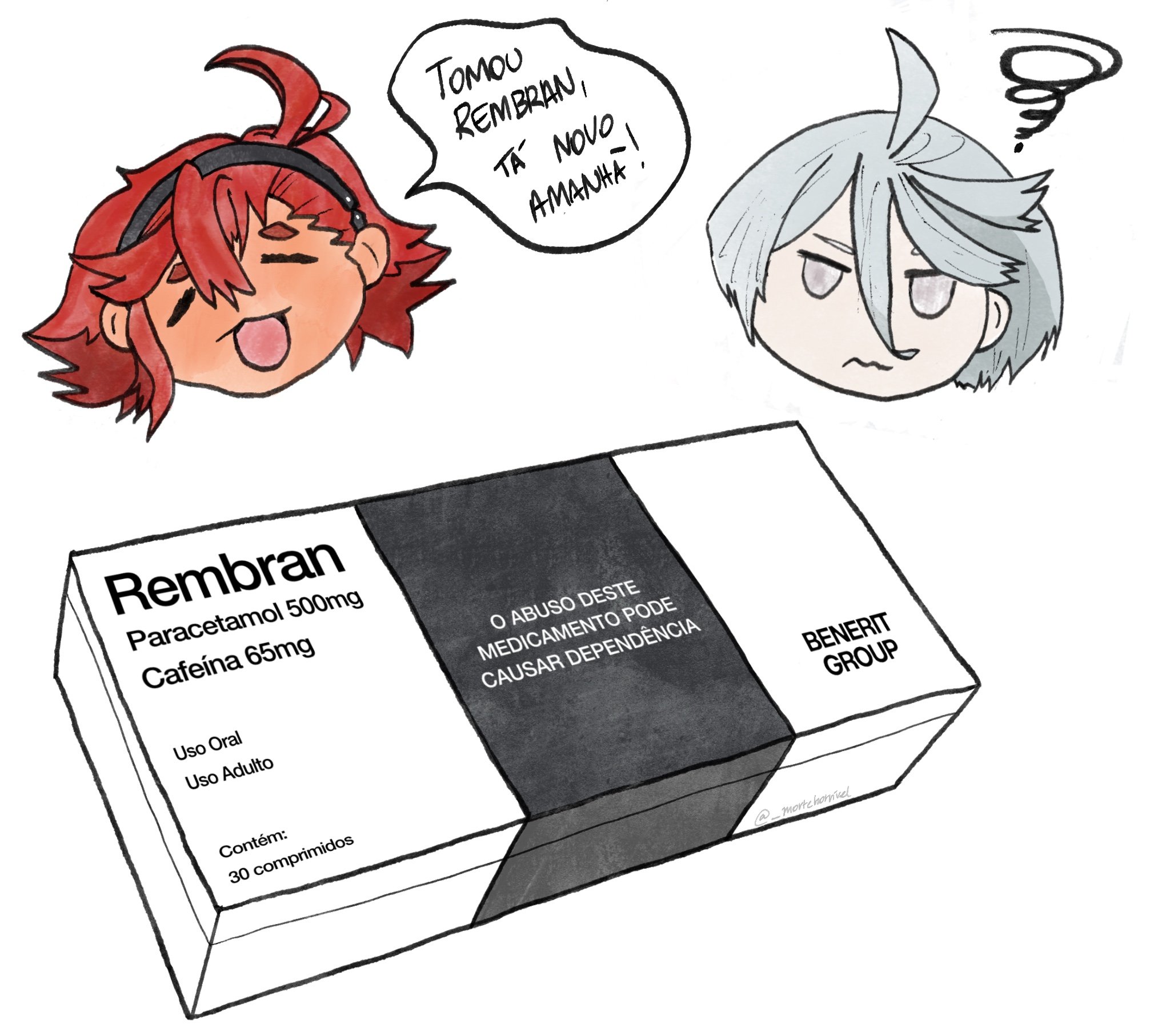
Suletta smiled. “Pretty. Sounds like a jingle for a headache medicine. ‘Take Rembran, the pain can’t stand!’”
Miorine opened her mouth. Closed it. The girl had no idea. It was… refreshing? Or insulting? Miorine decided it was both.
“And you?” Miorine asked, giving up on explaining her family tree. “Besides Suletta ‘Tomato’?”
Suletta smiled, wiping a drop of moqueca off the table with her finger. “On my documents? Suletta Samaya. But everyone calls me Suletta Mercury.”
Miorine paused. “Mercury? Like Freddie?”
“No, like Daniela!” Suletta said, as if it were obvious. “Auntie Dani. She’s a very close friend of my mom’s. Paid for my sister’s ticket to Europe and everything.”
Miorine blinked. Her brain tried to process the information.
“Wait. Are you telling me your ‘Auntie Dani’… is Daniela Mercury?”
“Yeah!” Suletta nodded, happy. “She comes over to eat caruru when her schedule allows. She says I’m her ‘Little Mercury’ because I’m restless. So it stuck.”
Miorine looked at the weird apartment. Looked at the bike on the wall. This girl lived in a gourmet dungeon in Butantã but had Daniela Mercury’s phone number? Brazil, Miorine concluded, was not for amateurs.
Miorine’s phone vibrated on the table, saving her from a logical collapse.
“It’s the car,” Miorine said, showing her phone screen to Suletta. “He’s lost. I think I have to walk down to the avenue.”
Suletta jumped up, inspecting Miorine’s screen. “I’m coming with you! It’s late, it’s dangerous. My dad used to say I have magical invulnerability. I’ll protect you.”
Miorine looked at Suletta. Lanky. With a dendê stain on her T-shirt. “I feel bulletproof,” Miorine said dryly.
***
The avenue at night had a very specific color palette: the yellow of failing streetlights and the red of car taillights.
Miorine walked fast, clutching her bag. Suletta was at her side, skipping along, humming something out of tune.
“There!” Miorine pointed. A black sedan stopped at the curb, hazard lights on. The car looked like a Fiat Siena that had lived a very hard life.
“Wait,” Suletta said. “The app said it was a Hyundai HB20, didn’t it? That thing looks like it’s been impounded three times.”
“Don’t be an elitist, Suletta,” Miorine snapped. She just wanted to go home and take a three-hour shower.
Suletta obeyed, opening the rear door with a theatrical valet gesture. Miorine climbed in, relieved by the blast of cold air that came from the vehicle’s interior.
But instead of closing the door, Suletta poked her head and torso inside the car, invading Miorine’s and the driver’s personal space.
“Good evening, Mr. Godoy!” Suletta said, nearly shouting to the front seat. “Is the AC on max? My friend is sweating dendê, you see? You gotta keep it cool!”
And then, in a move of pure lack of spatial awareness, Suletta climbed in and sat down next to Miorine, pulling the door shut. The Siena’s back seat was cramped, forcing contact.
Suletta’s thigh—worn denim, hot—pressed against Miorine’s—Italian linen, cold.
Miorine hated unsolicited contact. She had a personal space bubble with a one-meter radius. But when Suletta’s thigh brushed against hers, Miorine’s body felt like it had touched a ground wire, earthing itself. The constant buzz of anxiety in Miorine’s head vanished.
Miorine looked to the side. Suletta looked at her. For a millisecond, there was a mutual recognition. Ah. I must know you from somewhere that isn’t here.
“What are you doing?” Miorine asked, incredulous. “You were going to let me go.”
“I’m just checking if the seatbelt works!” Suletta protested, pulling the belt. “Did you see the state of this car? Safety firs—”
CLACK. The sound of the door locks engaging was loud.
Without responding, the driver turned around slowly. In the passenger seat, another man pulled a balaclava over his face up to his nose.
“Godoy is taking a nap in the trunk, princesses,” the man in the mask said, pointing a rusty revolver that looked like it was from the last century. “This is a hold-up! Empty your pockets! Now!”
Suletta blinked. “Is… is this a TikTok prank? Where’s the camera?”
“SHUT UP!” the driver shouted. “This is a kidnapping, dammit! We want Delling’s daughter! Which one of you is the fancy brat?”
The two thugs looked at the back seat.
Miorine: Linen blazer, expensive bag, smelling of imported perfume—mixed with dendê—, the face of someone who sues people for fun.
Suletta: Stained T-shirt, jeans, Converse sneakers with holes, smelling of cilantro.
“It’s the redhead!” said the one in the mask, pointing at Suletta.
Miorine and Suletta looked at each other. “WHAT?!” they both shouted together.
“Look at her hair!” the thug argued. “Red. Rich people stuff. Poor people don’t have the money to maintain that color, bro. And look how tall she is. Poor people are malnourished. This one ate a lot of good yogurt.”
Miorine felt a deep offense hit her ego.
“Listen here, you imbecile,” Miorine exploded. “I am wearing a $600 blazer! And you think the heiress is the girl wearing sneakers held together with masking tape?!”
The thug looked at Suletta. Then he looked at Miorine. “Ah, yeah. Makes sense.” He pointed the gun at Miorine. “So it’s you. Hand over the phone and the bank password. And you, redhead, scram. Get out of the car.”
Suletta looked at the gun. Looked at Miorine. Miorine was even paler. The tremor in her hand was slight, but Suletta saw it.
Auntie Dani said to have courage. Her mom said to have pepper spray. Suletta had neither. But she had stubbornness.
“No!” Suletta shouted, grabbing Miorine’s arm.
“No?!” The thug growled. “You want to get shot?”
“She… she doesn’t know the passwords!” Suletta made up, her voice trembling an octave higher than normal. “She’s just the… the ‘front’! Her father blocked everything! Only I have the passwords!”
Miorine looked at Suletta. What the hell was she doing?
“Is that true?” The driver looked at Miorine through the rearview mirror.
Miorine gripped her bag handle until her fingers ached. Her administrator mind kicked into action.
“Exactly,” Miorine said, assuming her arrogant posture. “I am legally barred due to excessive spending. This woman is my legal guardian. Without her retina scan, the bank vault won’t open.”
The thugs looked at each other. “Guardian? With that face of someone who sells bead necklaces in the park?” the masked one doubted.
“It’s a disguise!” Suletta shouted. “So as not to attract attention! We call it Low Profile Ostentation!”
“Fine, fine, enough talk!” The driver accelerated the car, tires screeching. “Take them both! If there’s no money, we sell the redhead to the circus and ask for ransom for the white girl.”
The car shot down the avenue, weaving through traffic. In the back seat, in the dark, Miorine felt a sweaty, trembling hand take hers. She looked to the side. Suletta had her eyes closed, murmuring something that sounded like a prayer.
“A cor dessa cidade sou eu… o canto dessa cidade é meu…” Suletta whispered, in a panic.
“If we make it out of this alive,” Miorine whispered, squeezing Suletta’s hand, “I’m going to teach you how to lie properly. ‘Low Profile Ostentation’ was horrible.”
Suletta opened one eye and smiled nervously. “It worked, didn’t it?”
“We’re in a stolen car with two armed idiots,” Miorine responded. “Let’s call it a partial success.”
***
The “hideout” was actually the back of an abandoned mechanic shop on the East Zone of the city. They shoved them into a room that served as a warehouse and locked the metal door from the outside.
“No funny business!” one of the thugs shouted. “The boss is coming to negotiate the ransom. And if you try to escape, we release the pit bull!”
An asthmatic bark was heard from outside.
“Does that dog smoke?” Miorine asked, wiping a dirty bench with her handkerchief before sitting.
Suletta’s eyes scanned the room. There was an old fridge with no door. A dismantled microwave. Wires hanging from the ceiling like urban vines. A car battery leaking acid.
“Miorine,” Suletta whispered. Her voice changed. “Do you have a bobby pin?”
Miorine touched her perfect bun. “I have several. They’re titanium. Why?”
“Give them to me.” Suletta held out her hand. “And your belt. Give me your belt, I might need it if the buckle is conductive metal.”
Miorine handed the items over, watching, fascinated and horrified, as Suletta transformed. The girl pulled a keychain from her pocket—a mini Phillips screwdriver—and attacked the old microwave like a heart surgeon on a battlefield.
“What are you doing?” Miorine whispered. “Going to heat up some lasagna for them?”
“Magnetron,” Suletta murmured, the screwdriver between her teeth. “High-voltage capacitor. They rigged the electricity here, see that exposed wire near the door? The tension is unstable.”
Suletta stopped. Looked at Miorine. “I need ten minutes. And I need them to come through that door wet. Or with sweaty hands.”
Miorine understood.
“Ten minutes,” Miorine confirmed. She stood up, smoothed her wrinkled blazer, and walked to the locked door.
Taking a deep breath, she embodied the spirit of every insufferable client her father ever served and channeled the energy of a luxury condo manager.
“HELLO?” Miorine shouted, kicking the door with the sole of her shoe. “MR. KIDNAPPER? WE HAVE A COMPLIANCE ISSUE HERE!”
“Shut up!” came the shout from outside.
“I WILL NOT!” Miorine increased the volume. “Listen here, you amateur! I am hypoglycemic! If I faint in here, the ransom value drops 40% for ‘damaged goods’! My father doesn’t pay for faulty products!”
On the other side, Suletta was stripping wires with her teeth, joining the car battery to the microwave capacitor.
“What the fuck is hypoglycemic?” the kidnapper’s voice asked, closer to the door.
“It’s blood sugar!” Miorine continued, imperiously. “I need a soda with sugar! Now! And don’t bring me any off-brands! If I die here, you’ll be charged with felony murder, and the sentence goes up to thirty years! Have you performed a risk analysis of this crime?”
“She’s right, man!” the other thug said. “If the girl dies, Delling will kill us.”
“I want a Coca-Cola!” Miorine demanded. “And I want it cold! And I want you to wash your hands before you give it to me, because this place is a tetanus hazard!”
While Miorine gave a bio-safety lecture at the top of her lungs, Suletta connected the last wire to the metal handle on the inside. She looked at Miorine and gave a thumbs-up. But she needed the “leak.”
Suletta pointed to a bucket of dirty water in the corner. Then she pointed to the floor, near the crack under the door.
Miorine understood.
“AND THERE’S MORE!” Miorine kicked the bucket, making the water run under the door, toward the bandits’ feet. “THE PIPE BURST! IT’S FLOODING IN HERE! IT’S GOING TO GET MY SHOES WET!”
“Goddammit, what a nagging woman!” the thug shouted. “Open the damn thing, man! Give her the Coca-Cola so she shuts up!”
Suletta pulled Miorine back, up onto a dry wooden pallet. “Don’t touch the floor,” Suletta whispered.
The sound of the key turning in the lock. The sound of footsteps in the puddle that leaked outside. The thug’s hand—sweaty, nervous—touched the metal handle.
ZZZZZTTTTT-POW!
The sound was sharp, like a cracking whip. A blue spark lit up the dark room. There was a scream. A high-pitched sound of painful surprise. The workshop lights flickered and exploded. Total darkness.
“THE LIGHTS!” Suletta shouted. “RUN!”
The door burst open with the weight of one of the kidnappers’ bodies, who was on the floor, shaking slightly—but alive, thank God and physics.
Suletta grabbed Miorine’s hand.
“Hold my hand and don’t let go!”
They jumped over the kidnapper’s body. In a survival reflex, Miorine fished her bag off the damp floor as she passed. The second thug was groping in the dark, blinded by the flash.
“To the left!” Suletta commanded, pulling Miorine through piles of old tires.
They burst into the workshop yard. The night welcomed them. The asthmatic pitbull looked at them, wagged its tail, and went back to sleep.
“The gate!” Miorine pointed. It was locked with a chain.
“Get back!” Suletta still held Miorine’s belt. She wrapped the expensive leather around her hand for grip and wedged the heavy metal buckle between the chain links, using the buckle as a fulcrum.
“Hnnng!” She twisted her wrist with absurd strength. The metal groaned. The Italian leather cracked.
Snap.
The rotten link in the chain gave way under the pressure of the improvised lever, and the gate swung open.
They squeezed through the gap in the gate and hit the sidewalk. They ran. They ran as if the university drum corps was right behind them. They only stopped three blocks later, under the yellow light of a gas station.
Suletta breathed, panting. Her face dirty with soot, her hair a bird’s nest. Miorine was leaning against a pole, her blazer torn at the sleeve.
They looked at each other.
The silence lasted three seconds. And then, Suletta started laughing. It was a nervous laugh that started in her belly and exploded.
“You…” Suletta pointed at Miorine between laughs. “‘Risk analysis’! ‘Damaged goods’!”
Miorine tried to maintain her posture. Tried to stay serious. But the adrenaline was a potent drug. A smile escaped, soon turning into a laugh. “And you…” Miorine panted. “You electrocuted a man with a microwave, Suletta! You are a psychopath!”
“I’m an engineer!” Suletta corrected, proudly, holding up the screwdriver as if it were Thor’s hammer.
The laughter died down, replaced by a heavy silence. Miorine realized she was still holding Suletta’s hand.
Miorine squeezed her fingers against Suletta’s. It was a firm, possessive squeeze. A silent recognition that this dirty hand had just saved her life. Suletta returned the squeeze, her thumb lightly stroking Miorine’s fingers.
To Miorine, the dirty asphalt of the gas station felt like the most solid ground in the world—as long as Suletta was standing on it, too.
“Let’s go, Bootleg Tony Stark,” Miorine said, her voice a tone lower, more intimate, extending her free hand to hail a passing taxi. “Let’s go to my apartment. There’s armed security and, I promise, tomatoes.”
Suletta smiled. Her smile pierced the darkness of the street. “And Coca-Cola?”
Miorine looked into her eyes.
“And Coca-Cola.”
Glossary
- Butantã: A neighborhood in São Paulo where the main USP campus is located.
- Afrânio: Referencing the Afrânio Peixoto avenue, a major access road to the university.
- FUVEST: The incredibly difficult entrance exam for the University of São Paulo (USP), known for being one of the most competitive in Brazil.
- Paulistano: A native or inhabitant of São Paulo city.
- Poli / FEA / Humanities: Names of the different schools within USP (Engineering, Economics/Admin, and Humanities/Literature). They have famous rivalries.
- Faria Limers: A derogatory term for young, wealthy professionals who work on Faria Lima Avenue (São Paulo’s Wall Street), often characterized by using English business buzzwords and wearing quilted vests.
- Bateria: The university drum corps, usually made up of students, who play samba and other rhythms during parties and games.
- Mooca: A traditional neighborhood in São Paulo with a strong Italian heritage. The “accent from Mooca” is very distinct, often caricatured by a strong, raspy “R”.
- Moqueca: A traditional Brazilian seafood stew, made with dendê oil and coconut milk.
- Dendê: Unrefined red palm oil, the soul of Afro-Brazilian cuisine. Unlike the processed, neutral palm oil found in industrial snacks worldwide, dendê is thick, bright orange, and has a distinct, strong aroma. It is essential for dishes like moqueca.
- Duralex: A brand of tempered glass tableware that is ubiquitous in Brazil. The amber/brown colored plates mentioned are a nostalgic staple in many Brazilian households.
- Farofa: A toasted cassava flour mixture, often eaten as a side dish in Brazil to add texture to stews and beans.
- Axé: A Yoruba concept representing “life force,” “energy,” or “power.” It is used as a greeting, a blessing, and also names the upbeat, high-energy pop music genre born in Salvador (“Axé Music”).
- Daniela Mercury: An iconic Brazilian singer, often hailed as the “Queen of Axé” (the music genre, not the life force—though she has the energy, too. She’s intense). She’s an openly gay superstar and LGBTQ+ icon in Brazil. (No relation to Suletta Mercury… or is she?)
- Caruru: A ritualistic Bahian dish made from okra, shrimp, toasted nuts, and dendê oil.
- Seu Godoy: “Seu” is a respectful shortening of “Senhor” (Mister), commonly used for older men or service workers.
- Magical invulnerability/locked body (Corpo Fechado): A spiritual shield against physical harm, curses, or bad luck. Rooted in Afro-Brazilian traditions like Candomblé.