
Chapter Text
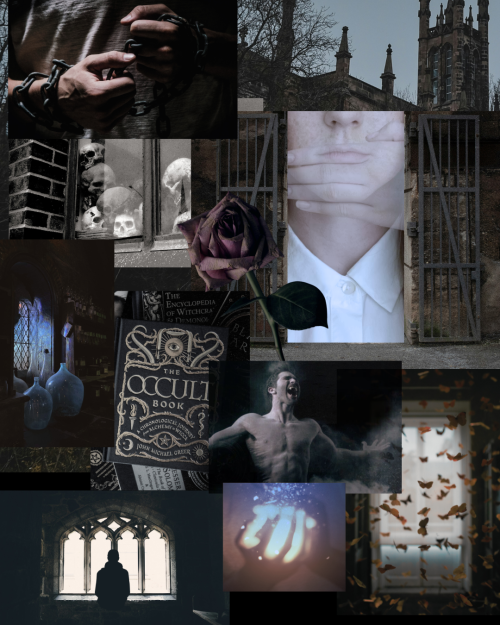
Artwork by quackquackcey
Stiles’ dorm room was the size of a generous coffin and had roughly the same ventilation. The walls were just crooked enough to create gaps behind the furniture that claimed pencils and socks and every other piece of detritus that a seventeen year old produced. Like every dorm room, there was a huge plate glass window that looked out over the Void, which was not much of a view, considering that the Void looked like nothing.
He lay on his bed and stared at the ceiling, where a crack ran in a warped parody of the shore of the Pacific Ocean, as if the school was taunting him personally. It probably was. He missed California. He missed sunshine and strip malls and curly fries and his dad microwaving something tasty for dinner. He missed cell service.
He missed having a cell phone that needed cell service.
It had been two years since Beacon Academy had cheerfully confiscated all digital devices at Orientation. “You won’t need these, but you’ll get them back with your diploma!” Headmaster Finstock had trilled, as if they were boarding a cruise instead of being suspended in a metaphysical abyss powered by teenage malaise for the next three and a half years.
Physical mail was permitted. Packages and letters involved waiting, and wishing, and that sinking disappointment when nothing arrived with your name on it. Once a week, a brass-mouthed chute in the main hall coughed up envelopes and a rare box like it had emphysema. Stiles had received three letters from his dad this term. All of them said some version of: Proud of you, kiddo. Work hard. I miss you. Write when you can.
He wrote weekly, but his dad was slow to respond. Stiles was suspicious that the school was shredding half of his correspondence just for the angst of it.
He grimaced at the familiar suspicion and stretched, feeling his back pop and release as he groaned. He reached for his cup of iron-tasting water, and knocked over his open Physics textbook. The heavy book hit the floor with the satisfying thud of a GPA dropping.
“Of course,” he muttered, snatching up the book as if haste might restore his place in the dense text.
Physics at a magical academy seemed like a waste of time. It was required because Headmaster Finstock believed that “true mastery of the arcane requires a firm grasp of the mundane.” Stiles suspected this was code for “I suffered through it and now so will you”, but it was hard to hold it against the lighthearted Headmaster who was forever trying to get everyone to call him “Bobby”.
Unlike Mr. Harris, who taught Physics and had the warm bedside manner of a prison warden and the grading philosophy of an executioner. Like most teachers, he administered classes begrudgingly, preferring to work on his own mysterious private research enabled by the uniquely sterile void in which the Academy floated. He was not impressed by haphazard student magic. He was especially not impressed by magic used to fudge lab results.
“Gravity does not care about your feelings,” Mr. Harris had said on the first day of term, pinching the bridge of his nose while someone’s experiment attempted to levitate the lab tables.
This was objectively untrue at Beacon Academy, where everything cared about your feelings. Feelings were currency. Feelings were fuel. Feelings were the difference between a respectable shield charm and spontaneously setting your eyebrows on fire during midterms.
Stiles resettled himself in the hard chair and smoothed the Physics textbook’s rumpled pages, finding his place. The chapter heading read: Electromagnetic Induction. Beneath it was a diagram that looked like a migraine.
He was failing.
Not catastrophically – Beacon reserved catastrophic for things like voidwalker incursions and cafeteria meatloaf – but decisively. His last test had come back with a red 62% circled in a way that suggested Mr. Harris had enjoyed the circling.
Scholarship students were not technically required to maintain a certain average grade or ranking. They were simply encouraged to “embody academic excellence reflective of Beacon’s storied legacy.” Which was administration-speak for: Don’t embarrass us, you charity case.
Stiles pressed his forehead to the page. He imagined being able to do the kind of magical working that would imprint the diagram that may as well have been arcane into his mind permanently. Maybe by the time he graduated, he thought with a twist of his mouth.
The Academy floated in a pocket dimension sustained by adolescent despair and a robust endowment. The more intense your emotions, the more raw magic you could access. Homesickness could power a teleportation circle. Heartbreak could level a courtyard. Existential dread was excellent for defensive wards.
Beacon did not officially endorse trauma. It simply curated it.
The dormitories were designed for optimal longing, all single rooms and shabby shared bathrooms on the lowest level where the school’s floating foundations could cause the most distress. The food was aggressively mediocre, or else designed to disgust, erratic enough to always be an unpleasant surprise. The mail chute was unreliable on holidays when he most wanted to open a card with a cartoon reindeer on it from his dad. And there were no phones. No internet. No late-night scrolling through other people’s curated happiness to lift your own inadequacy.
Stiles would have killed for social media. Or for a little bit of doomscrolling. Or even one of those terrible mobile games where you match jewels and feel briefly competent.
Instead, he had coupled partial differential equations.
He stared at the problem set.
Calculate the maximum heat of a rectangular loop of wire…
He felt nothing about the loop of wire. This was the issue.
He needed to be sadder.
Midterms were next week. Unlike Physics, there would be practical exams where raw output and precision were both required. If he didn’t generate enough power, the spells would sputter. If they sputtered, the faculty would look at him with Concern. Concern led to Meetings. Meetings led to Letters Home.
When he had been selected to Beacon Academy, his dad had been both baffled and proud. He winced now to remember how he had begged to go, imagining a fresh start to his story. And magic. Magic had seemed so cool, before two years of Beacon Academy forced him to face the price of being a wizard. He imagined his dad getting one of those thick envelopes from the school, both horrified by and trying to cultivate his sense of prickling dread. We regret to inform you that Stiles has not achieved sufficient emotional volatility…
He shut his eyes.
He could try thinking about Mom. That well had been tapped thoroughly in his first year, but there was always sediment at the bottom. He could replay the hospital room, the beeping machines, the lack of recognition in her eyes. The way everyone said strong like it was a consolation prize.
He felt the familiar ache stir, slow and syrupy.
There it was. Productive grief.
He hated that it was productive. The wound of his mom’s death had been almost healed by the time he had been in junior high back home, but along with his excellent grades and natural aptitude, maternal tragedy had been enough to warrant attention from the world of magic. He might not have been so eager to accept the scholarship to the mysterious, exclusive school of magic had he understood that his scabbed-over grief would get ripped open over and over again in the name of generating enough emotive power to charge his spells.
For a moment he considered easier methods than delving into the pain that had become almost too familiar to be a useful source of power. A twisted ankle. A slammed finger in the wardrobe door. Nothing dramatic, just enough sharpness to spike the meter during practicals.
He looked at the wardrobe.
The wardrobe, bland and pine-scented, loomed with all the menace of Scandinavian minimalism.
“Don’t tempt me,” he told it.
Self-inflicted injury was technically against the rules, not for moral reasons, but simply for inefficiency. Physical pain was a crude fuel, and emotional pain burned longer, cleaner. The Academy preferred renewable resources.
He sighed and sat up straighter, scolding himself for his poor posture. He felt a tiny trickle of warmth though his body as the shame of his own internal nagging offered a thread of power.
There were certainly students who harmed themselves anyway, lacking a grim enough personal history to draw on past traumas. But Stiles had made it through the first two years at Beacon without resorting to dangerous hobbies or punishing fitness routines or straight-up maiming himself. He had a Titanic's-worth of sunk cost fallacy now, and his pride would not let him become the kind of protagonist who dramatically harmed himself for power. That was at least a trilogy’s worth of poor decisions, and he only had two more years to survive.
Instead, he would do something far better for multitasking.
He would stay up.
He glanced at the clock above his desk. 11:43 p.m. Lights-out was midnight, though the teachers never stepped foot onto the dormitory floors, and enforcement was lax unless someone was summoning something with extra limbs.
He could sleep. He should sleep. Sleep deprivation made him weepy and thin-skinned and prone to staring into the Void a little too long.
Perfect.
He hunched over the textbook and began copying out equations by hand, each symbol a tiny act of penance, each over-hard press of his pencil filling the coffers of his power drip by drip. His handwriting deteriorated as the minutes ticked by, slanting into script that looked mildly possessed.
Around him, the last sounds of the day murmured from the dormitory. The pipes with their always-wrong-temperature water creaked and pinged. Someone down the hall laughed too loudly and then abruptly stopped, as if remembering that joy was a limited resource best spent wisely.
Stiles imagined the Academy itself, vast and gothic, drifting through nothingness like a bored god’s paperweight. It fed on them. Not maliciously. Just… institutionally.
His dad would have knocked on his bedroom door and said, “You alive in there?” in a tone that suggested he was prepared for either answer. He missed his dad, even though that longing was dry and academic after 26 months away from home. Not that he was counting.
Here, no one knocked. Like any group of teenagers, privacy was sacred to the students, but he suspected that isolation was the true goal.
At 1:17 a.m., he finished the problem set. It was almost certainly wrong. He felt a dull, buzzing fatigue behind his eyes. Not despair, exactly, but more like the emotional equivalent of greasy hair, a sense of personal disarray that weighed on him.
Speaking of.
He sniffed his sleeve.
He should shower. He’d meant to after dinner, but he’d gotten lost in a spiral about scholarships and shame and had ended up reorganizing his desk by level of existential threat before he had tucked into his dreaded Physics homework.
The communal bathrooms were at the end of the hall. Now that it was long past lights-out, he would have to creep down the black tunnel of the hallway to face cold tile and flickering security lights and mirrors that sometimes reflected more than was strictly present. It wasn’t worth the cost of the magic to conjure a bobbing mage light that would cost more than that the creepy journey would generate.
Still, he imagined the maybe-if-he-was-lucky-hot water sluicing off the day, washing away the sticky film of anxiety and graphite and questionable cafeteria gravy.
He imagined climbing into bed clean, the pleasure of clean limbs against the chlorine-scented sheets. He would feel… slightly better.
He eyed the ceiling crack that reminded him of home like a splinter.
Misery was magic.
Going to bed grimy, faintly itchy, aware of his own unpleasantness, that had to count for something. A low-grade hum of dissatisfaction to stoke tomorrow’s spellwork.
“Probably better than stubbing a toe in the hallway,” he muttered, and turned off the lamp.
The room plunged into darkness. The Void pressed faintly against the window, vast and patient, broken up by the crappy illusion of constellations and waxing moon that were about as convincing as glow-in-the-dark plastic pasted to a bedroom ceiling, even though they were enchanted to track the moon cycles outside the Void.
He slid under the covers, fully clothed, skin tacky, brain thrumming.
He felt gross. He felt lonely. He felt small and suspended in nothing.
Perfect.
The perpetual unease of the distant sound of metal groaning where massive chains tethered the building in the Void was a familiar lullaby.
Stiles stared into the dark and tried very hard to charge his magical batteries, charging trickle by miserable trickle, but it was hard not to imagine a glowing battery icon in the corner of his vision, perpetually stuck at 3%.
The next day’s Physics midterm came with all the fanfare of a typical Academy morning: no sunrise, no sunlight, gray oatmeal, and a classroom that looked like it had been designed by someone who hated both joy and curvature.
The desks were arranged in neat, punishing rows. The windows showed the Void in its usual performance of yawning black nothingness. On the blackboard, someone had written GOOD LUCK in chalk. Mr. Harris had erased the word GOOD, leaving a desultory smudge.
Stiles sat in the third row, center, though he hadn’t chosen his desk. Beacon Academy assigned seats by an opaque algorithm that claimed to maximize “productive emotional friction.” He was flanked, as always, by people who made him feel inadequate in entirely different ways.
To his left sat Erica Reyes, dragging her wild mane of blonde hair back from her artfully-made-up face. After a childhood spent sickly with some ailment she’d been bullied for, Erica was making up for lost time. She treated life like an opponent in hand-to-hand combat. She had once broken a boy’s nose in Practical Magic because he’d “weaponized wistfulness incorrectly.” She cracked her knuckles before exams.
To his right sprawled Isaac Lahey, fellow scholarship student, chronic underachiever. Isaac had mastered the rare Beacon Academy distinction of being both brilliant and aggressively uninterested. His personal history was so dark that he didn’t even need to share it to coast off of it, and the rumors of why he had been selected became more outrageous each term. He wore loose curls, a rumpled long-sleeved shirt pushed up to his elbows, and the expression of someone who could ace this test but would prefer not to.
“Ready to fail magnificently?” Erica asked, her bright lipstick framing a challenge of a grin.
“I don’t do anything magnificently,” Stiles muttered, double checking his notes. “I specialize in sustained mediocrity.”
Erica snorted. “Shut up. You’ll do fine.”
“Define fine,” Stiles said.
“Probably better than me,” she replied grimly, and flexed her fingers like she was about to strangle a mathematical proof. She took a test booklet from the stack and passed the rest to him.
Stiles flipped open the cover and felt the nervous adrenaline surge and the warm tingle of power that accompanied that anxiety followed a moment later. The first page was mercifully multiple choice, but the second was not. The third page appeared to be a personal attack.
A solenoid of length L…
He tried to focus. Really, he did. But there was something uniquely humiliating about solving for the leverage of simple machines while suspended in a sentient abyss. The Academy floated in a tear in reality powered by adolescent despair, and he was being asked to calculate current density.
He wrote his name at the top of the page.
The scratching of pencils began. Erica attacked her paper like it had insulted her. Isaac leaned back, chewing on his pencil with mild interest. Somewhere behind him, Jackson Whittemore sighed theatrically.
Jackson did not merely take exams. He performed them, milking them for every ounce of stress he could. With a happy, loving family and nothing but being an adopted orphan to show for his childhood, Jackson had to claw his way into enough power to maintain his fourth-place-ranking in the vicious math of grades that the Academy recalculated nightly at dinner. The day’s update was timed, and public, designed to spoil as many appetites as possible.
Stiles didn’t need to see Jackson to picture him: posture immaculate, hair styled like he had conjured a barber that morning, jaw set with tension that followed him like a storm cloud on a string.
Stiles worked through the first page. Some answers felt solid. Others felt like he was choosing based on vibes and a prayer to Archimedes.
It could not have been more than ten minutes when Mr. Harris’ voice answered a straining, perfectly manicured raised hand.
“Yes, Ms. Martin,” Mr. Harris said, with the faintest note of approval.
“There’s an ambiguity in question four regarding the orientation of the loop relative to the field vector,” the number one student said smoothly.
Stiles flipped the page and squinted at the question. It wasn’t that ambiguous. Or maybe he just couldn’t see it. Lydia enjoyed demonstrating that she could perceive complexities invisible to lesser mortals.
Mr. Harris reached for a spare booklet, scanned the question, and nodded once. “Assume standard orientation.”
“Of course,” Lydia said, as if she had merely been testing Mr. Harris.
Stiles suppressed the urge to bang his head against the desk.
Halfway through the long-form section, his mind began to fuzz.
He thought about his scholarship. About the quiet meetings. About the way the administration liked to say potential in a tone that meant conditional.
He thought about his dad opening a letter with the Beacon Academy seal that confessed the wasted opportunity, and the silence of disappointment in the kitchen where he grew up.
A tightness coiled in his chest.
There it was again, that useful, sour ache that sharpened the edges of his thoughts with warm power. It hummed under his skin despite the fatigue that dragged at the inner corners of his eyes. He pressed his pen harder to the page, and started working on the last problem with a clench of his jaw, willing away the exhaustion from his late night.
Mr. Harris called a five minute warning with a bored look over his square glasses, and turned back to his own project. Like most teachers at Beacon, Mr. Harris devoted himself to esoteric magical studies made possible by the misery and isolation of the Beacon Void, and only begrudgingly spent the minimum possible time educating the next crop of melodramatically stunted emomancers.
Behind Stiles, Jackson frantically flipped the test booklet back and forth, and let out one of those big fake sobs that sounded like he was willing himself to feel an emotion. Stiles privately thought Jackson was doing too much. He rolled his eyes as he focused on finishing his test in time.
Finally, Mr. Harris stood from his chair with a sigh, smoothing his aggressively beige suit. “Books closed,” he said, voice as crisp as snapping bone. “Pencils down.”
A collective sigh rippled through the class as their fate was sealed, and their tests were collected with the solemnity of last rites.
“Let’s hope your scores have improved since the last quiz,” Mr. Harris continued. “If you cannot derive Maxwell’s equations without conjuring a shortcut, you have failed both me and Sir Isaac Newton.”
As they filed out, Erica muttered, “Question six was a trap.”
“It was not a trap,” Lydia said behind them. “It was obviously a misdirection.”
“Obvious to you,” Erica shot back, baring her teeth at the smug redhead.
Isaac smirked at Stiles. “If we fail, we can start a band. The Dropouts of Electromagnetism.”
“I don’t have the emotional bandwidth for irony,” Stiles groaned.
Despite their banter, the air felt charged – not magically, just socially. Midterms did that. Every glance was evaluative, as if whispers and the set of shoulders could forecast a change in the academic rankings.
Stiles split off from the others, trailing after Lydia as they climbed the stairs to the East Tower and its small classrooms near the top of the school. She looked flawless, unruffled by the intellectual effort of their test, serene as if she knew her position at the top of the class was unassailable.
“How was it?” she asked, green eyes bright.
He narrowed his. “Define it.”
“The exam. Try to keep up, Stiles.”
He shrugged. “I achieved a level of competence statistically indistinguishable from despair.”
She smiled, slow and sharp. “So you missed question nine.”
“I did not miss question nine.”
“You hesitated on question nine.”
“I did not hesitate.”
“You always tap your pencil twice when you’re unsure,” she said lightly. “You tapped three times.”
He stared at her, almost missing a step.
“You were counting my pencil taps?”
“I was bored.”
“Of course you were,” he said bitterly, climbing the endless, spiraling stairs designed to induce introspection and mild calf pain.
She tilted her head. “It was straightforward enough, though Harris will likely curve it down; he hates happiness.”
“It’s probably in his contract,” Stiles muttered.
For a moment, something softer flickered in her expression, something like friendly concern. Or maybe a sliver of guilty recognition at how hard it was to dethrone her. Night after night for two years running, Lydia had been at the top of the rankings board in the dining hall. Stiles, Erica, and Jackson shuffled ranks beneath Lydia, depending on how much Erica dwelled on her depressing youth, and how miserable Jackson was making himself in the gym.
In another universe, one with cell service and sunshine, they would have been friends. They would have shared notes and study sessions and the mutual understanding of being too much and not enough all at once.
Here, the Academy sharpened them against each other, grinding them into powerful mages one gritty scrape at a time.
“Well,” she said briskly, sheathing the moment away. “Try to set it aside. You can’t fail Theoretical Magic and Physics, it would be undignified to beat you so badly.”
“I live to preserve your dignity.”
“I know,” she said.
He and Lydia climbed in silence.
“I miss Practical,” he said abruptly.
She glanced sideways. “You hated Practical Magic.”
“I hated being told to weaponize my abandonment issues on a timer,” he clarified. “But at least it was honest.”
The courses from their underclassman years had been hands-on. Potions that smoked and stank and occasionally screamed. Shield drills fueled by fresh humiliation. Workshops on Emotional Unmooring, where they’d been encouraged to revisit formative trauma and “gently destabilize the self.”
Stiles had once unmoored too enthusiastically and spent a semi-catatonic week convinced he was a minor character in someone else’s narrative.
Theoretical Magic, by contrast, was books. This year, he spent classes and study halls surrounded by dense, leather-bound treatises on the ethics of conjuration, impenetrable diagrams of ley-line topology, and essays on the metaphysics of grief as a renewable resource. He was very tired of reading about his own suffering in footnotes.
Lydia, of course, was taking two of the advanced electives open to upperclassmen, double the requirement, and she was making it look easy. When they reached the classroom, Lydia took her seat in the front row, naturally, and Stiles slid into the desk behind her as if the seating assignment sought to remind him he would always be second to her brilliance.
As Ms. Morrell began lecturing about the historical weaponization of melancholy in pre-war spellcraft, Stiles rested his chin on his hand and tried not to think about magnetic fields.
Or rankings.
Or the way Mr. Harris watched them with a self-interested detachment, as if they were merely a crop to be tended and harvested for his own purposes when ready. He probably wasn’t a bad guy. Villains were supposed to be obvious, cackling in swirly cloaks, spending nights on questionable hobbies involving lightning.
Mr. Harris wore beige and assigned problem sets.
Which, frankly, was worse.
Theoretical Magic concluded the way it always did: with a reading assignment that would keep him pinned beneath the heavy book long enough to be legally classified as a siege. Ms. Morrell taught both Latin and Theoretical Magic, and Stiles was grateful that most of his homework went to the easy-going and often-disorganized teacher. At least he wasn’t failing either class. Yet.
Stiles stumbled out of the East Tower with Lydia behind him and the tome of his latest reading assignment tucked beneath his arm. The leather cover was slick with the miserable sweat of decades of students who had labored over its dense text before him.
They were halfway down the stairs when it happened.
A shriek tore through the stairwell, high, sharp, and femininely unambiguous.
Stiles didn’t even flinch at the noise behind him.
A fluttering cloud of white and sulfur-yellow butterflies exploded into the stairwell, popping into existence with soft snaps of sound. Gently confused, they fluttered into the stone walls, soft bodies smacking into banisters and faces with papery thuds.
Lydia was plastered against the wall, hands clenched, eyes wide with unfiltered horror. A senior Stiles didn’t know rolled her eyes and stepped around them on her way to the dining hall. Lydia didn’t notice.
“I hate them,” she gasped.
“You summoned them,” Stilles said, batting one away from his ear. “That feels relevant.”
She glared at him as another butterfly came to perch on her shoulder, making her shudder hard enough to send the bug on its way. “I know what I did.”
The air around her shimmered faintly with the telltale ripple of power moving. Fear poured off her in waves, clean and bright and potent. Stiles could practically see her reserves ticking upward.
The butterflies were immaculate. Perfectly symmetrical, no missing legs or antennae or wings, as if Lydia had teleported them from some sunny spring garden. Possibly she had, though pulling physical objects from outside the Beacon Void was a feat beyond most students.
“Doesn’t the math bother you?” he asked. “You’re expending power to create them in order to generate power from being afraid of them. That’s a net loss.”
“Maybe for you,” she snapped, swatting frantically. “I’m efficient. It’s an investment.”
One landed in her hair.
She made a noise that suggested imminent homicide. The shimmer intensified.
Stiles shook his head. For him, fear was a murky, stubborn thing. If he tried this, he’d just feel stupid. Lydia, however, had been performing daily bug-induced terror for two years and was no less afraid. If anything, she seemed to refine the fear with each application, as if distilling an ever-higher proof of potent magical power.
“Lucky,” he muttered.
She bared her teeth at him. “It’s not luck.”
A final pulse of energy rolled off her, and the butterflies winked out of existence, leaving only the echo of her breathing and a faint dusting of yellow scales on the steps.
She straightened her blazer with trembling hands.
“You’re welcome,” she said coolly.
“For what?”
“For letting you witness excellence.”
He bowed slightly. “A privilege.”
They landed at the bottom of the stairs, and drifted toward lunch. The dining hall was cavernous and aggressively medieval, with long tables, stone arches, and a high ceiling that would have been beautiful if there had been any natural light at all. Still, the grandeur suggested optimism. The food, however, suggested otherwise.
Today’s offerings included something labeled Citrus Stew that smelled like a cleaning product. There was bread heavy and hard enough to pose a threat. A tray of greens glistened faintly with what might have been dressing and might have been mildewing condensation from the Void.
Beacon Academy cuisine was engineered for emotional agitation. It was almost always strange and unfamiliar, challenging palates with sourness and spice. Just in case anyone adjusted to the flavor or the novelty, it was occasionally mold-kissed in a way that forced careful observation and strategic excavation.
Stiles filled a bowl with a tentative scoop of stew and took a slice of bread, flipping it over to make sure it wasn’t bloomed with white decay before he scanned for his usual table. He carefully did not look at the glowing numerals that ranked the students each night displayed prominently on one dark wall of the dining hall as he found a seat, banging his knees against the table. The long benches were a handsbreadth too high, as if bruised legs and a hunched back were the best seasonings available.
Erica was already there, eating with methodical intensity. Isaacc lounged beside her, staring at his spoon with a perturbed look on his face, as if he had never tasted yogurt quite like that before. Possibly he hadn’t. Jackson sat perfectly straight, picking at a plate that contained exactly six almonds and a 4-oz square of protein.
Across from them was Vernon Boyd.
Boyd had the build of someone who could carry a body without complaint and the expression of someone who would not help you hide it. He spoke rarely, ate quietly, and regarded Stiles’ existence with cool disinterest.
Stiles dropped into the empty seat.
“Is it supposed to fizz?” he asked, poking the surface of his thick, gray-yellow stew as tiny bubbles rose to the surface.
“Yes,” Lydia said as she took a seat.
“No,” Erica said at the same time.
Boyd shrugged once.
Jackson checked his watch.
“Physics was fine,” Jackson announced, to no one in particular, though no one had asked. His knee bounced under the table. “I’ll need to review the induction proofs, but otherwise fine.”
“Thrilled for you,” Stiles said.
Jackson’s jaw tightened. “You didn’t find question nine tricky?”
“Unlike you, I find my entire life tricky,” Stiles replied, his frustration with their midterm making him press on Jackson’s weak point of a loving family and material security. “Question nine was consistent with that theme.”
Jackson grimaced and pushed his plate away. “I need to get to the gym.”
“You always need to get to the gym,” Erica said.
“It helps,” he said shortly.
No one had an answer for that. An awkward moment of silence fell, broken only by the tentative scrapes of spoons against worn dining hall porcelain.
Jackson did gymnastics in the old dueling hall, flipping and twisting across mats until his hands were red and his shoulders ached. He tried ever-harder skills on the high bar that ripped his callouses off, blood mixing with white chalk, and then he stretched until he shook. He waxed meticulously, because he was vain, and because it hurt. The pain translated into reliable output, compensating for his happy childhood and propelling him up the rankings.
And maybe the way everyone looked at him with wincing pity added a little extra misery.
He stood abruptly. “If I don’t condition now, I’ll lose an hour.”
“To what?” Isaac asked lazily.
Jackson’s mouth tightened, and he didn’t respond, merely leaving with military precision.
Stiles tore a chunk of bread off and chewed thoughtfully.
“Anyone else get weird vibes from Harris?” he asked.
Erica didn’t look up. “All the teachers are weird.”
“No, like,” Stiles said, lowering his voice slightly. “Weird weird. He was watching us like… I don’t know, like he wanted something.”
Isaac slurped his stew. “He wanted correct answers.”
“That’s not what I mean.”
Boyd finally spoke. “You’re bored.”
Stiles blinked at him. “Excuse me?”
“You want a mystery,” Boyd said flatly. “Midterms aren’t enough.”
Lydia’s eyes narrowed. “Is this some ploy?” she asked, a net of tiny lines forming between her perfectly-groomed eyebrows as she tried to discern how this topic might give Stiles an edge in their rivalry.
Erica shrugged. “If Harris is secretly a lich, that’s administration’s problem.”
“Liches are passé,” Isaac said. “He just wants us to get out of his classroom so he can get back to his thesis, right Boyd?” Issac nudged the statue of Boyd’s shoulder. Boyd was the only one of them taking Harris’ upperclass elective, Metaplanar Studies, which was intensely relevant for a school tethered by magic in interplanar space.
Stiles scowled at his bowl. He hated when they were sensible. “I’m just saying,” he muttered. “It feels pointed.”
“Everything here feels pointed,” Erica said, bored with him. “That’s just the architecture.”
Boyd finished his meal and stood. “I’ve got class.”
He left without waiting for them.
Stiles watched him go, wondering if Boyd was right. Maybe he was just bored, and spending energy on mysteries that weren’t there. Boyd set a different example: no time for humor, or friendship, or bonding. He treated Beacon like a passing trial to endure, learn from, and leave.
Stiles envied that focus. He scraped around a suspicious green patch in his stew that might have been lime, but looked suspiciously like algae.
The hall buzzed with midterm chatter, half analysis, half competitive posturing. Lydia cracked open a book that looked like fiction and Stiles suppressed the urge to roll his eyes at the obvious flex. At another table, a knot of girls in his class, Malia and Kira and Allison, teased some underclassmen. The boys were suffering through a quiche that was more mold than egg, and were too new to the school to understand that the bullying was altruism, kindly meant to bolster their power.
Lunch dissolved the way it always did, dishes vanishing away by enchantment no matter how much food was left on them as if the Academy had decided they’d reached optimal dissatisfaction. Students groaned and headed off to their next classes.
Stiles slung his bag over his shoulder, and regretted that he didn’t have enough time to drop off his thick Theoretical Magic book, but History class was upstairs while his room was downstairs.
He was halfway up the grand staircase when he passed by a small alcove off the corridor where four teachers sat in a loose circle. Not chanting, or summoning, or performing a group spell. They were just sitting peacefully. It was the strangest thing he had seen all day.
Ms. Blake, who taught English and assigned essays about tragic heroes with suspicious enthusiasm, held a skein of deep blue yarn. Ms. Monroe, the History teacher, was gently folding what looked like a rust-colored sweater away. Ms. Morrell was there with a half-formed scarf pooled in her lap, and two other faculty members Stiles vaguely recognized completed the circle.
Knitting needles clicked softly. They were talking in low, animated voices.
“…and then he said dactylic hexameter builds character–”
“Oh please, as if character ever stopped a teenager from hexing someone!”
Laughter floated out of the alcove, warm, uncalculated, and genuine. It was so aggressively normal that Stiles nearly walked into a suit of armor. No candles, no sigils, no glowing eyes, no visible siphoning of student despair. Just yarn and friendly gossip.
Ms. Blake glanced up and caught his eye. She smiled – an actual smile that stretched the shiny scars on her face and neck, not the thin professional baring of teeth most faculty favored.
“Midterms surviving you?” she called.
“Mutual destruction,” he said automatically.
Ms. Morrell laughed. “That’s the spirit.”
The circle resumed its quiet clicking and warm chatter.
Stiles stood there a second longer than necessary, feeling the image lodge in his throat like a swallow of stale bread that needed a glass of water to move along. People being cozy and pleasant and kind for no discernable reason felt out of place in the Academy’s sharp-edged ecosystem.
It felt like something from before.
His best friend Scott, who had never manifested magical power and who was probably taking a normal course load in a normal highschool. His dad in the kitchen, humming off-key. A neighbor bringing over cookies that were slightly burnt but offered anyway. A world where not every interaction was a transaction. The lurch of homesickness came with a jolt of power that twinned misery with victory, just as Beacon had conditioned.
He swallowed, and hated that he was just like Lydia now, looking for an ulterior motive and any possible upside.
“History,” he muttered to himself, and climbed the rest of the stairs.
Behind him, the knitting needles kept clicking, soft and steady, as if stitching something beyond what the Academy explicitly sanctioned.
His last class of the day ended the way Latin always did: with Ms. Morrell assigning thirty lines of translation that read like an ancient Roman’s meandering shitposts.
Stiles would have rather laid down in his room, or gone to hang out in the rec room where students congregated to trade homework answers and power-generating barbs, but he was shackled by a faintly disastrous and soon-to-be-overdue project. He dragged himself to the Artificing workshop with a grimace.
The workshop was housed in the West Annex, where the air permanently smelled of hot metal and ambition. Workbenches lined the walls, scarred and burnished by decades of overconfident teenagers. Half-finished charms and dormant mechanical familiars cluttered the shelves of the magical shop class like a graveyard of adolescent hubris.
His project sat on a shelf where his initials were scrawled on a peeling piece of tape.
He had imagined it would be an easy project for the talismans unit, elegant in its simplicity. It was a charm with a small, palm-sized disk of oak inset with a silver spiral, etched with misfortune-binding runes. His design had been innovative in needing only one activation to provide months of mild bad luck, enough to provide a trickle of power with each stubbed toe and burned tongue and papercut and hangnail.
It was subtle, and would be useful beyond a good grade. Even his teacher Corinne’s eyebrows had lifted in rare admiration at the sketch he had submitted of the little disk and its power-conserving runes.
Instead, it looked like a coaster that had been through a minor war.
He picked it up and felt the flaw immediately. The silver inlay hummed weakly, the current stuttering where he’d miscalculated the resistance ratio. A week ago, while soldering, he’d transposed two glyph values. The correction had required ripping out the inlay and starting over.
Silver was not cheap.
Silver at Beacon, imported through a void-stable conduit that had to be constantly reinforced with a current of Beacon’s power to protect against metaphysical corrosion, was obscenely not cheap.
He’d paid for the replacement out of his scholarship stipend. His very finite, very dwindling stipend. Now the talisman would function, technically. But it would require far more emotional charge to activate than originally designed. It was clumsy. Embarrassing.
He set it down and rubbed his eyes.
Corinne would notice.
Corinne noticed everything.
She might have insisted on a first-name basis, but she was anything but casual. She taught Artificing with the crisp confidence of someone who had personally picked an argument with fate and won. She had paid a price for these victories. Both her left arm and leg were missing, replaced with an intricate lattice of silver and obsidian crafted with such grace that her limbs seemed less prosthetic than artistic.
Her replacements were not hidden. They were statements that said “World-class Artificer”, and a survivor of something that would kill anyone else. She scared him more than a little.
“An artificer,” she’d said on the first day of term, metal foot clicking against the stone floor, “Does not blame materials or tools or fate. If your creation fails, it is because you did.”
He turned the talisman over in his hands.
Option one: turn it in as-is and accept the inevitable critique. Corinne’s eyebrows would bunch together as she noted the inefficiency. He would lose points and slip in the rankings, watching his name slide down the evening’s list with a familiar, grinding sense of inadequacy.
Option two: ask Boyd.
Boyd could coax elegance out of scrap metal. His constructs were brutal and precise and worked the first time. He understood flow and grounding in a way Stiles did not.
But Boyd was hardly his friend, despite two years of continuous proximity and effort. He would not help Stiles, not out of cruelty, but out of simple policy: Beacon Academy was a zero-sum game. Boyd conserved his power for himself, and Stiles understood why he didn’t waste his efforts correcting Stiles’ sloppy soldering and questionable rune math.
Stiles briefly considered the emotional yield of groveling.
Public humiliation could be potent. If he asked Boyd in front of others and was refused, the sting might net him a respectable charge. But it would not be enough to charge the talisman, not now with the flaw baked in.
He set the disk down with a soft thunk.
“I just need more power,” he muttered.
The workshop was nearly empty. A few second-years hunched over a mechanical sparrow that kept exploding into feathers. There was no changing light to mark the day coming to an end, but his grumbling stomach told him he was running out of time before his project was due tomorrow.
He slipped the talisman into his pocket.
There were, broadly speaking, three ways to acquire power at Beacon:
- Dwell on past emotional suffering.
- Manufacture new emotional suffering.
- Poor decision-making.
He was running low on patience with the first and had exhausted the second for the day.
That left the third, and its potential for all of the above, plus physical maiming.
The basement levels lay beneath even the lowest dormitories, past the boiler rooms and storage vaults. Down there, the colossal chains that tied the Academy to whatever passed for stable reality were visible, their vast, iron-black links thicker than tree trunks, disappearing into the dark like the ribs of a sleeping leviathan.
They rattled and groaned constantly, a symphony that was familiar from his dorm room. The vibration in his bones, however, was a feature of terrifying proximity. Rumors flourished down there in the creaking dark. There were always stories of magical pests nesting in the mortar, of stray constructs gone lurking, of things that had followed the school into the Void and stayed, sipping at the potent cocktail of teen angst and leaking magic.
It had been months since he and Lydia had dared each other to explore.
He remembered that night vividly.
She had conjured a mage light that bobbed ahead of them, painting the uneven stairs silver, and the air had tasted like rust and old magic. They’d found the peryton near the third anchor point, behind the head of a bolt the size of a garbage truck that secured one of the chains. The creature had been beautiful, with chrome feathers instead of fur, deer-like antlers sharp as surgical instruments, and wings that caught the conjured light and fractured it into blades – until Lydia had dismissed the light with a shaking hand to make the fight that much more terrifying.
In the blackness, the peryton had nearly killed them.
The cut across his chest had been deep enough to leave a scar, a thin, pale line that still bisected his sternum. The pain, the adrenaline, the narrow escape… it had powered his spells for weeks. His reward had been not just continued survival, but clean, electric energy.
He pressed his fingers against his chest as if the scar with its memories could give him enough power. But that night’s potency had long since faded, and there was no bloom of warm energy spiralling through him when he thought of it.
Still, he did not need something that dramatic. He just needed enough fear to charge a flawed talisman.
He thought about the basement as he suffered through another nutritionally-miserable and socially-awkward Academy dinner. Sneaking out at night was less rebellion and more tradition. There were no locks on the doors, no hall monitors warning students off. The basement and its terrors were provided with all the self-explanatory implication of the rest of the school’s amenities: the terrible food. The rec room with its dart board enchanted to show whichever Academy resident was pissing you off most. The bathrooms with their co-ed mildew and total lack of privacy. All of it was designed to maximize the inner turmoil of its students.
He returned to his dorm room to prepare.
Preparation, in his case, meant practical layers and a folding knife, a minor ward token he’d carved in second year, and the talisman, just in case he managed to strike a rich enough vein of terror that he couldn’t carry it all back before his emotions settled and the heart-pounding panic bled off.
He hesitated in front of his mirror, frowning at his shabby clothing. Two years of no new garments had him looking more like a threadbare orphan than an intrepid explorer.
“You’re an idiot,” he told his reflection.
The reflection agreed.
Outside the window, the faux-moon flickered on like a light. The Academy maintained a facsimile of stars, more lights than astronomy, but the pinpricks of light suspended in the Void were just convincing enough to inspire poetry and mild existential dread.
Tonight, the moon was full.
Its light pooled like mercury over the stone, filtering through windows and down stairwells. It would be almost enough to see by, at least until he was in the basement.
He slipped out after lights-out with minimal effort and even less caution. After all, no one cared, and the worst thing that might happen was some inexperienced underclassman trying to join him to freeload off his unrest. But the dormitory was quiet.
The staircases spiraled downward, narrower and colder the deeper he went. The sound began as a faint metallic murmur and grew into a resonant groan. The chains creaked and the noise escalated as each step of uneven rock vibrated faintly underfoot.
Already, he felt the prickle at the base of his skull as power started to flow from his anticipation. From his dread. From that delicious edge of danger.
“Productive,” he whispered.
At the final landing before the true basement unfolded below, like an endless origami of darkness, he paused. The moonlight reached this far, thin and strained, striping the stone in pale bands. Beyond lay shadow and the rhythmic, titanic shifting of iron against iron.
He drew a steadying breath.
He did not need a peryton. He did not need Lydia. He did not need blood.
He just needed to be afraid.
And down here, beneath the creaking bones of the Academy, that had never been difficult.
It was less that he stepped into the basement, and more that the basement swallowed him up, the uvula of the artificial moonlight vanishing as he disappeared into that dark maw. The air was colder here, metallic and damp, laced with the smell of oil and grinding iron.
The chains dominated everything.
They rose from the foundations in colossal arcs, each enormous link of black iron etched with sigils that pulsed faintly in the darkness. They vanished through the floor and ceiling and terminated in foundation plates that were thick slabs of metal as tall as him. The chains creaked, a constant rhythm of pull and strain, like an endless exhale of tension.
Stiles stepped onto the stone floor, wincing as his footsteps echoed too loudly.
He paused, listening.
At first, it was only the chains and their low, tectonic groan of massive resistance.
Then, as he listened, he heard a counterpoint to the grinding rhythm.
Something more animal than metal. Something like a roar.
Whatever it was sounded distant, but it was hard to tell with the way the stone and iron maze swallowed sound and spat it back out warped.
Stiles froze, even as the frisson of danger trickled power into his depleted reserves. He tilted his head, listening for another chance to identify the noise, but there was nothing for a long minute.
He exhaled slowly.
“Ventilation,” he muttered. “Or atmospheric compression. Or the Void having indigestion.”
Another roar split the air.
This one was unmistakably not plumbing. The sound ricocheted off the stone, vibrating in his ribs, making some tiny animal at the back of his psyche want to cower. It sounded like something trying to tear its way through its own vocal cords.
Stiles swallowed.
“Well,” he said faintly, “that’s promising.”
He moved toward the sound. After all, the menace of the unknown was what he had come for.
The chamber widened as he walked with his hand outstretched so he wouldn't bump into anything. He considered summoning a mage light, but he barely had enough power, and if he ran into something nasty, he would need it for the little protection charm he’d glued together in freshman year. His eyes adjusted slowly, and his path curved around the base of the largest anchor chain.
The roaring came again, closer now.
It had a pattern. Maybe once or twice a minute came an onslaught of rage, compressed into sound. Each time it rang out, it was closer. Stiles felt the jittering bounce of magic flowing in as he imagined possibilities, each one more frightening than the last, like a flipbook bestiary of things that could maim him, eat him, end him.
He rounded the curve of a girthy chain and stopped. For a moment, his brain refused to understand what he was seeing.
A figure was shackled to the base of the chain.
Not metaphorically.
Literally.
Thick bands of metal encircled his wrists and ankles, fused directly into the enormous links behind him. Runes blazed with faint blue light along the restraints, shifting and recalibrating as if responding to a changing load.
The boy– no, not a boy. Almost a man– hung slightly off the ground, toes barely brushing the stone.
He was naked, though there was no theater or ritual in it. Just stripped of everything.
His body was lean and muscular, corded with tension where he strained against his shackles. Messy black hair fell into his face in uneven clumps. His eyes were red.
Not monster red, not glowing theatrically. Not demonic-lantern red.
They were a raw sliver of crimson in the darkness, bloodshot and furious and wrong.
He threw his head back and roared again, the sound tearing out of him like a living thing.
The chains answered with a low, resonant groan.
Stiles did not move.
The man’s power was palpable. It pressed outward in waves, a suffocating heat that prickled along Stiles’s skin. Even restrained, even siphoned, it felt enormous.
And then Stiles saw it.
At first he thought he was imagining it in the darkness, a shimmer in the air between the shackles and the stone floor. But as he focused, the shimmer resolved into something finer.
Hair-thin lines of light ran from the runes on the chains into the foundations themselves. They pulsed faintly, in time with the man’s breathing.
With each roar, the threads brightened. With each pulse, power flowed along them.
Stiles’ stomach dropped.
It looked almost clinical, like an IV carefully exsanguinating the imprisoned man.
He had seen something similar in Physics, diagrams of energy transfer that showed closed systems where momentum was conserved, nothing lost, only redirected. Here, rage built inside the prisoner like pressure in a sealed chamber. The chains absorbed it, the runes translated it, and each swell of power bled away along invisible channels into the Academy’s bones.
The man sagged for a fraction of a second and Stiles watched his chest move.
Then his body tensed again, the muscles in his arms bunching, rage backfilling the emptiness of drained emotion.
Conservation of momentum.
Conservation of fury.
Stiles’ mouth went dry.
The Academy was tethered by chains, and the chains were tethered to him. How much sheer power did this one man have if he needed to be secured by the entire Academy? Another roar ripped through the chamber. This time, as he sagged back into the clinking chains, the man’s head snapped toward Stiles.
Their eyes locked.
The red in the man’s irises sharpened, brightening into something metallic and dangerous beneath dark brows.
For one long second, neither of them moved.
Then the prisoner lunged.
The chains caught him mid-motion with a deafening CLANG that shook dust from the ceiling.
Stiles stumbled backward, heart slamming against his ribs so hard it felt like a spell misfiring. The glut of magic that filled his own reserves was heady, but it felt like a trickle compared to the rushing waterfall of power where the man pulled against the restraints, muscles standing out in brutal relief. Veins tracked along his arms like bioluminescence as magic looked for a way out, and the runes securing him flared white-hot where metal bit into skin.
He snarled, not a word, not quite an animal sound either, but something in between. Something stripped of language.
Stiles caught his breath, willing himself to calm. The chains had held, and as much as Stiles had come to court danger, he was not foolish enough to step within the small radius of freedom granted to the prisoner. As his breath eased, he did the mental work to transfer some of his suddenly-plentiful power into his protection charm, letting the energy trickle in slowly so as not to overload his juvenile project.
He could save activating his bad luck talisman for a moment when he was not in front of some kind of maddened experiment.
He studied the prisoner, who studied him back with an intense yet unreadable expression. He was taller than Stiles by a few inches, not much broader, but stronger, his frame packed with flat, lean muscle. The magnetism of him was undeniable, raw and violent and incandescent.
His inky hair stuck to his forehead with sweat. His chest rose and fell in furious gasps. Stiles got the distinct sense that he had been down here for a long time.
The threads of light flickered brighter as his rage spiked. Stiles could almost feel the siphoning now, a tug in the air like static before a storm.
This was not security.
This was infrastructure.
“Oh,” Stiles whispered.
The prisoner’s lip curled back from his teeth. He yanked sharply against the chains again, and the metal screamed in protest.
Every instinct in Stiles’s body screamed back: Run.
His feet wanted to run up the stairs. Run to Lydia. Run to literally anyone with administrative authority and a conscience.
But under the terror – that sweet, electric terror that flooded his magical reserves – was something else.
Recognition.
The Academy ran on emotion. He had always assumed it was metaphorical in some way, that the school itself was designed efficiently enough that the Void and the tethers were fuelled by environmental runoff. Or even by some kind of collective tax on the residents.
He had not imagined–
Not–
He swallowed.
Not like this.
He took one tentative step closer.
The prisoner’s head jerked, following him with predator precision.
“Hey,” Stiles said, because apparently he had lost his mind. “Hi.”
The man’s perfectly-symmetrical nostrils flared. His fingers curled, tendons straining as if he could rend the metal by will alone.
“I’m not gonna hurt you,” Stiles added weakly.
The prisoner answered with a guttural roar that shook Stiles’ bones.
The hot power of his staggering wrath swelled like a tide. Rage radiated off his skin in palpable waves before spilling over. It was terrifying. It was intoxicating.
Thrilling.
Stiles’ magic reserves spiked so sharply it made him dizzy. He could power the talisman ten times over with this. He hated that some part of him was noticing that opportunity.
“I’m Stiles,” he tried again, voice barely steady. “Who– do you have a name?”
The man’s eyes flickered, but it wasn’t quite comprehensible in those tired red eyes. Still, it was a spark, a glimmer of sanity. His lips parted, but no sound came out.
The pull of magic tightened, runes blazing, and the spark vanished beneath another tidal wave of fury.
He lunged again, and the clanking sound of chains running over the metal loops let him closer this time. Close enough that Stiles felt a huff of displaced air across his face.
The metal restraints groaned, holding.
Stiles did not run.
His legs trembled, and his pulse roared in his ears. Every survival instinct begged him to retreat. But a smaller, uglier part of him, the part that calculated emotional yield and activation thresholds, held him in place.
This fear was incandescent.
He shivered.
The prisoner’s gaze locked onto his throat.
There was no humanity in it. Or perhaps there had been, once, before it had been stripped down to something feral and sharp-edged.
Stiles felt a chill slide down his spine.
How long had he been here?
How many roars had fed the chains?
The threads of light pulsed again, draining, redirecting, conserving.
The Academy creaked overhead, vast and patient.
The prisoner threw back his head and screamed.
And for one terrible, electric moment, Stiles understood exactly what was powering the school.